Interview with Allegra McEvedy
Chef, writer and broadcaster Allegra McEvedy has been cooking professionally for over 25 years, working her way through a clutch of London’s best restaurants as well as an 18-month spell in the United States. Allegra previously appeared on CBBC as one of the judges on Junior Bake Off. However, she has never been asked for a side of grass to accompany venison, until Step Up To The Plate.
Published: 17 July 2019
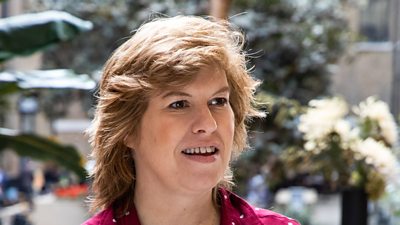
Making children aware that you have to be organised, passionate, instinctive, be able to follow orders and be able to think for yourself, it’s a very special, exciting skillset.
Could you tell us about your role in Step Up To The Plate?
In Step Up To The Plate, you’re a teacher, mentor AND you’re a judge, so you have to wear three different hats. With CBBC’s Junior Bake Off, it was just judging. Here you have to train them to do the job, finesse them so they’re doing it the best they can and then you have to judge them.
Why did you want to get involved in Step Up To The Plate?
The food in Britain has never been better than it is at the moment. Internationally, we’ve got a reputation that we’ve clawed back after stark years in the last century and it’s really important that we keep attracting new talent. You want to get them in young, get them excited, get them realising that being a chef and being front of house are viable, exciting, professional careers, not something to be fallen into, but something to be chosen.
Do you think people don’t realise being a chef can be a great career choice?
Being a chef has been taken more seriously since the rise of people like Jamie (Oliver) and Gordon (Ramsay) and people like that. We are now attracting new talent - certainly when I went to chef school years ago, it was considered to be akin to being a plumber rather than the arts. The thing about cooking, it’s part art, part science, and then there’s another part of it which is heart, you have to be able to cook from the heart. So making children aware that you have to be organised, passionate, instinctive, be able to follow orders and be able to think for yourself, it’s a very special, exciting skillset.
Could you tell us about the ‘difficult diners’, the comedians who come in on the practice day with their tricky requests?
My goodness, the difficult diners were difficult! Some of them were hellish and really difficult, some more comedic. I’ve just done a voiceover for an episode where one of the difficult diners asks for a side of grass for their venison. And bless them, the front of house went and cut some grass from outside!
Could you tell us about some of the funny moments in Step Up To The Plate?
There was a particularly good bit where we were doing some meat-replacement burgers and seeing their little faces after they realised they’d eaten a burger made of mealworms was pretty good. Insects, there’s plenty of them, they’re full of protein, why wouldn’t you? They didn’t pick out that they tasted funny or ‘buggy’.
Step Up To The Plate can be entertaining and lighthearted one minute and then quite tense in the next in terms of the huge task the kids have been set...
There is a balance over the two days. The first day is more educational and humorous but the second one is full service. On very little training these kids put on a full service for a restaurant full of people who are expecting good food and they pretty much do it on their own. Every now and then Fred and I had to step in when the wheels were coming off, but I think that happened only once or twice, most of the time they just really did step up to the plate.
How much competition was there between yourself and Fred?
Of course there was competition between Fred and I! We’re both quite competitive people. We’ve both done well in our industry and there’s a sort of natural, healthy competiveness or tension between front of house and back of house, there always is in restaurants, there always has been. Essentially Fred and I were a team, all be it both with our own crews, and it’s about trying to get the best team to the final.
How is it different working with children rather than adults, have they surprised you in anyway?
To be honest, they were mostly like little adults. The thing that amazed me the most was their maturity, they were very up for it, really focussed, very dedicated, they really wanted to win and to go through, and they took feedback very well.
What skills have the children had to demonstrate?
There was a masterclass where I taught them something and they had to produce it to the same level.
Then there was service, which is a completely different skill and is about trying to follow tickets, keep numbers in your head, put dishes up at the same time as another main course, work as a team and help your colleagues if you need to. So we didn’t have very long with the children but in that time, they got a real snapshot of the skills you need to succeed in a professional kitchen.
They all came out more mature than they came into the show, particularly the ones who came through the further rounds and to the final. They came in as children and they left as young chefs.
All of these skills will stand you in good stead in life: being able to listen, being part of team, being able to focus on the task in hand, being able to multi-task. These are all skills that you absolutely need in the kitchen but you absolutely need them in life as well.
What do you think is the key skill young people need today to work in the restaurant industry?
Enthusiasm. As someone who has employed a lot of chefs in my life, you can teach them anything if they’re up for it, if they want to learn.
What would your top tips to young people wanting to go into the restaurant industry be?
Don’t muck around, get a good start, there’s no point hanging around. College is useful, but you actually learn on the job more than anything else.
Get around a bit, don’t get stuck in the same places. Make sure you can get out to some restaurants or look online at recipes or see how different cultures eat and just soak up as much food knowledge as you can. I’ve been in the industry for 25 years and I’m still learning every day.
I’ve been keeping a food diary since I was nine years old and I’ve got volumes of little books that I kept in my pocket or my backpack when I was younger, and I still take a food diary with me whenever I travel and write about things that I see in the market, or something I might have had for breakfast or a little street stall that I see. Then I come back and it keeps it fresh in my mind. I write about it or recreate them in my restaurant or in my books, so little notebooks like that are hugely useful.
Who is your most memorable customer?
I cooked for the boxer Mike Tyson when I was the chef at Tribeca Grill in New York, De Niro’s restaurant. He came in and asked for a rack of lamb served medium rare, so I cooked it medium rare and sent it out. He sent it straight back and said he needed it better cooked, so I put it back in the oven, and cooked it to solid medium well and sent it out again. It came back again! I thought this guy is the heavyweight boxing champion of the world and he keeps sending back my food, maybe he’s going to come into the kitchen and box my ears. I threw the lamb to the back of the oven and left it there for another seven minutes, by which point it was a shrivelled, gnarly, small hunk of charred lamb and I sent it out and thought ‘oh I’m going to get walloped’. The waiter handed it to him and he said, ‘that’s a perfect medium rare, thank you’. It was just insane. I was like ‘Phew!’ At least he was happy.