Other stories from across the UK
Springwatch has been filming across the British Isles since January, covering the best of this season’s wildlife stories that have already happened.
Published: 23 May 2017

Peregrine Diary
Three-part mini series and live camera
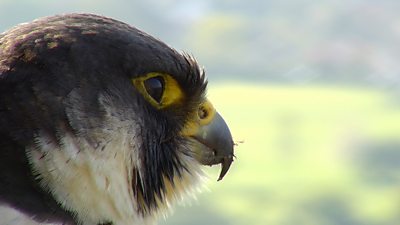
A female urban peregrine is the first in the UK to be fitted with a satellite tag, enabling the Royal Society For The Protection Of Birds (RSPB) British Trust for Ornithology (BTO) and BBC Springwatch to follow her movements over the coming months. The small backpack will send signals to a satellite enabling the BTO to know where she is at any time. This will reveal more about where urban peregrines travel to hunt when finding food for their young.
The female peregrine, known as Sally, and her mate, Seb, are currently incubating five chicks, monitored by Salisbury Cathedral and the RSPB. The pair have colour rings on their legs, with SY for the female and SB for the male. When the chicks hatch the pair will be busy hunting a variety of different birds to feed them. Diving at up to 180 miles per hour, the peregrine is the fastest bird in the world. They will also hunt at night over Salisbury, using the light from street lamps to see their prey flying over.
Peregrines have been increasing in towns and cities across the UK during the past 20 years. They have been nesting on Salisbury Cathedral since 2014 after an absence of 61 years. Colour-ringed urban Peregrines stay both local to where they hatched and travel as far as Yorkshire and Norfolk from the west. The satellite tag will reveal more information about what peregrines do on a day to day basis.
Kingfisher Diary
Two-part mini series
Filming in a Kingfisher nest is a holy grail for Springwatch, and this year (fingers crossed!), one of our regular contributors has helped us to achieve it. We hope to watch as the eggs hatch, develop and fledge into the startling, brightly-coloured beauty of our rivers.
Little Egret Diary
Four-part mini series
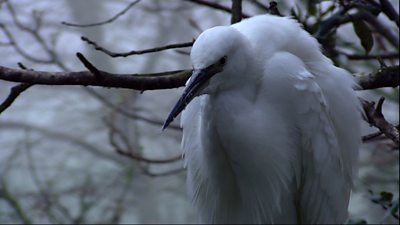
Little Egrets first bred in Britain in 1996 and since then have become a conservation success story, colonising many parts of the UK. This year we will follow a colony in a country garden on the edge of the Somerset Levels. It's breeding season and our tree-top cameras will capture their battle for survival among a crowded canopy of neighbouring herons and rooks.
Presenter films
Humpback Whales
Since the 1982 whale ban, populations of humpback whales are increasing worldwide. Sightings of humpback whales off the British coastline are becoming more common, with 40 seen last year - but this increase has led to more whale strandings and entanglements. Iolo Williams meets volunteers from the British Divers Marine Life Rescue team who released the same humpback twice after it was caught in fishing lines off the South Devon coast. He also looks at the preventative measures being trialed to try and reduce the damage done by entanglements in fishing nets.
Gulls in cities
Gulls are becoming an increasingly common sight in our towns and cities - with numbers rapidly on the rise. Gillian Burke is in Bristol to meet gull expert Peter Rock and discover why they are attracted to urban centres, which perhaps surprisingly, doesn’t appear to be for all of the free food.
Natterjack Toads
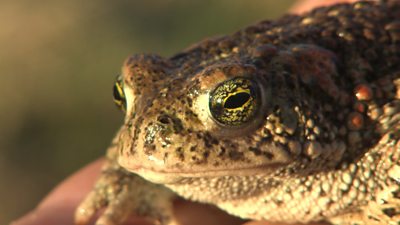
Martin Hughes-Games is in the Talacre dunes of North Wales in search of the natterjack toad. It might be one of Britain’s rarest amphibians but this Site of Special Scientific Interest is home to the most successful reintroduction programme for the toad. Martin meets the man who brought them back to Talacre and lends a hand with the annual survey of this truly rare amphibian.
Emperor Moths
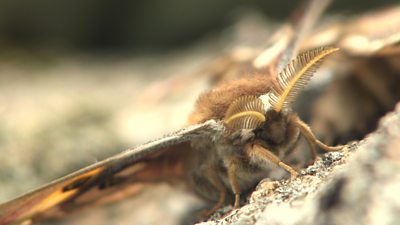
Gillian Burke travels to Dartmoor on the hunt for one Britain’s most spectacular moths. As the only silk moth in the UK, this bold and beautiful springtime insect has attractive markings, large wings and is often mistaken for a butterfly. The males can be found flying during the day in search of females, using their sensitive antennae which hone in on the females’ powerful pheromones. Gillian joins entomologist John Walters to set up a test to determine how powerful the pheromones are and how quick the males react to a female as she signals that she is ready to breed.
Snipe drumming
Drumming is a sound made by snipe as part of their courtship display. It’s been likened to the sound made by a galloping horse and Chris Packham heads to West Sedgmore to see the snipe in action, and, with the help of a bow and arrow, reveals how this extraordinary sound is made.
Thetford Tawny Owls
Tawnies are one of our most familiar owls, but very little is known about how well they survive in man-made forests. Martin Hughes-Games heads to Thetford Forest in Norfolk, where the Lee Barber from the British Trust for Ornithology is undertaking a project to find out. As darkness falls, they set the mist-nets and Martin gets hands on with his first wild tawny owl.
Capercaillie
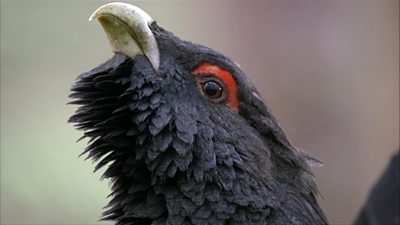
The Capercaillie is the UK’s largest species of grouse but they are incredibly rare and very difficult to see. Iolo Williams heads to their Scottish stronghold in the Highlands. Camping overnight with expert Gareth Marshall he hopes to witness the secretive courtship display of male capercaillie at their lek.
Dippers
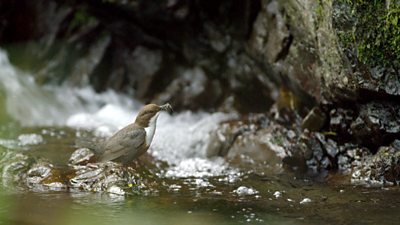
The dipper is Britain’s only true aquatic songbird. Unusually they sing all year round and hold a territory over the winter. Michaela Strachan travels to the Yorkshire Dales to meet Dr. Stuart Sharp of Lancaster University, who is leading a research project into this incredible little bird. He and his team are looking into how territories, an abundance of prey and good parenting can directly influence the next generation of dippers and their ability to grow into successful parents themselves.
Garden Dramas - macro films
Hairy footed flower bee
In early March, a Devon churchyard is a-buzz with furry little creatures known as hairy-footed flower bees. They are out and about taking advantage of the early spring nectar that’s on offer. But for the males it’s sex not food that’s on their minds! Specialist macro cameras allow us to enter the secret world of these adorable insects. In the process we may even discover the real purpose of those hairy feet.
Rockpools
Life in a rockpool is hard. Every 12 hours the world us turned upside down, from deluge to drought and back again. The animals that live here face a daily battle to make it in this tough world - and their lives ebb and flow along with the tide.
Orange-tip butterfly
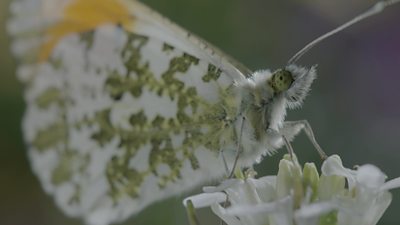
One of the first butterflies to emerge in spring, the orange-tip male is easily recognisable - but what goes on out of sight is truly extraordinary. We watch as the adults emerge from their winter slumbers in the chrysalis, dry their wings and launch into the big wide world. Once mated, the female lays her eggs one at a time, and when they hatch the caterpillars are in a race to eat enough to survive - facing some pretty dire dangers along the way.
Raft Spider
A male raft spider is on a mission: his small pool has everything he needs - it provides protection for this semi-aquatic arachnid, food to hunt, and even the chance to mate - but will the large female in his pond allow him to get closer enough to try, without trying to eat him first?
Cameraman Diaries
Springwatch has sent three camera operators out to the far corners of the country to show how spring affects those living on the wild edges of the UK.
- John Aitchison is on Oronsay off the west coast of Scotland, looking for the breeding birds that benefit from an ancient type of conservation.
- Richard Taylor-Jones is in Kent, at its most eastern point where the cliffs of Thanet crash down to the sea.
- James Bayliss-Smith is following in his grandfather’s footsteps, trying to use the same techniques to film wading birds in the Wash as his grandfather used to take photographs in the 1940s.
Unusual places
Not all wildlife thrives in green spaces - some is to be found in more unusual locations:
- Wild Scrapyard - The scrapyard may look like a mess, but to it’s owner everything is in the right place - and to the wildlife, the higgledy-piggledy nature of this place is a perfect man-made habitat in which to thrive.
- Motorway Services - Our motorways carry 65 percent of the total traffic in the UK, but if we take the time to stop at a service station and look beyond the concrete, there’s wildlife all around.