Other stories from across the UK
Springwatch has been out and about filming across the British Isles since January, covering the best of this season’s wildlife stories as it happened - including...
Published: 22 May 2018
Every year Springwatch picks a place or an animal to follow in multiple films throughout the season. This year, we have been following:
- The Gower. A rugged and wild peninsular on the south coast of Wales, the Gower is home to wild weather, and wild life. Focusing on a raven nest, these films watch the comings and goings on these steep cliffs. There are four chicks to begin with, but with marauding choughs, peregrines in the skies above and spitting fulmars trying to nest next door, it wont be easy to get all four to maturity. All that, plus Dartford warblers in the gorse above and rock pipits on the beach below – its a high-rise, epic drama.
- Richmond Park. Yazuru is a cameraman from Japan who moved to London some years ago, and has fallen in love with Richmond Park and it’s wildlife. With stunning composition and box office animals, this is London’s most famous park as you have never seen it before.
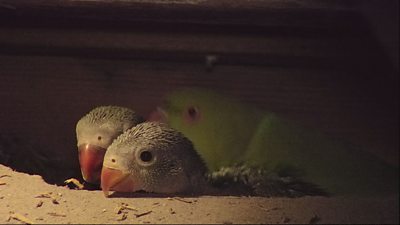
- Ring-necked parakeets (pictured above). Nesting in the attic of a pub in Kent, these small but feisty parrots are more than a match for the boisterous antics that go on below. Starting off almost unrecognisably ugly, as the youngsters grow, their bright green plumage starts to come in, and as they start to wander around the roof space their ungainly habits are a joy to behold.
Blue Chip films
Using some of the world’s leading natural history camera operators, these films are a celebration of some of the UK’s most beautiful and unusual animals.
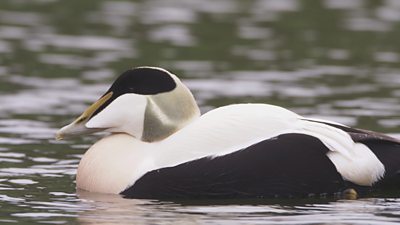
- Eider ducks (pictured above). These stunning ducks have made the Isle of May their home, nesting away from ground nesting predators on the mainland. Unfortunately, other dangers lurk here - from stinging nettles that can paralyse the chicks, to black-backed gulls for whom a duckling is a tasty snack. Even if they do make it to the water - a 6-mile paddle back to the mainland awaits the rafts of tiny ducklings
- Lapwings. Two lapwing families nest on either side of a wall - one on the open moors of Yorkshire, and the other on a piece of farmland. Separated by just a few yards, their lives are completely different, and the dangers they face when trying to bring up their young couldn’t be more varied.
- The Lighthouse. Standing proud on the north-east coast, St Mary’s lighthouse has been a beacon for seafarers for centuries - and is a beacon for wildlife too. In this film we take a vertical migration, starting below the waves, through the rockpools and beaches, and into the skies above – meeting the animals that make their living around this safe haven.
- Parasitic wasp. Bad news if you are an aphid - these remarkable wasps seek out their aphid victims, before injecting their eggs in their hosts. The young wasps then hatch inside the bugs and eat them inside out. It’s not pretty, but the aphids do have a few tricks up their sleeves to avoid becoming the host… it’s a genuine arms race.
- Mayfly drama. Life in a pond is far from easy if you are a mayfly nymph. Everything is out to get you, from the vicious dragonfly larvae to small fish, for whom a snack sized mayfly is the perfect dinner. But if they make it to the famous mayfly-hatching day, these understated insects become part of one the most spectacular wildlife events in the UK’s year.
- Land of the spider. A back garden hosts three very different spiders - the acrobatic jumping spider, the perfectly camouflaged killer crab spider and the ground hunting wolf spider. Each uses it’s own techniques to get its dinner – and each is a gloriously adapted hunting machine.
Camera-led Blue Chip
Springwatch works with some amazing camera talent, and each year we ask them to give a personal insight into one of their filming passions.
- Raymond Besant is from Orkney, and follows in the footsteps of a local hero, Eddie Balfour. Eddie spent 40 years getting to know the hen harriers of his island home, and using his notes, maps and books, Raymond tries to film some of the things that Eddie so memorably describes.
- Andy Jackson has brought Springwatch incredible images of the underwater realms for the past few years, but in this personal take he invites us under the surface of Loch Fyne, to discover what he calls ‘The Garden’ - a realm of intense drama and astonishing beauty
- Richard Taylor-Jones is in an abandoned quarry set amongst mile upon mile of intensive agriculture. What he finds there is a wildlife haven, with hunting kestrels, nocturnal bats and, in a TV first, a grass snake hunting great-crested newts.
- Luke Sadler lives on the west coast of Scotland, and this wild place has inspired his film-making over the years. In this humble film, Luke takes us into the crashing waves to find the seals, birds and basking sharks that make this place so very special.
- Gary Moore isn’t a cameraman, but a soundman with a vision. Immersing us in his auditory world, we follow Gary through dusk and into the dead of night - when his favourite bird, the nightingale, is at its absolute best.
Passionate People
The natural world has long had its champions, and Springwatch always looks to highlight and celebrate some of the unsung heroes of British wildlife. Amongst them this year:
- Robert Gillmor MBE is the don of wildlife art, founder of the society of wildlife artists, creator of the world-famous RSPB logo and a hero to many. As he prepares for his final exhibition, we go to meet him to look back at his extraordinary life.
- Kyle Moore is at the other end of his career from Robert, but at only 19 years of age, Kyle has already won numerous awards for his photography - especially of his remarkable urban foxes.
- Tree slugs may not be everyone’s idea of a top night out, but for one man, Chris du Feu if you not seen a tree slug climb - "You’ve not lived".
- Author Melissa Harrison has a fondness for the rain - while others seek shelter indoors, Melissa heads out to see the changes that rain brings to the countryside, on a film that may change how we all look at a rainy day.
Presenter-led
No Springwatch would be complete without the presenters getting out and about to film some of the season’s best wildlife… and this year is no exception.
- Lord of the Wings. In Winterwatch we saw the battle of the brainy birds when Crow went beak to beak against Raven in the Game of Crows… now Michaela Strachan and Iolo Williams put our two largest raptors to the test as golden eagle goes talon to talon with white-tailed eagle. It’s the battle of the brawny birds… both impressive predators we’ll test their powerful grip, lighting speed and supersonic vision. Both birds have ruthless hunting instincts but which one is the undisputed master of the skies and will be crowned Lord of the Wings!
- Chris Packham goes to Dovestone to see a unique project where the RSPB are working with a water utility company are using a helicopter to restore the upland peat bogs for wildlife - including the threatened curlew.
- Chris has also taken a trip to Northern Ireland, to see how Belfast became one the first swift cities, an urban space determined to help this bird as its number declines. He also visits a population of red squirrels in Derry, where the river Foyle has kept a healthy population apart from its grey cousins.
- Michaela Strachan is in Bristol, meeting a whole host of people who are fighting the plastic scourge along the waterways of this busy city - and how in many ways, small and large, they are winning.
- Gillian Burke has been to Glasgow to meet a very unusual population of water voles right in the middle of the city, to find out how, and why, these animals are making their living miles away form the nearest water source, despite their moniker.
- Gillian is also in Wales to meet researchers at the National Botanic Garden in Carmarthenshire, to set an unusual test. As a young girl she loved the ‘Flower Fairies’ books - but how accurate in their portrayal of insect/plant relations were they? Surprisingly - they turn out to have been really rather good!
- Iolo Williams has headed north to visit the Lamlash bay No-Take Zone – an area of seabed that hasn’t been fished for 10 years exactly. This first ever Scottish NTZ was announced on a Springwatch Special in 2008, but revisiting the site a decade later, will the differences be significant?
- Otters haven’t had an easy ride over the last 50 years; and while their numbers are on the up, they still face complex challenges. Lucy Cooke travels to the Fens to meet conservationist Cliff Carson – who, for the last 11 years, has been giving his local otters a helping hand, and a home.
- Major Oak, the tree that according to legend was a favourite hiding place for Robin Hood and his merry men, is in trouble. Biologist Niall Strawson meets some people using some surprising new technology to learn the secrets of this 1100 year-old tree