Interview with Julie Nicholson
Interview with Julie Nicholson.
Published: 22 June 2015
I hope that audiences take from the film a sense that out of dark times, there can be a flowering. Grief doesn’t diminish but the ability to live and thrive doesn’t necessarily diminish either.
How did you feel when you were first approached to make your book into a drama?
I felt a little unsure at first. Giving up the book into the hands of strangers was a step of faith but alongside that I felt privileged that someone else wanted to tell my story and Jenny’s. I felt the decision to extend the book into a film needed to be acceptable to the rest of Jenny’s family before I said yes. The producer, Liz Trubridge and her colleagues, invested time and energy in meeting and engaging with the family, which helped with the decision-making process. I felt it was necessary to trust the team who were going to be responsible for adapting the book into film, as ultimately it was a responsibility for guardianship of Jenny’s memory. The assurance that it would be a collaborative process helped.
What was it like watching the television adaptation for the first time?
Watching the television adaptation for the first time was not as difficult as I had anticipated, but with so many contrasting emotions; surreal, on one level, as if I had stepped outside my own experience. There were comfy leather sofas in the screening room, but I think I sat on the edge of the seat, rather than relaxing into it. I was completely drawn into the film from the outset. It felt like I had Jenny back again for a while, but then of course I had to lose her all over again. The scenes with Jenny and her sister and brother were funny and joyous. It was very poignant watching my father, uncle and aunt who are no longer here. I felt the film captured all the relationships so well. I wanted to watch it objectively, but that was impossible after the first few seconds of the film. I felt the film was so honest, and that all the actors played all the family with such tenderness and sensitivity. I wept of course, I think from beginning to end. I felt such care had been taken in making the film. As the film ended, I felt a bit overawed yet proud on everyone’s behalf of the achievement. I felt at the time and still feel that something very beautiful has been created, a painfully bittersweet gift but nonetheless, a gift.
What was it like to have Frank McGuinness write the screenplay?
Knowing that Frank McGuinness was going to write the screenplay was one of the contributing factors to agreeing to the film in the first place. I have long admired Frank’s work as a playwright. Getting to know him, talking with him, I felt instinctively that my book was in safe hands. He is a very feeling and sensitive human being. I was interested to see what he would do with the story, the threads he would follow. In fact, it’s fair to say that I was excited that Frank cared enough about the story to want to write the screenplay.
How did you feel about Emily Watson playing you?
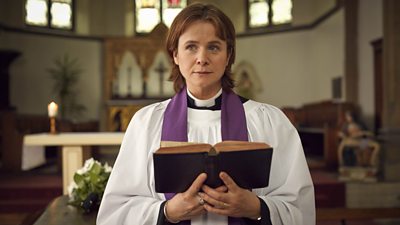
I believed it was important that whoever played me, should be a mother, understand viscerally the powerful bond. I felt blessed to have Emily Watson playing me. Emily is an extraordinary and courageous actor who takes risks. Her stillness and quietness is as powerful as her actions and spoken words. From the very beginning I was confident that she was the right actor for the job. I felt a connection with her. As I watched her play me, I felt that she felt my every mood and emotion. I suppose that’s the mark of a great actor. There were times when I didn’t know if I was watching Emily or myself.
Tell us about how involved you were in the making of the drama.
I felt the whole process, from start to finish was collaborative, especially as the script emerged and developed. I can’t pretend it wasn’t difficult at times ‘letting go’ of the control of the narrative but I tried not to impose myself unduly on the process, so that the team should not feel inhibited by my involvement, especially during the period of filming. Everyone was really quite amazingly patient with me. Ultimately, we all wanted the same thing... the best that the film could be.
In the early stages, Frank talked to me regularly about the script, I saw each draft and was able to comment and have some input. If I had any concerns at any stage I was listened to. Anything I wasn’t entirely happy with was addressed. I felt part of it all, even when I wasn’t directly involved - including decision-making over casting. For instance, I said from the outset, that it wouldn’t be appropriate to search for a ‘lookalike’ Jenny. That was a concern of the whole family, but that an actress should be found who could capture the essence of her, ideally someone who was not already a known face. Nicola Wren, who plays Jenny, was straight out of drama school, which I felt Jenny would have approved of. I found her to be a delight both on and off screen. For the duration of the drama, Nicola becomes Jenny. I feel I’ve learned a lot about the whole process and am so grateful to have had the involvement that I had. I hope I helped rather than hindered.
What did you find the biggest challenge in the process?
The biggest challenge was of a personal nature, keeping a healthy perspective and not reliving every moment as if it were for the first time. The psychological impact was something I needed to be aware of. In the early stages, letting go of my book was a challenge, knowing when to step back, and trusting others to do their job. I think/hope I managed this, but it wasn’t always easy and sometimes my emotions got the better of me. Keeping a balance between the film and rest of life was a challenge at times. A challenge I felt, rather than anything that was projected, was ensuring the film got it right for the wider family. I suppose this was a self-imposed challenge. I could not have looked my family in the face if the film had not been the authentic, sensitive drama that it is.
What would you like audiences to take from the drama?
I’m not sure what I want audiences to take from the drama. Certainly, this is how it was! I hope they see past the pain to the beauty of a life beautifully and vibrantly lived. I hope for people who have suffered similar losses, especially the families of 7/7, there might be a resonance between our stories. I hope audiences see a little of the personal impact within a major national disaster. Mostly, I hope people see the humanity and kindness that followed the one single act of inhumanity. As the film truthfully reflects, alongside pain and tragedy there is also pleasure and joy. I hope that audiences take from the film a sense that out of dark times, there can be a flowering. Grief doesn’t diminish but the ability to live and thrive doesn’t necessarily diminish either.
Cast list
Julie - Emily Watson
Jenny - Nicola Wren
Greg - Steven Mackintosh
Lizzie - Martha Mackintosh
Thomas - Laurence Belcher
Uncle Jimmie - Alan Rothwell
James - Gwilym Lee
Mother - Anne Stallybrass
Aunt Karina - June Watson
Father - John Woodvine
Sharon - Sophie Dix
Martyn - Nicholas Asbury
Cleric - Edmund Digby-Jones
Joanne - Megan Salter
William - Noah Jupe
Vanda - Poppy Miller
Stefan - Darren Strange
Ellie - Mimi Lowe
Colin - Stuart Martin
Pauline - Maxine Evans
DCI - Andrew Whipp
Station Manager - Trevor Michael Georges
Priest - Richard Syms
Mourner - Ryan Coath
Tube Passenger - Craig Stein
Drunk Beggar - Paul-Ryan Carberry
Taxi Driver - Bruce Byron
