Interview with Tara Fitzgerald
In 1994, a toddler disappeared from a small Welsh village, never to be seen again.
Published: 22 January 2018
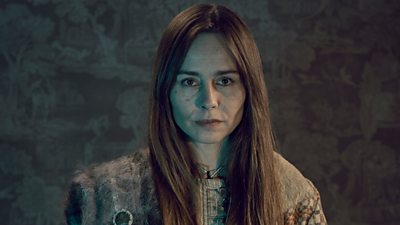
It’s very rare to read something of that complexity and intelligence and originality, which is peppered with these extraordinary characters who all feel completely authentic.
What leapt out at you when you first read Requiem?
It’s very rare to read something of that complexity and intelligence and originality, which is peppered with these extraordinary characters who all feel completely authentic. They all have very strong drives. The story has so much to say. The great thing about Kris’s writing is that he doesn’t seem to judge his characters. He is also prepared to examine things that a lot of other writers are perhaps afraid of. He’s an outstanding writer.
The scripts have very strong female roles which are not dependent on anyone else for their identity. One of the themes of the drama is the search for identity. Matilda is on a quest for her identity, but Sylvia already has a very strong sense of who she is - even if it’s incorrect.
How would you characterise Sylvia?
She’s a very rare bird. She is very original and idiosyncratic, but also slightly enigmatic. Part of the pieces is to do with things not being what they first appear to be - and that sums up Sylvia. She is driven by her calling and believes in that intensely. It is her vocation.
What marks out Mahalia as a director?
She’s one of the best directors I’ve worked with. She always has time for actors. She set up rehearsals so all we all felt we inhabited a very specific place. Mahalia is interested in “otherness”, that slightly ineffable, indefinable quality in people. But she also ensures that the story is rooted in a very identifiable reality. Her notes are really good, too. They help to crack things open. She’s a very special director.
Why do you think we are all so interested in the idea of the unknown?
Even if we say we are not, we are all fascinated by the possibility of another dimension. The mystery of life is riveting. We are all searching for the answers to the Great Unknowns. It’s a very human quest: Why are we here? Where are we? We are always trying to explain and rationalise things - that’s a human impulse. Science will take us to a certain point, and were relieved about that. But then something else will leap out of the bottle, and we can’t explain it. In Requiem, Matilda is searching for her identity. But on a larger level, it’s about how we are all looking for our place in the universe.
What do you hope people will say to each other after watching Requiem?
I hope they will be very intrigued and entertained. I also hope they will be moved and fascinated and ask questions. I really hope it makes people curious. I hope it makes them wonder, “What does it all mean?”