Interview Richard Harrington
In 1994, a toddler disappeared from a small Welsh village, never to be seen again.
Published: 22 January 2018
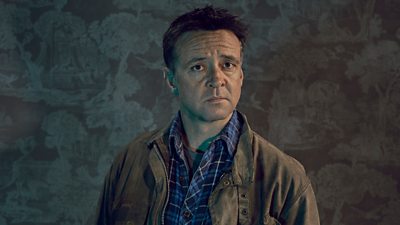
It’s about how fantasies and cultures can be created and the lengths that people will go to in order to protect their community.
How would you describe your character?
I would hate to say that Aron was ordinary - most people are until you put a microscope on them. He doesn’t seem very emotional, but there is more to him than meets the eye. He’s overly protective of his wife after what she’s been through. He tries to keep things together, but he certainly does the wrong things sometimes, and can turn to violence. He’s not necessarily a bad man, but he’s put in bad situations when he tries to hold together the sanity of a wife who’s lost a child.
Was it hard to perform the scenes of domestic violence?
Absolutely. The scenes were very tough to act out. They were true to the script, which examines how someone can treat the person he loves most with such contempt, but filming them was certainly exhausting.
Claire and I have worked together before, and we have a very good relationship. She is a brilliant actress who is able to deflect anything and give back what she gets. However much I screamed at her, she’d throw it back at me. She gives a beautifully effortless performance as Rose. It also really helps that we have a very similar way of working. We both want to muck around when the camera is not rolling. Whatever bad feelings are portrayed in a scene are very quickly dispersed with a laugh or a wink.
What was it like working with Mahalia?
It was amazing. From the moment I met her, we started to excavate the text. She’s such a lovely person to work with. You can meet directors in auditions and get on very well with them. They have a spark and indulge you. But then they can find the confines of a set very restrictive. They have to carry so much on their shoulders, and you can see them tensing up. You’re almost left to do it on your own because they have bigger battles to fight.
She is special because she really focuses on the actors. She makes you think about things profoundly and laterally. She created a very productive atmosphere on set. She had never directed anything of this scale before, but she never faltered during the six months’ shoot. She also cast impeccably - we all got on like a house on fire. Working with her was a very nourishing experience.
What is it about Kris’s script that is so intriguing?
It is not what it first appears to be. It’s about how fantasies and cultures can be created and the lengths that people will go to in order to protect their community. They are quite prepared to create a reality within a reality.
What will audiences find most striking about Requiem?
At its core, it’s a very human story about a missing girl, and no one can be apathetic about that. If you watch this drama, you have to have heart and soul. It will certainly pull at your heartstrings.