Interview with Kris Mrksa, Creator and Writer
Interview with Kris Mrksa, Creator and Writer of Requiem
Published: 19 January 2018
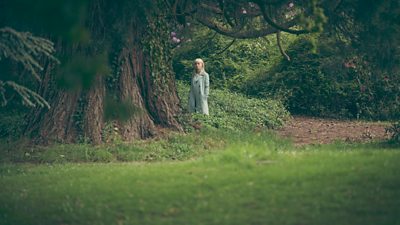
Requiem won’t scare you like a guy with a chainsaw would scare you, but I hope I have created something haunting and disturbing. I want to cause lasting disquiet!
What inspired Requiem?
I often have two or three ideas kicking around. Then I suddenly realise they fit together and I have something to run with. The first kernel was the death of my mother - I realised that a whole part of my life had died with her. I had very little recollection of my childhood, and what I did have was imperfect because it was a child’s view of the world. My mother would always explain to me what was going on with Auntie Dolly, whether or not I’d had the measles jab. So I really lost things with my mother.
Losing a parent is a loss that strikes at one’s identity. Identity is something that I have always been fascinated by. I think the idea that we are all a unified individual is more illusory than we recognise. So I began to combine a philosophical idea about identity with the theme of grappling with loss.
How did you translate that into this drama?
As a writer, one is always plundering one’s own life. Matilda, the protagonist in Requiem, confronts mysteries greater than what Auntie Dolly got up to at the family do. The plot kicks off with her mother committing suicide in a shocking fashion, after which Matilda starts to wonder whether something about her own childhood might have been invented.
What were your influences when you wrote Requiem?
I’ve never been a big fan of chainsaws and monsters, but I’ve always been an enormous fan of the more low-key, psychological horror thrillers that toy with the audience's psyche, and the protagonist’s psyche. These are films that are terrifying and powerful, but not in the conventional way.
Can you give us some examples?
The Innocents, Truman Capote’s version of The Turn Of The Screw, is a really wonderful film, the best haunted-house movie ever made. That had a big influence on my thinking. Other masterpieces that have the same ambiguity are Don’t Look Now and Rosemary’s Baby, which sits in terrifying, disquieting territory. Rosemary is being doubted at every turn until she starts to question herself. That was something I was trying to land with Requiem.
Because the TV market is so crowded, the challenge is to deliver something fresh to keep the audience interested. So I thought this might be fruitful, unexplored territory for a TV drama. I wondered if one might play this story as a psychological horror that is ratcheted back. That was not something I’d seen on TV before.
How did you choose the setting of Requiem?
The protagonists are a pair of urbane London sophisticates who listen to classical music. I wanted to throw them into a place where they were maximally 'other'. They had to end up in a remote part of the UK that was a stark contrast to London. I wanted there to be a clash of two worlds. The protagonists had to be out of their element. They are fish out of water. When I visited Wales, I fell in love with the place. It has a mystical feel, and the history there is very palpable. There is a druidic vibe there, too. Matilda and Hal are quickly drawn into that world and enmeshed in it. The Welsh town becomes a character in its own right. It’s the perfect setting for this drama.
What impression do you hope that Requiem will create?
I’m very much aiming to unsettle people. Since the 1960s, we have had this obsession with finding out who we really are, as if that will solve all our problems and make us happy. I’m very sceptical about that. Requiem won’t scare you like a guy with a chainsaw would scare you, but I hope I have created something haunting and disturbing. I want to cause lasting disquiet!