Ten Years On
Ten years has seen the progression from 2K to 4K resolution and just like Planet Earth was one of the first series to air in full HD, Planet Earth II will be one of the first series to air in full UHD. The imagery in the series is so sharp, clear and lifelike it will be the closest thing to really being there ever produced by the BBC Natural History Unit.
Published: 29 October 2016
Ten years has seen the progression from 2K to 4K resolution and just like Planet Earth was one of the first series to air in full HD, Planet Earth II will be one of the first series to air in full UHD. The imagery in the series is so sharp, clear and lifelike it will be the closest thing to really being there ever produced by the BBC Natural History Unit.
Ultra-lightweight and portable design stabilisation technology has significantly advanced from previously heavy, cumbersome and expensive cineflex type products or Steadicams. They are now able to be carried by cameramen and drones
- The MoVI and the DJI Ronin are small and lightweight stabilisation systems that can be hand held, placed on jibs, dollies and other grip equipment. They not only stabilise the camera but also give the option to operate remote pan and tilt, achieving complex but very smooth and organic moves. These have opened up a whole world of what it is possible to do with a camera, travelling through environments and alongside animals.
For example; serval cats hunting; following elephants through 4-metre-tall grass; Komodo dragons fighting; lemurs leaping through the rainforest and many more of the scenic elements of Planet Earth II.
Drones have opened up new possibilities for filming aerials, allowing us to film from the air in places it would have been impossible to access with a helicopter and even lower and closer to landscapes and animals.
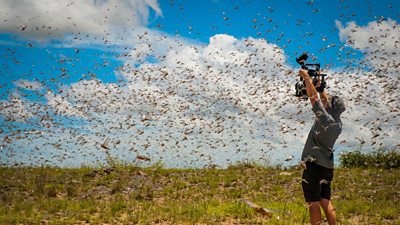
Drones allowed the team to capture aerials gliding through the jungle, skimming around desert rocks and flying directly within locust swarms.
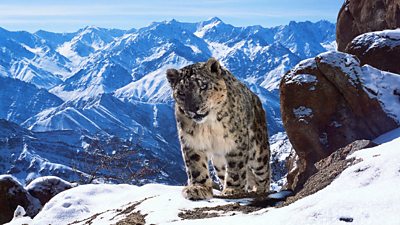
New generation high quality camera traps have defined the filming of Planet Earth II as they’ve allowed the team to film much closer than ever before to the world’s most elusive and dangerous animals. The technology has advanced so that remote trigger cameras are more affordable and have high definition resolution which stands up against other cameras. The team was able to use large numbers of camera traps to act as surveillance to capture behaviour that was previously considered too rare or unpredictable. For example, snow leopards in India brushing up against the camera as they walk past, or grizzly bears in Canada acting as if completely alone.
Technology innovation over the past ten years has allowed us to capture new animals and animal behaviour on film. Examples of this include:
- Cutting edge image intensifying technology has helped us reveal the secretive predatory strategies of urban leopards, and the newly described nocturnal scorpion hunting technique of a desert bat.
- Miniature camera-grip equipment such as macro sliders, jibs and scopes were employed to travel through the miniature world following animals such as harvest mice and glass frogs.
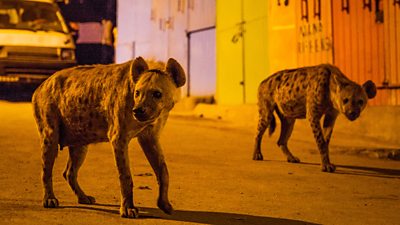
- The rapid increase in sensitivity of 4K low light cameras has enabled us to shoot in situations previously considered too dark. In the series they have been used to film fungi time lapse like never before, bioluminescent animals in the jungle, birds of paradise in the jungle gloom and hyenas at night.
Scientific discoveries and filming firsts
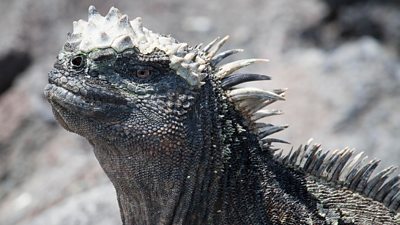
Marine iguanas and racer snakes: For the first time the Planet Earth II team filmed marine iguanas and their frantic dash for safety across their hatching beaches whilst being pursued by huge numbers of racer snakes. The sight of this nightmarish footage even shocked Sir David Attenborough.
Birds of Paradise: The bright and beautiful colours of birds of paradise in West Papua have been filmed a few times, but recently scientists realised that they had been looking at the displays in the wrong way. For the first time we have filmed the display of the tiny Wilson’s bird of paradise, not from the ground but looking down on him from up in a tree – the same way a female would see him…and it has revealed the true beauty of his display.
Araguaia dolphin: This new species of dolphin was discovered in the Amazon River in 2014, over 1500 kilometres from the ocean and found nowhere else on earth. Almost nothing is known about them and our team spent several weeks tracking them through the flooded forest to get the first glimpse of these mysterious dolphins in the wild. Using stabilised cameras mounted on boats and drones, we filmed them from both the water and the air.
Bat hunting scorpions on the ground: Scientists have been researching a newly described hunting behaviour of a desert bat. Dubbed as ‘the hardest bat in the world’ the bat takes on the death stalker scorpion, one of the most poisonous scorpions on earth. Thanks to some immunity to their stings the long eared bat comes out on top. Collaborating with scientists in Bristol and Israel, this is the first time this behaviour has been filmed.
Glowing fungi: These are the brightest fungi in the world and while previously a mystery, now scientists have discovered they may glow in order to trick beetles that use bioluminescence to attract mates. For the first time, new low light cameras allowed the team to film the amorous beetles attracted to the glowing mushrooms. They are covered in fungi spores and in this way help to disperse the spores when they finally move on.
Animal behaviour filming firsts
Snow leopards: The crew embarked on three trips on successive years to film snow leopards in Ladakh where there may be as few as four cats for every 100 kilometres squared. In total the crew was on location for 16 weeks, and the camera traps were in the field for 15 months deployed along trails and scenting rocks used by the leopards. In Planet Earth snow leopards were filmed at the end of a photo lens from one kilometre away, now they’re almost brushing up against the remote camera traps. This is the first time four snow leopards have been filmed at one time as they mate, hunt and fight, making it the most complete film of snow leopard behaviour.
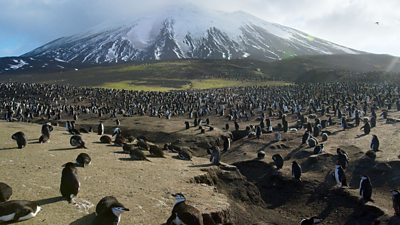
Zavodovski penguin commute: In what was probably the most intrepid shoot of the entire series, the islands team set off on a seven-day journey by sail boat across the planet’s roughest ocean, to get to the remote island of Zavodovski in the middle of the Antarctic sea. Very few people have ever visited this island and no one has ever managed to capture the amazing endeavour of the chinstrap penguins that have to face fierce stormy seas that batter them against the rocky cliffs as they try to get on and off the island to go out on their daily fishing trips. The result is one of the most dramatic sequences in the series.
Bee eaters catching insects flushed out by elephants: Carmine bee eaters in Botswana follow elephants and other large animals that walk through the grass hoping to catch any flying insects they stir up into the air as they push through the grass. The team learned that the birds were following their vehicle as it stirred insects, similar to how they would with elephants. So they sat a cameraman on the front corner of the jeep, strapped on a harness that supported a camera on a stabilised rig and filmed incredible shots tracking with the birds as they hunted in the air.
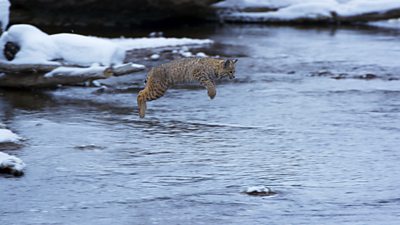
Bobcats hunting in Rockies winter: Cameraman John Shier spent five weeks in the freezing conditions in the Rockies during winter, waiting to capture elusive bobcat hunting behaviour. This is the first time ever these cats have been filmed hunting ducks and squirrels.
Rail road worms hunting millipedes: The jungles team found an incredible new story about a night-time predator. Railroad worms are actually bioluminescent beetles that use two different lights on their bodies - greenish yellow ones to deter predators and then a red glowing head to use as a ‘night vision’ hunting light.
Catfish hunting pigeons: This is a relatively recently described behaviour where, much like orca hunt seals by stranding themselves on beaches, these catfish wait in ambush at a specific river’s edge in a French town for pigeons, to come and bathe. When they gather at the water’s edge the fish thrust themselves at the pigeons grab them in their mouths and then drag them underwater.
Goshawks predating on sand grouse: The deserts team set off to the South African desert to film sand grouse coming to collect water for their young at waterholes. But what they stumbled across was far more dramatic, a pair of resident goshawks that had learned to wait around the waterholes and pick off the grouse as they came in. The goshawks know that even if the grouse know they are there, they cannot afford not to drink in the extreme desert heat. Never filmed before, this a compelling story of the grouse risking death to bring back water to quench their chick’s thirst.

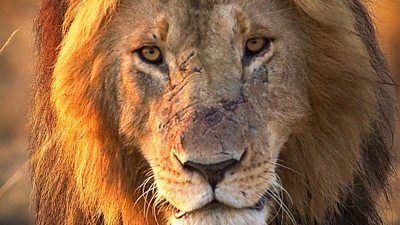
Lions hunting giraffe: The Planet Earth II team joined forces with camerawoman Lianne Steenkamp who has been following the same pride of desert lions in Namibia for the past few years. Combining specially shot material with some incredible footage captured over the years has allowed us to showcase the most dramatic giraffe and lion hunt ever filmed in the deserts episode.
Locusts: For one month, the team headed out to the arid regions of Madagascar to try to find and film a locust swarm. After some initial success, the crew’s luck completely ran out. Up until the last few days it looked like they would come back empty handed, but finally the team caught up with a swarm of biblical proportions. New technology such as MoVi’s and drones allowed us to get right into the heart of the swarm, as well as film it from the air.
Leopards hunting pigs in Mumbai: Mumbai has the highest concentration of leopards anywhere in the world. This is the most complete sequence of urban leopard behaviour to date and the first time anyone has filmed a successful hunt. The team used a military grade thermal camera to spy on the leopards in the city. These cameras revealed a large number of leopards living and hunting right alongside people without being noticed.
Hyperlapse: Within the cities programme we have used hyperlapse technique to immerse you in the urban environment. Rob Whitworth is the most accomplished hyperlapse cameraman of our day. His online videos often reach half a million views within 24 hours, with one single video achieving over 5,000,000 hits. He has collaborated with the cities team to create jaw-dropping seamless journeys through some of the most iconic cities of the world.

Peregrines hunting in New York: New York City has the highest concentration of nesting peregrines in the world. We have filmed a successful cooperative hunt from the tops of skyscrapers and from a helicopter within the midst of the iconic Manhattan skyline. This is the first time that the wild behaviour of these urban birds has been filmed, capturing incredible aerials of the fastest bird in the world dropping from a height at speeds of up to 200 mph. With nearly 700 skyscrapers acting as cliff edges would in their natural habitat, the crew was helped by expert conservation biologists and documented their important work monitoring the local population of peregrines.
The Planet Ten Years On
Whilst there have been plenty of positive developments both in our understanding of the natural world and the technology we use to film it, within the ten years since Planet Earth transmitted, the remaining wildernesses on our planet have come under increasing pressure. Throughout the series, Planet Earth II aims to acknowledge some of the environmental issues facing the different habitats. Whilst this is not a conservation series, all those involved in making Planet Earth II feel it is critical we highlight the fundamental change and pressure on these environments and the animals that are fighting to survive. The message is subtle but we strongly believe that the series will remind people just how amazing and precious the natural world is and this in turn will lead them to protect it.
The world is also now man-made – not just jungles, deserts and mountains anymore. The urban world is the newest and fastest growing habitat; it has grown by over 30 percent in the last ten years. In Planet Earth II we have actively decided to acknowledge this fact and have a programme dedicated to wildlife living in the cities of the world. This is the first time a Natural History landmark has included a programme about urban wildlife. Whilst the Cities programme does look at the issues facing wildlife in an ever more urbanised world, for the most part it is a fascinating look into those animals that have found incredible ways to meet the challenges of surviving in the urban environment.
Planet Earth: A Global Hit
- Almost 3.5 million copies of the Planet Earth DVD have been sold worldwide.
- There have been 80 performances to 200,000 people of 'Planet Earth Live in Concert’
- On release Earth (2009), the cinematic feature release of Planet Earth, was the highest grossing documentary of its time.