Interview with Julian Morris (Adam)
An interview with Julian Morris, who plays Adam.
Published: 20 July 2017
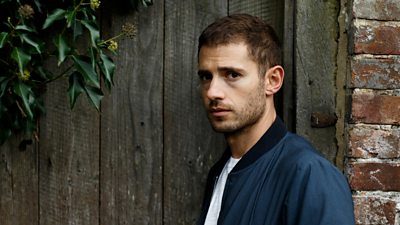
It was important for me to make choices that showed that Adam’s oppression came from within. This is in stark contrast to the first film, where the main oppressor was outside of oneself
What attracted you to Man In An Orange Shirt?
It was a breathtaking love story that I felt was transgressive in its honesty. That, and the excellent company of the people making it.
Describe Adam to us. Where do we meet him at the start of his story?
Adam is a complex character. He was raised by his grandmother Flora (Vanessa Redgrave) and he suffers from the shame she makes him feel as a gay man. That shame causes him to repel any intimacy other than a quick fix. He seeks to punish himself through the sex that he has - it is anonymous, hungry and often violent.
In banishing what is most beautiful about him - his need to love and be loved - he becomes his own oppressor. The sort of oppression that is characterised by rejecting oneself and one’s own identity must necessarily be one of its most damaging forms. I think this is true of many gay men and women today and indeed of minorities across our society. Society has undoubtedly progressed with respect to issues of civil rights, however the residue of past prejudice continues to infect. Man In An Orange Shirt is an important reminder of that while also offering the hope that it can be overcome.
How conscious were you of the first film, set 60 years prior to Adam’s story? Did it inform your performance?
I was very conscious of it, given how much I’d enjoyed reading it - however since Adam was unaware of that past until the end of the second film it didn’t seem warranted to allow it to inform my performance in too great a way. Where it did influence though was thematically - it was important for me to make choices that showed that Adam’s oppression came from within. This is in stark contrast to the first film, where the main oppressor was outside of oneself.
What was it like working with Vanessa Redgrave? Were there any highlights or especially memorable moments?
I loved every second of working with Vanessa and I’m happy to now call her my friend. She is fiercely intelligent and she thinks deeply and thoroughly about the choices she makes for the character. I found this challenging and stimulating, and my own performance is better for it. Outside of that she is wonderful, funny and silly.
Who do you think should watch Man In An Orange Shirt?
I think anyone who enjoys a provocative and beautiful love story will enjoy the show.
Complete the sentence: Man in an Orange Shirt is…
… vital, moving and beautiful.
An introduction, by Patrick Gale
My commission to write this show couldn’t have been more fortuitous: Commissioning Editor Lucy Richer let it be known she was after a script reflecting gay male experience in the 20th century, which ideally would have the flavour of a Patrick Gale novel.
Happily she said this to Kudos’s Sue Swift, who just happened to be an old friend from my days of bridge addiction. With such a vast subject, I had to find an involving, intimate story within it and, as with so many of my novels, this was a fragment of narrative from my own life.
When my mother was pregnant with me and preparing for us to move - from Camp Hill Prison on the Isle of Wight to Wandsworth, where my father was to become governor - she found a stash of personal letters hidden in his desk. At first she was amused, assuming they were from an old girlfriend he’d never mentioned, then horrified, as she realised they were from an old school and university friend who had been his best man.
In real life she destroyed the letters, terrified he’d be arrested for what was then an imprisonable offence but also disgusted because, in her ignorance, she assumed this meant he was a paedophile. In true buttoned-up English fashion, she never let him know what she had discovered.
What I’ve done in Man In An Orange Shirt is to take that scene of discovery and wind backwards, imagining the two men’s impossible love for each other being shipwrecked on the demands of respectability and the law. And then I’ve wound forwards from it, imagining what would have happened if my mother had instead confronted my father with the discovery. Readers of my novels will know I’m a psychotherapist manqué, fascinated by the effects of secrets and lies within a family.
Man In An Orange Shirt takes those secrets and lies and imagines the long-range damage they might do if the understandably embittered wife of episode one went on, in episode two, to find that her grandson was yearning for the fulfilment her late husband had never known.
Although it’s brilliant that transmission will coincide with the BBC’s celebration of the partial decriminalisation of homosexuality in 1967, I hope this is much more than just a drama about gay men and their difficulties.
I hope that its two love stories will touch people simply as love stories, and that the torments and frustrations in the family I portray will set viewers wondering about their own ancestors, grandparents and parents - and what secrets and lies they might be concealing.
GK