Interview with Hilary Salmon
Interview with Hilary Salmon, executive producer of BBC Two drama One Child.
Published: 8 February 2016
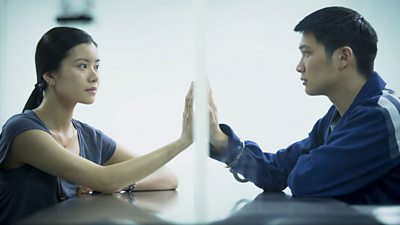
One Child is written as a thriller but I’ve often described it as an emotional thriller. It has that ticking clock rhythm that you get with all the best thrillers...
What is One Child about?
One Child is about a girl who has been born in China and adopted by a British-based family, having been abandoned by her real Chinese family under the One Child policy. As a young woman, Mei is having a successful academic career and she’s contacted out of the blue one day by her real Chinese mother who wants her to come back to China because her brother, who she didn’t know had even been born after her and who became his mother’s one child, is on a murder charge for a crime he didn’t commit. So Mei travels back to China and it’s an exploration of her coming to terms with, and understanding, her own cultural background and identity. It’s also an investigation of the Chinese criminal justice system, how it works and where the inequalities in it lie.
Why do you feel this is such a compelling story to tell?
I think like all stories that take place within a culture that we don’t see very often on our screens, there’s a real fascination just from being in China, and being in China from a Western point of view because Mei has been brought up in the West but equally she has an identity in China as well. She was born there, she looks Chinese and she has an access to that society which we wouldn’t have. It feels like we’re going into a culture with part of our heads being shocked by the way it works because we’re Westerners but also we have an acceptance in that we have an access to it. One Child is written as a thriller but I’ve often described it as an emotional thriller. It has that ticking clock rhythm that you get with all the best thrillers in the sense that when Mei arrives in China, she has a very short period of time to get her brother out of prison. He is on death row and he will be executed if she doesn’t succeed in getting him out of prison by proving his innocence. However, it’s also an emotional story because it’s as much about Mei meeting her real mother for the first time, at first not really understanding why her mother abandoned her and not feeling like she gets any emotional response from her mother, and then gradually the two of them grow together, learn to accept each other and form a really tight bond that will never be broken again. So there’s an emotional journey and a proper thriller journey which makes it a very compelling offering for television.
What was it about the series that made you say yes?
Guy read a book about Chinese mothers who have given up their children for adoption, and became very taken with that as a way into a story. He married that with the idea of a thriller about a system which is very hard to fight against if you’re caught up in it. He wanted to write about being on death row, the unfairness of the death penalty and that there’s no going back. It seemed that the marriage of that emotional story of Mei coming back to China and wanting to do something quite political and interesting about the corruption of the criminal justice system in China was a really strong marriage that would make a really good story, and I was very excited by that.
What do you find particularly striking about the drama?
One Child is unusual as a narrative in that almost every scene is told from the point of view of this young girl, this innocent young person who has grown up here and is coming back to her birth land and seeing it through new eyes. I don’t think there’s a scene that Katie Leung, who plays Mei, isn’t in, which makes it very unusual and, effectively, Mei is our guide through the whole piece. In Katie’s performance, we empathize with her very early on and we stick with her through this thriller pulse. It’s not cutting away from her makes a very intense, intimate and unusual journey through a culture.
What makes One Child different from other dramas?
I think One Child is a unique drama for British and US television in that it takes place almost entirely in China and we’ve so far, in the West, done very few stories set in China in the English language and of course that culture is changing incredibly rapidly at the moment. China is an enormously important country to the West and yet we understand very little of what makes it tick, we understand very little of how Chinese society works. We actually understand very little of what it’s like to live in a country that’s not a democracy but, in particular, the fact that the gap between rich and poor is rising every day makes it an incredibly interesting time to be looking at that country and reflecting back on how that change towards a system which will have many billionaires in it now is affecting every area of Chinese culture.
What does Katie bring to the role?
Katie had a huge responsibility on this show. She plays the lead part, which is a big responsibility for a young actress anyway, but at the same time she’s also in every scene. She’s effectively our narrator, she’s our emotional point of view, she tells the story, she’s caught up in the thriller and action of it all. Mei has to grow up incredibly quickly and that’s a massive range for a young actress to portray. Katie rose to that challenge fantastically. She brought a kind of inner purity to it and she gave us quite a simple performance which is both very endearing and also very captivating to watch. She doesn’t overplay anything, but at the same time you always know what’s going on in her head. I think the fact that her character was investigating a story and a culture which is also in a way Katie’s story - having been brought up in Scotland, while her parents had come from Hong Kong - gives it an authenticity that we might not have had from a different actress.