Interview with Guy Hibbert
Interview with Guy Hibbert, writer and executive producer of BBC Two drama One Child.
Published: 8 February 2016
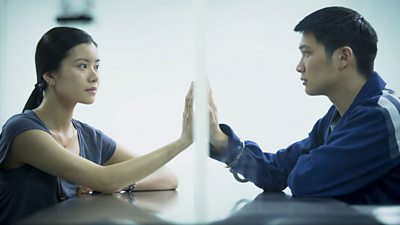
As the story develops Mei gets closer and closer to her birth mother, which then causes great anxiety with her adoptive mother. So we’re watching, wondering which way she will swing...
How does Mei feel when she’s first contacted by her mother?
Mei is very much loved by her adoptive parents. She’s their only child and has been brought up in a very safe environment. When she goes over to China and meets her birth mother it starts off very awkwardly, partly because of her birth mother’s sense of shame for abandoning her. As the story develops Mei gets closer and closer to her birth mother, which then causes great anxiety with her adoptive mother. So we’re watching, wondering which way she will swing, whether she will go totally towards the Chinese mother or whether she will abandon her and go back to her British-American mother, and I think that’s part of the interest of the story.
Why does Mei’s birth mother think Mei can help?
She doesn't know. She is a migrant worker and has no idea how things work - but a journalist, Qianyi, is telling her that Mei, being British, must have connections. Chinese society operates on connections. Qianyi thinks that Mei must be connected to a person in the British embassy or to a businessman with powerful interests. They think it will change the state of play somehow, but Mei doesn’t have any connections and so the story then develops into something else.
Do you think Mei’s adoptive parents are as worried about the experience changing Mei as much as they’re worried about losing her to her birth family?
They are worried about losing her. I’ve researched that and however much the adoptive child is loved, and however safe realistically the adopting parents can feel in their relationship with their daughter or son, deep down there is still this anxiety that one day they’ll be gone. Their anxieties are profound and never go away.
What happens when Mei meets her brother, Ajun, for the first time?
That’s when Mei feels she has to do something. She’s been brought up as a single child and suddenly there’s this brother who happens to be in desperate trouble. That’s the first time she feels connected to her Chinese background and her birth mother. She doesn’t know how to deal with the relationship with her mother at such an early stage but she has an instant connection with Ajun. They have a sort of platonic Romeo and Juliet relationship, so when she goes back to her birth mother she feels connected. Mei gets that emotional connection with her mother and that then triggers the anxiety back in England.
What does Katie bring to the role?
Soon after I finished writing the script, Hilary Salmon and I met Katie with the thought that she might be right to play the role of Mei. She has an extremely lovely personality - very unspoilt and natural and, in that meeting, we immediately thought, she's perfect for the role. I was imagining her as being right for the beginning of the journey, a young woman who has had a happy, secure childhood, who knows what she wants in life - to be an astrophysicist - and is training to fulfil that dream. What we didn't know about Katie the actress is whether she could take the audience on the extraordinarily tough journey for Mei through the story. And so one of the most pleasing aspects of the production for me was to see how she took on the role, how she took us through all of Mei's emotions and gave us the experience of watching Mei transform in character and come out a much wiser woman at the end.
What inspired you to write One Child?
I was asked to do a piece about China by Ben Stephenson. I had one contact, the writer Xuē Xīnrán, and she was the inspiration for that part of the story which is the adopting of girls during the One Child policy. These girls were abandoned in their hundreds of thousands in China as the preferred one child was a boy. The other part of the story is about the corruption of the legal system leading to a sentence of death. I wanted to explore capital punishment. For as long as state executions take place, we need dramas and documentaries to keep on tackling the issue.
Why do you think it’s important for drama to continue to tackle such issues?
I was brought up on TV drama like Cathy Come Home and The War Game - dramas that tackled big issues of the day. As a teenager watching TV, a whole raft of plays and films were taking on these issues and I wanted to carry on that mission. Someone said TV at that time was the National Theatre of the day, always putting the national debate out there and I feel that this is one of the roles television should play. I’m in a very privileged position where I can tell a story to one million plus people and so I will use that privilege.
What research did you do?
Before writing, I met a lot of people in the UK and in China, in Beijing and Guangzhou, where I did my research, and so everybody and most incidents in the story are based on either research I have read or people I have met. Then, once the script is written, I go back and re-research, get experts and people with the same experiences of those in the script to read and criticise and then I make the proper adjustments to make the script as authentic as I can.