Introduction by screenwriters Rachel Flowerday and Sasha Hails
Introduction by screenwriters Rachel Flowerday and Sasha Hails
Published: 6 October 2016
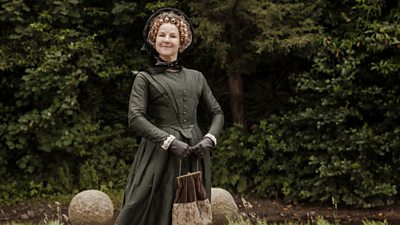
Collins’ characters are so vivid and beautifully drawn and their inner lives so wonderfully mapped out through their actions, that they were a joy to bring to the screen.
When the opportunity arose to develop a literary adaptation for the BBC’s Love to Read season, Wilkie Collins’ The Moonstone leapt to mind. The book that T.S. Eliot called “the first and greatest of English detective novels” created the country house mystery genre, is a true classic of Victorian fiction and, maybe most importantly of all, is a rip-roaring page-turner of a story to boot. True to expectation, The Moonstone has been – if you’ll excuse the pun – a gem of a novel to adapt.
Not ‘just’ a crime story but, in parallel, a powerful romance, The Moonstone is also an astonishingly modern commentary on Colonialism, the English class system, religion and the position of women in society. Collins’ characters are so vivid and beautifully drawn and their inner lives so wonderfully mapped out through their actions, that they were a joy to bring to the screen.
But it wasn’t all plain-sailing. The novel presented its own challenges – not least the first-person narrative form, in which a sequence of characters give witness statements about their memories of the crime and its aftermath. The limitations, though, proved helpful – and, rather than change the epistolary form to a linear re-telling of the story, we decided to embrace it, using face-to-face interviews, interspersed with flashbacks, to dramatise Collins’ written character statements. It meant working in two time frames, which occasionally tied our minds in knots, but we’ve found the result to be powerful and haunting on screen. Giving the different narrators their voice also feels true to Collins, and his deeply humanitarian writing.
We used the claustrophobia of shooting largely in the Verinders’ Yorkshire house where the theft takes place, to increase the natural tension in the community. This also gave us time to really explore the characters and dig into the emotional drama of the love story. When it comes to the big essential set-pieces on location, the Shivering Sands sequence amongst others sparked some challenging creative juggling. But we’re proud of how we’ve brought this haunting sequence to life.
Our working process was also unusual for British television. We were lucky in that, having come up together through the BBC Writers’ Academy and worked with our exec John Yorke on and off for a decade, we had a level of trust and a shorthand between us that allowed real teamwork.
Early on, we decided to take the leap of choosing a co-writing credit on every episode. There’s always a slight competition, even between the most generous writers, over meaty story beats and who ultimately gets to write the ‘best’ episode. Our feeling was that by co-writing, we would both always be fighting for what was best for the series as a whole, and work equally hard for every beat of each episode, keeping ego completely out of it. It worked really well. We broke the story for the five episodes as a pair, with our exec and producer coming in at the end so we could pitch the day’s work and spot any shortcomings together. When it came to writing the episodes, we went away to write individual first drafts – but reconvened for notes at every stage, suggesting (and writing) new scenes and story beats for each other’s episodes where needed, and acting as each other’s script editor. It’s possible that having an all-female core team – writers, director, and our producer Joanna Hanley – helped continue this spirit of partnership onto the set. The result is true collaboration.
It’s rare, as writers, that the finished product looks not only as good as your imagination, but better. Here, though, it’s definitely the case. Every element works in harmony – stunning location and costumes, amazing cast, talented crew, and of course our fabulous director Lisa Mulcahy.
We’re beyond delighted with the magic they’ve breathed into our scripts – and can’t wait for a new audience to enjoy the sparkle of The Moonstone.