Radio Brands
Make It Digital - Radio Brands
Radio 1 - Hackstage Pass
The Hackstage Pass is a brand new platform game launching ahead of Radio 1’s Big Weekend in Norwich. The aim of the game is to get mini-versions of Radio 1 DJs Nick Grimshaw, Annie Mac, Greg James, Scott Mills and Fearne Cotton, backstage. While it looks and feels like a typical platform game it has a twist - the only way to complete it is through hacking the gameplay. Incorporated into the game are key concepts of programming, and because every move the player makes generates code, they must de-bug their own moves in order to complete the mission.
Radio 4 will host a range of content exploring coding, computing and digital communication and ways of thinking. These include:
The Life Scientific: Dame Stephanie Shirley
Tx: 7 April
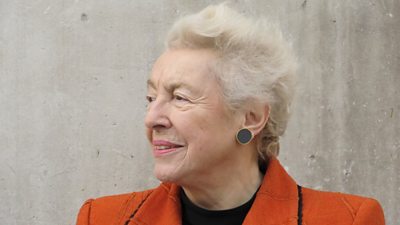
Jim Al-Khalili talks to Dame Stephanie Shirley (pictured above), a Kindertransport child who created a multimillion-pound software company. As a young woman Stephanie worked at the Dollis Hill Research Station building computers from scratch, though she told young admirers that she worked for the Post Office, hoping they would think she sold stamps. In the early 60s she started selling computer programmes to companies who had no idea what they were or what they could do, using code written with pen and pencil by mothers working at home.
Producer: Anna Buckley for the BBC
Ways Of Thinking
In an increasingly digital world, it’s easy to feel overwhelmed. Many of us conclude that we just don't have the right brain for this kind of thing. Author Naomi Alderman discovers her latent ability to contribute to our digital future.
In the early days of computers, only ultra-logical reductionist thinkers could participate. Amateurs were easily frustrated by computers that seemed to lack common sense. Forty years on, it’s a very different story. You don't have to think in 1s and 0s to be a digital creative. Naomi already writes storylines for computer games but she has left the coding to others. Now she finds out if she could do it. She meets the coding experts who think that we’ve all got something to offer to the digital world. By the end of the programme, she might be ready to design her own app.
Producer: Alex Mansfield for the BBC
Codes That Changed The World
The history of computing is obsessed with the hardware and how much smaller and faster devices have become. But if you really want to appreciate the achievements of modern technology, you have to understand how we've talked to the machines and got them to do our bidding.
Aleks Krotoski profiles the programming languages that have given us the modern world. And as Aleks discovers, it’s a history with a surprisingly large number of women whose stories and contributions have largely been forgotten.
Producer: Peter McManus for the BBC
Computing Britain
Britain has always been at the forefront of developments in computers. This series focuses on the places where people came together to crack problems - and come up with results that changed the world. These are tales of collaboration and competition. Stories include: the building of the Colossus at Bletchley Park during the Second World War; the post-war programmable computers (the Baby and EDSAC) at Manchester and Cambridge Universities; the rise and fall of Silicon Glen in the Central Belt of Scotland; the first university course to teach computer games writing at the University of Abertay in Dundee; and the attraction of app companies to silicon roundabout in East London.
Producer: Alex Mansfield for the BBC
The Future Of Radio - Series 2
In Jerome Vincent and Stephen Dinsdale’s comedy series, backroom boffins Luke Mourne and Trish Baldock (ably assisted by Shelly on work experience) are, as ever, at the digital cutting edge. They develop an Absence App that actually stops communication so we can all have a bit of peace and quiet and get on with our lives; explore the implications of the Internet Of Things (50 billion machines will be talking to each other by 2025 without the need for human middlemen - this is true); and create a sophisticated Continuity Software Program - which puts the Radio 4 announcers out of work…
Producer: David Blount for Pier Productions
Future Speak
Look closely and you’ll see that computer code is written all over our offices, our homes and now our classrooms. The Lords’ Digital Skills report says the UK’s digital potential is at a make or break point – there’s a skills gap to be plugged and a generation gap to be bridged. As technologist Tom Armitage argues, there’s also a leap of the imagination to be made, to conceive of the benefits of true digital literacy. With perspectives from education, industry, academia, the media and the arts, he reflects on a world where, increasingly, code is what you make of it.
Producer: Kirsty McQuire for Sparklab Productions
The Letters Of Ada Lovelace
The intense intellectual and emotional world of the computing pioneer Ada Lovelace (1815-1852) is brought to life for the first time through her dramatised correspondence on BBC Radio 4. An all-star cast reads letters to the young Ada from her absent father, Lord Byron; letters from Ada revealing her sharp intellect, vivid imagination, and manic depression; and letters to and from her mother who, concerned that Ada might inherit her father’s feckless and ‘dangerous’ poetic tendencies, tutored her thoroughly in mathematics.
In her correspondence with her great friend and mentor, Charles Babbage, we hear how she spotted the great potential of his new ‘Analytical Engine’, suggesting that it could be used for much more than just adding and subtracting - ‘for music and art perhaps’. Ada Lovelace grasped just how many problems - and not only mathematical ones - could be solved by rigorous, logical analysis. In so doing, she anticipated the birth of computer science.
Producer: Anna Buckley for the BBC
