Omar
Omar is a Midlands boy through and through. He has lived in Brierley Hill near Stourbridge his whole life.
Published: 18 October 2017
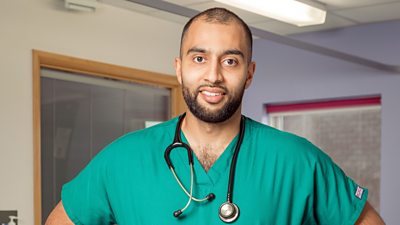
He went to medical school at Warwick University before settling on Wolverhampton for his foundation years. He has recently got married and his wife is a solicitor.
Omar’s main passion in life is fast cars and describes himself as a ‘car fanatic’. He is addicted to changing his car. He likes his cars ‘fast, German and modern’. He has done several track days driving various fast cars including a Lamborghini Gallardo and an Alpha Romeo Quadrifoglio. He wants to try a track day with an Atom in the future.
Omar enjoys going to the cinema and spending time with his wife. He also likes going to the gym and squash when he has time. He hangs out with his friends who describe him as ‘lazy’, but Omar says it’s just that he’s very laid back. He used to go to Thai boxing, but has been too lazy for that lately.
Omar applied for medical school, but didn’t get in. He ended up doing a degree in Pharmacy and still wanted to be a doctor after he had finished his four years of studies. He applied again after his degree and then got in.


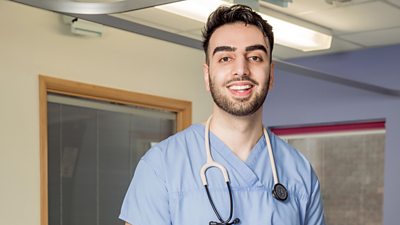
Q&A with Omar
What was it about being a doctor that attracted you to the role?
Ever since I was young, I’ve always been interested in Sciences and when I had the opportunity to apply for medicine and did work experience before hand, and speak to friends, and other people who were doctors, I thought it was something that sounded amazing and could see myself doing. And thankfully I got accepted on the course.
Is it something you’ve always wanted to?
I think it’s something I’ve wanted to do for a very long time. And it’s something I enjoy doing - I couldn’t see myself doing anything else.
What are the most rewarding parts about being a doctor?
The most rewarding parts for me are coming in to contact with patients from all different backgrounds; being able to see them, talk to them, treat them, help them, see unusual cases, explaining to patients what you’re going to do to make them feel better or help ease their symptoms. And it’s quite a broad job - there are quite a lot of good things about it; I can’t put my finger on one particular thing.
And the most frustrating part about being a doctor?
Sometimes it can get a bit manic, it can get a bit hectic. It can delay other patients having to wait long to get good care. And it can appear that we are ignoring patients, or we’re too busy, because there’s so much demand for patients to see doctors.
How has it been having the cameras follow you?
Having the cameras around has been unusual. I don’t think you get used to it. I think it’s a bit strange to have someone follow you and capture every move. I think when I’m around patients and talking to them, the cameras blend into the background. But the in between - when I’m not talking to patients or on the computer, or taking a minute out - they were just there… not in a bad way, just that it was a bit strange
Why did you want to get involved?
I remember watching the first couple of seasons a couple of years ago when I was at Med School. And doing this was an opportunity to get involved in something that was beneficial to the hospital and for us as doctors so everyone else can see what we get up to - it’s a good way to get the message across.
What do you think viewers will take away from having watched the show?
I think viewers will take away that we work hard but that we can relax and chill out. They’ll also see that health care can be manic - in a good way and a bad way.

