Jamaica Inn: interview with Emma Frost
Writer Emma Frost, who adapted the Jamaica Inn for BBC One, reveals what inspired her adaptation.
When I was young, I watched the sexiest, most exciting TV drama that I’d ever seen. Billie Whitelaw was in it, Patrick McGoohan, Jane Seymour, and as for Trevor Eve – well - I had a major crush on him for 10 years afterwards. It was 1983 and that show was called Jamaica Inn.
It gave me such a taste for Daphne du Maurier’s work that I read every book of hers that I could lay my hands on. I watched and loved The Birds, Rebecca, Don't Look Now... I marvelled at her darkness; her ballsy heroines; her uncomfortable analysis of female identity; her rich and visual prose.
So when, almost exactly 30 years later, my agent was asked if I was interested in adapting Jamaica Inn for the first time since, there was no way anyone else was going to do it.
Jamaica Inn is a gothic romance in the vein of Twilight, Wuthering Heights or The Piano, and as such it is a story in which love may equally well destroy our heroine and her identity or physical self, as offer joy or transcendence.
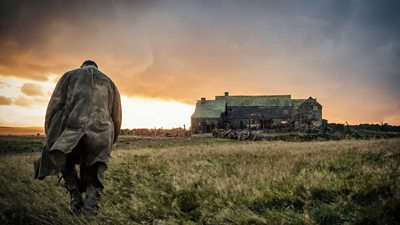
Mary Yellan thinks she knows it all. Her vision of what’s right and wrong is black and white until she enters the dangerously grey moral landscape of the Cornish moors and Jamaica Inn, where nothing is what it first appears and – like a gunslinger in a Western - Mary must navigate this unknown world and forge her own new moral code.
The drama’s themes - desire, survival and morality – form a triangle. Mary desires Jem but can she, and the integrity of her morality, survive him and his dubious character? The people of the moors are destitute and must smuggle to survive in a corporeal sense, but if their lives are on the line, can this really be condemned as wrong? How far would or should we go for what we desire? What is it acceptable to do to stay alive?
For me, Jamaica Inn is the perfect fusion of an internal, emotional, love story, and an external, rollicking action-adventure, and these two come together in one glorious metaphor: just as a ship in rough seas in the dark is drawn to the light it hopes may signal its salvation, so Mary is drawn to Jem through her desire for him – but will the ship find safe passage or be wrecked on the treacherous rocks? And will Mary find transcendence and fulfilment through her love or will Jem’s light turn out to be false and destroy her?
Mary Yellan is a heroine for our times; she is morally courageous, resourceful, independent, and in the end, she’s truly pioneering as she challenges the boundaries of self and psyche, and transgresses gender roles.
She’s a heroine who proves that boys don't have all the fun. It’s been a privilege to be her custodian. And a huge personal pleasure that Daphne’s son, Kits Browning, who’s supported my adaptation all the way, believes his mum would have loved it.
