Interview with Simon Meyers
Simon Meyers is the Producer of I May Destroy You.
Published: 26 May 2020
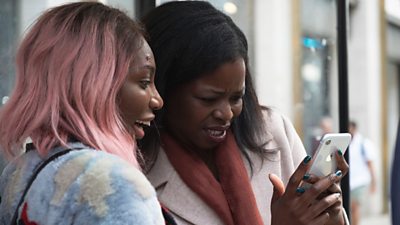
Nothing is presented in a salacious manner, even though some of the material and subject matter is brutally frank. We wanted to be as transparent and optically open as we could with the sensitive material.
Can you introduce yourself and tell me about your role on I May Destroy You?
I’m the producer . That means I oversee with Michaela and the directors, the process from scriptwriting, through filming and all the way to production.
Can you briefly set up what the series is about?
I May Destroy You is about the grey areas in between what’s black and what’s white. The characters all have multiple layers and there aren’t really heroes or villains. Everyone has a flaw and everyone has positive attributes too.
What drew you to this project?
The writing. I thought it was the most original, witty and clever piece of writing that I’ve been offered in recent years, by a long way.
Where is the story set and how does that inform how you tell this story?
The story, whilst it could be universal, is set in east London and that gives the show a sense of place in that it has a recognized London landscape about it, without sending the usual London landmarks. It’s an east London backdrop works very well - sometimes it’s almost an extra character in some of the exterior scenes. It locates us in multicultural, urban space.
Michaela Coel has written the series, but she also starred and executively produced. Talk us through that process of working alongside her and how you work together.
I think it was important that everyone involved in the series, really understood and got on board with the vision that Michaela had for it. I know that sounds similar to any series, but Michaela’s voice is so strong, so particularly authored, that it really was very important for the people at the center of it to work closely with her. It meant daily meetings, before during and after filming, so we could talk about what was coming up. It was a long shoot to do in one chunk. It was a lot of communication and staying close to each other.
What does Michaela Coel bring to the series?
Her unique voice, limitless talent, enthusiasm, energy and such a drive to get it done and to explain how she sees the backdrop of the world.
Can you talk about the research you undertook before starting work?
Michaela as a writer had some knowledge of the subject and issues involved. Mainly though, it was about the characters. Research was done based on her experience of life rather than the kind of show where we forensically go looking at areas. There is no subject in it that hasn’t been considered carefully before we portray it on screen.
Some of the subject matters are quite sensitive and could be quite triggering for some audiences. How do you go about portraying those scenes within the series?
I think we portray those scenes with as much transparency, honesty and openness as we can. Nothing is presented in a salacious manner at all, even though some of the material and subject matter is brutally frank. We just wanted to be as transparent and optically open as we could with the sensitive material.
What was the most challenging aspect of this job?
Making sure that the crew we had were all on the same page. Managing a 95-day shoot without significant breaks was hard on a practical level because people got tired. We wanted to make sure everyone was on the same track.
Can you talk about the process of finding the right cast to inhabit these characters?
A lot of the cast aren’t familiar faces from television and haven’t really worked in TV before, mainly wider experience on stage. We had a brilliant casting team in Julie Harkin and Nathan Toff, and they found some of the most interesting and unpredictable people to inhabit these roles and bring them alive from the page, while keeping them natural and as real as possible.
Talk us through the character of Arabella.
Arabella changes so much, she’s a chameleon. Obviously her story, and what happens to her in the first episode, is the spine of the series, but it’s not 12 episodes about that. So she changes throughout the series from being a bit outrageous, to mischievous and in some senses being the victim, but she is not a put-upon character. The audience is in for a ride with her. She is different in different episodes, there are many faces and many different looks. Arabella is different from episode to episode in what wig she is wearing, what costume she is wearing and where she is in the story. There are so many physical incarnations to Arabella.
Without giving too much away, can you give me an insight into Arabella’s journey across the 12 episodes?
Well, as I think everyone knows, Arabella suffers what she doesn’t know at the time is a sexual assault during episode one. Her journey across the 12 episodes is to come to terms with that and move on.
How would you describe Terry?
I suppose we’re all used to seeing ‘buddy movies’ although generally they are male buddies. Terry is Arabella’s rock and best buddy, support and best friend.
Kwame goes on a journey through the series, as do all the characters. Can you give us an insight into Kwame’s storyline?
I think it would be quite easy from the episodes to judge and misjudge Kwame. He, like all our characters is searching for something and is not always the happiest of characters. By the end of the story, he’s definitely found some peace.
Had you worked with any of the cast before?
I had worked with a couple of the cast who played minor characters.
How much prep time did the cast have together prior to shooting?
In television, the cast generally don’t have an extended rehearsal period like they do for stage. They did have time to bond and to talk about some key scenes, but not an extended rehearsal period.
What was your reaction when you first saw the rushes and the story piece itself together?
Excitement! Just to see it coming together and evolve and how everyone on board adapted to what we were making. I had never seen anything like this or watched anything like this. Obviously this is Michaela’s story that she has written and created but there’s a little bit of everyone’s DNA in it as well.
What have you enjoyed most about working on this project?
Seeing something unusual and unique come together, and a large team such as we have working together with one goal, without ego.
What do you hope audiences will take away from the series?
I hope they’ll take away that even the angels have horns and the devils have wings. It is an entertaining show, and some of the subject matter is quite dark but I wouldn’t describe it as downbeat. I think it’s a show that will make people think.
Why do you think I May Destroy You will resonate with a 2020 audience?
I think everyone, no matter their background, will recognize someone or something from the characters and themes within the series. There are characters we’ll all recognize; we’ve had a friend like that or an aunt or uncle like that and there are issues we all talk about. It's the most relevant show that I can remember working on.