Interview with Paapa Essiedu
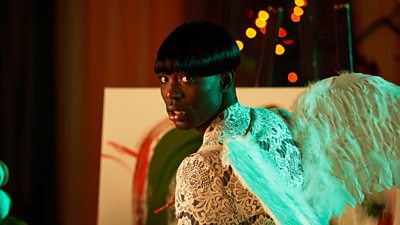
Paapa Essiedu plays Kwame in I May Destroy You.
Published: 22 May 2020
Michaela has a way of confronting the truth in a very direct manner. I hope people watch it and feel seen, and then feel confident to be able to speak out about any experiences they’ve had that have been reflected in the series.
Tell us about the character you play in I May Destroy You.
I play Kwame, who is one of the central three characters around whom the story develops.
Can you briefly set up the series for us?
I May Destroy You starts off with Arabella, Michaela’s character, who is a writer working on her second book and trying to make her way in the world. An event happens when Arabella is on a night out and the whole series is her coming to terms with what happened. The series explores sex and consent in a modern world and a variety of different paradigms and perspectives through Arabella, Kwame and Terry.
Please could you introduce us to your character, Kwame? Where do we find him at the beginning of the series?
Kwame is friends with Arabella and Terry. They’re a very tight-knit threesome and he’s a very sexually confident and active man. He’s a personal trainer and at the beginning of the series he’s a vivacious, fun loving and ‘live for the moment’ type of guy.
What is Kwame’s role and how does the narrative follow his story?
It starts off with Kwame being a supportive friend to Arabella as she comes to terms with the trauma of what she’s been through, but then Kwame has quite a confusing but traumatic experience whilst on a Grindr date, so over the course of the series we see him come to terms with things through various different means. He attempts to use various different coping mechanisms to process what’s happened. We see quite a big shift in his character.
Without giving too much away, can you give us an insight into how the narrative evolves over the 12 episodes for Kwame?
Kwame starts off not really caring too much about anything, as he’s really living for himself, he’s ‘living his best life’. He then faces a traumatic experience and he has different ways of coping with that, which include addiction and exploring his sexuality.
Can you describe the relationship between Kwame, Arabella and Terry and how it develops over the course of the story?
It’s quite a co-dependent relationship, as they all need each other and all three of them go through quite difficult circumstances, quite traumatic incidents, and they rely on each other to get themselves through that. It’s underpinned by a bedrock of love and trust and shared experience. At the center of their relationship is a lot of joy and a lot of fun. They need each other.
Did you do any research on the subject matters explored throughout the series before you started filming?
I didn’t do that much research in the sense of reading books, but I have friends who've had experiences similar to those depicted in the series, so I kind of drew on that and looked at my own experiences in that sphere.
At the start of the series we see Kwame as a fun-loving guy, how does his personality change and how do the series of events that he encounters change him?
Kwame changes a lot, but he tries to maintain the façade of serving himself. He tries to give the impression that he loves himself and that everything he does is for himself, but the subtext speaks loudly for him. He struggles a lot and develops unhealthy habits as coping mechanisms and to deal with the things he goes through.
How did you find a balance between the comedy aspects and the serious subject matters explored?
Michaela is such an amazing writer and she doesn’t write to be funny or series, she writes reality. She writes real characters perfectly. That’s what life is like: one minute something is really funny and the next second it’s not, and she observes that brilliantly. It’s not difficult to find that balance when the writing is so brilliant.
What was the most challenging aspect of this job?
It’s 12 episodes long. The story burns over the course of a long time, and the challenge is to see how it comes together in the long- form, with the overall narrative arc, when you’re focusing on a particular scene or moment. It requires a lot of concentration and a lot of awareness of the story at large, as opposed to the individual moment. It was all made very easy though, as we had such a supportive and talented team both on and off screen.
Had you worked with any of the cast before?
Yes, I was at drama school with Michaela so we trained together for three years and we have been friends since then.
What do you want audiences to take away from this story?
Michaela has such a unique and authentic voice and a way of confronting the truth in a very direct manner, so firstly I hope people watch it and feel seen; and then secondly, feel confident to be able to speak out about any experiences that they’ve had that have been reflected in the series. I hope it empowers them to talk and make steps towards confronting and ultimately resolving those events and issues.