Interview with Colin Barr (Executive Producer)
Gripping, feature-length drama that tells the true story of the family of Damilola Taylor, going beyond the headlines to reveal a surprising and affecting portrait of family, fatherhood, loss and love.
Published: 26 October 2016
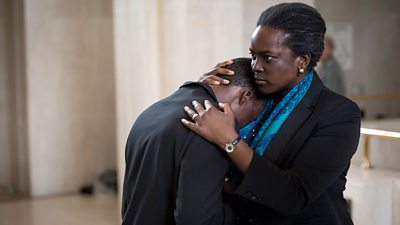
It felt like the kind of story that was important to tell and the kind of story that could have a big audience whether or not they knew much about the Damilola story.
Why did you decide to make the drama Damilola, Our Loved Boy?
About two and a half years ago, someone mentioned to me that it had been 15 years since Damilola had been killed. After I got over the shock of how long it had been, I started to think back to the case and that photograph of Damilola that everyone uses, the school photograph of him smiling and I had such a vivid memory of that photograph that I was sure that it’s one of those things a lot of people would have remembered. It made me start thinking of the family and how I wasn’t sure what had happened and I hadn’t really ever known what had happened in the aftermath of his death. I thought it would be worth speaking to Richard, Damilola’s dad to see what had happened in those 15 years.
I went to see him in South London and we sat down, spending a few hours talking about the family’s story from leaving Lagos to the end of the second trial when they finally got some justice for Damilola. I was so struck that even though I’d read lots about the case at the time, and although there were headlines everywhere and watched the documentary; there was a whole story that hadn’t been told. It was a universal story that touched on themes of grief, love, hope and how families can heal themselves in the most difficult circumstances. It felt like the kind of story that was important to tell and the kind of story that could have a big audience whether or not they knew much about the Damilola story.
What do you think Levi has brought to the story?
Everything. From the first time we spoke about it, he had such a deep understanding of West African men, he was so drawn to writing a story from the view of a West African father. He brings a huge understanding about the dynamics of family and the interplays between family and siblings. You can feel that in the language used but more than that, regardless of the fact it’s a West African family, he just brought so much heart and soul to the piece.
He understood straightaway that this is a family story and if we concentrated too much on the crime/trial and didn’t concentrate on the family then it could easily capsize into something else. His centre of gravity on it was absolutely spot-on. He just understood the family story and he understood the family inside out and he did a huge amount of research. In some respects, it was only after we had the second/third draft of the script that when we went back to the research that we had done, just how faithful he had been to the research yet still craft the drama that had all of the coherence that you’d want it to have.
Why do you think it’s important that we tell the story of the Taylor family?
For any family watching it, there will be things they recognise. You don’t have to live through something as shocking as the death of a child in those circumstances to understand pain and anguish and the tensions that can be created in families. Also what it takes to overcome those tensions and to rebuild after something has been shattered.
I think you could tell this story at any time and it would have something to say, but it’s so timely because although the film isn’t trying to tackle an issue head on, there are issues contained in it that are as present today as they were then. There is timelessness in terms of the themes but timeliness in terms of the subject.
How did you go about your research?
We did the research for Levi – the way it worked was we spent a lot of time with Richard and other friends/family and also Tunde, Damilola’s older brother. We did hours and hours of research interviews with them and also worked with the Damilola Taylor Trust and spoke to people in the community, working with the police, the council. Any individual we could track down that had a part in the story, we did research interviews with them all and compiled a great big factual dossier. We sat down with Levi and worked a way through it, trying to make it into something that made dramatic sense. You research like you do for a documentary but you use all the material to make a script. The research is as meticulous as it is on any documentary.