Interview with Levi David Addai (Writer)
Gripping, feature-length drama that tells the true story of the family of Damilola Taylor, going beyond the headlines to reveal a surprising and affecting portrait of family, fatherhood, loss and love.
Published: 26 October 2016
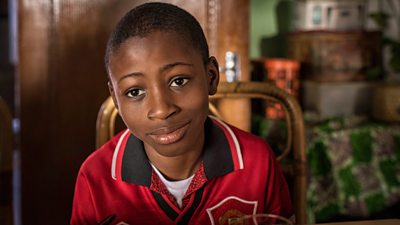
I hope by the end of the film they don’t see the family as just victims of crime but are inspired and encouraged by a family who overcame so much.
Why did you write Damilola, Our Loved Boy?
Colin Barr, who I worked with on My Murder, contacted me about an idea he was discussing with the BBC regarding Damilola Taylor. I was cautious at first about depicting another murdered young black boy on mainstream television. However as we got talking I started to ask questions that went further than the tabloids and news reports. I was interested to know why he came to the UK? Why the family stayed after his death? Who was the real Richard Taylor? Why did he decide to help the youth of South London? Where did that strength come from? Then I got fascinated about what happened behind closed doors.
The image of a united and dignified Richard and Gloria Taylor, standing on the Old Bailey steps stuck with me since I first saw it. Now I wondered what they went through when they went home. Another question that came to me was when I realized that Damilola wasn’t an only child. There were two other older children, his sister Gbemi and his brother Tunde. With so much media attention on Richard I then wondered what it was like for them, particularly Richard’s remaining son Tunde.
Why do you think it is important that we re-visit and tell the story of the Taylor family?
I think it’s right that the nation gets to see the real family behind the story, to help it move on from just ‘a piece of tragic news’. I remember there was a notion that this was ‘a poor immigrant family, who came over to England and then lost their child’. In fact they were a comfortable middle-class family. Richard worked for the Nigerian government. He and Gloria had both lived and studied in the UK in the 1970s and had their first two children in the UK, before Richard moved back to Nigeria for National service. Then in 2000 the family decided to return to the UK to get medical care for one of their children, the care they deserved because they are a British citizen. A few months later Damilola was killed.
Do you remember the news back in 2000 when is happened? If so, how did it affect you?
I was in college at the time and living in south-east London. Gangs were always an issue, but there weren’t as many frequent fatalities at that point. Plus, when it came to violent street crime it was more likely to involve people 18+. So when the news broke about Damilola being stabbed there was utmost revulsion and confusion. How can a ten-year-old be stabbed to death? It didn’t compute. It made no sense. Then, as the details came out, it just made everyone’s heart very heavy.
What did your research consist of?
I had a brilliant research team at Minnow Films, Lizzie Kempton and Sarah Harris did a fantastic job of talking with Richard, Tunde, and other family members, friends of family, police, church members and community leaders of the time. They would compile the transcripts and send them to me. I would then respond with further questions like “what was Tunde’s first job?”, “what music does Richard like to listen to?” and they would go back and ask. I am as interested in the minutiae as I am the big details. It all helps me know more about the person and I can use this to depict a more detailed character.
What was it like meeting Richard?
I was nervous at first. This is someone I had only seen on screens and print. He was extremely gracious, warm and humble. He even gave me what he has given many youth he has worked with – encouragement! He was aware of all my previous work and took a moment to praise and encourage me to keep on writing. To keep at it and to keep going. That meant a lot to me.
What were you biggest challenges whilst writing?
There are lots of typical drafting challenges that you face both in development and when the film is in preproduction. Together with Colin Barr and the fantastic Sue Horth we nurtured the story with sensitivity and respect. I was also fuelled by receiving the full backing of Charlotte Moore, even before it was greenlit. And because of this faith shown I wanted to respond by giving the film my all.
However, the biggest challenge was dealing with my own emotions. Every redraft was painful as with each one I had to mourn a little. The subject matter isn’t a work of fiction. It’s about real people and how they were robbed of a real person. You’ve got to have a heart of stone not to feel that every time you go through the story.
What do you want the audience to take away from the drama?
I hope the audience is impacted by the Taylors’ journey, their strength, their love and ultimately their unity. I hope by the end of the film they don’t see the family as just victims of crime but are inspired and encouraged by a family who overcame so much.