The Crimson Field: Marianne Oldham
Interview with Marianne Oldham, who plays VAD Rosalie Berwick.
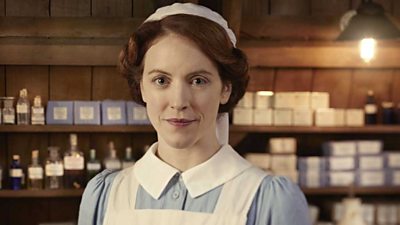
How did you initially become involved with The Crimson Field?
The casting came through from my agent, and then I met David Evans (director) and Annie Tricklebank (producer) and I felt very at ease with Rosalie very quickly. I had three auditions and I felt much more relaxed than I’d ever been at an audition because I didn’t have to try too hard with Rosalie.
Did you feel like you understood the character of Rosalie?
Yes, she was instantly very recognisable. I felt quite sorry for her in a way – I definitely recognised her way of shielding herself from the world by being uber polite and trying to not be noticed in any way. She doesn’t want to put a foot wrong.
What is your character Rosalie like?
Sarah Phelps the writer wrote these wonderfully detailed biographies – a past history of our characters, and we talked about Rosalie together as well. She’s from this very privileged and protected upbringing, and she hasn’t experienced very much of the world at all. And what she has experienced of the world has been a bit of a nasty shock, so she’s hidden herself away again and she’s ended up building layer upon layer of barriers to protect herself from being hurt or ridiculed.
How does she get on with the other VADs?
Well, with great difficulty to begin with! When they meet it’s kind of wonderful, because you’ve got these three very different girls, and meeting each other and knowing that they’re going to have to work in extremely close proximity for a very long time.
Really it takes them a long time to get to know each other because none of them really back down and pretend to be something that they’re not. They all remain very resolutely to be their own person and approaching it their own way.
Eventually after collision and collision, and argument and argument, they all find a way of coming together – out of necessity really, but also finding that they bring out other sides of each other. And I think it’s really wonderful really to see these three women learning from each other even though they thought they’d never get on with people so different from themselves.
What is it like for Rosalie when she first arrives at the hospital?
Completely shocking. She’s in a state of shock for most of the first two episodes to be honest! I think for some reason she thought that the First World War was going to be about folding linen and making beds! But she’s completely buffeted by the very intense and real and very shocking environment and she’s thrown from corner to corner – and forced out of her shell eventually. Which is an amazing thing for Rosalie because you see this woman who was absolutely refusing to engage with life just in case it hurts her, being forced to, and then realising it’s not such a bad thing after all - to join in, and to laugh and to cry and that there’s an amazing world out there.
Did you do any research into the First World War?
Yes, I mean I read a few books but it was such a massive subject matter to approach. Really the photographs and the personal stories were the ones that were most useful, because the history of it – I wasn’t sure how much Rosalie would be aware – obviously at the beginning of the War she wouldn’t have known about the end of the War. I didn’t want to muddy the water too much, and also politically, I was trying to look very much at the propaganda side of it and see what she would have seen back in England.
The kind of posters she would have seen, why she would have felt compelled to write her name on that list of volunteers. It must have been an extremely brave move or maybe one out of desperation for Rosalie! Then, I was somewhere in the middle of London in the dusty old secondhand book shop, and I found this book called Roses Of No Man’s Land. It was just amazingly apt, all of these personal stories about loads of VADs who were out there, and nurses and orderlies – everyone that was behind the frontline, and was close enough to the frontline to deal with it. So it was really important.
Was there one story or something you read that particularly stood out for you?
Yes, what was incredible was the amount of humour in it. I just remember this line saying ‘you had to laugh otherwise you would have lost’ and it really struck me. It was so intense and so relentless and I don’t think we can even imagine the extent of what people went through then, and how close they were to the reality of life and death, and all its graphic-ness. We’re so rarely presented with that these days, and to read that they had to laugh was very touching and human.
Who are Rosalie’s allies?
Well the two girls, the two other VADs. It’s wonderful that they come together eventually. But initially Joan! Because she’s the first one that gives Rosalie some attention and interest, and says you can be anything you want to be - the world's changing – and I don’t think Rosalie’s ever heard that before! She’s so struck by it – someone saying ‘you are worth something’. That sadly goes a little bit wrong, that friendship - but by the end I think the other two VADs are very important, or become very important.
Which scene particularly stood out for you during filming?
When they brought the convoys in in the middle of the night for the night shoot, you really didn’t have to do any acting. The make-up team were incredible, and these lorries of men. The crew had been setting up and setting up, all standing there freezing in the darkness, and there’s masses of us waiting – we thought this is what it would have been like, just waiting and waiting for this convoy to arrive.
The horses I think went bananas and started running all around the fields so there was someone chasing after the horses. The waiting went on and on and on and eventually everything came together and the trucks rolled in one after the other, and the dust was flying everywhere, and you saw these men with their blank faces looking at us, and just mud and blood.
Alice and I were just standing together and I remember afterwards we were both just... you didn’t have to act, it immediately brought you back to what it would have been like. Just awful the amount of people coming into these hospitals.
What do you hope audiences will get from the drama?
Some kind of sense of what these people went through. As I said the extent of which is something I don’t think we can even imagine these days. The people that were helping in these field hospitals – they were living in the most awful conditions in these tents, in the freezing cold, come wind, rain – and would go on and on helping, and they hardly slept.
You know these stories that I was reading, they hardly had a break, and the relentlessness of the men coming in. I think they were the most incredible people to be honest, and their stories of humour and how they got through it and the relationships being found in this most extreme environment, is something extraordinary and so touching – and so exciting that humans can behave like this to one another, and get through such adversity. I think it’s incredible and amazing that Sarah Phelps has brought it to life so that we can see that, and be really encouraged by it.
