Introduction by David Olusoga, Writer and Presenter
My episodes of Civilisations explore the themes of contact, trade, interaction, empire and race.
Published: 7 February 2018
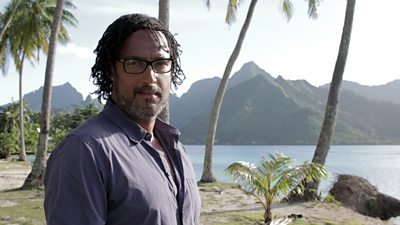
It was through watching documentaries on the BBC in the late 1980s that I first became interested in art and history.
I have always been most drawn to those moments from the past when people from distant lands and different societies made contact with one another. Often those moments of contact were violent and destructive, but not always. Much of human history has been marked by trade and interaction - the exchange of goods, raw materials, ideas and people. Nowhere is the spirit and importance of those encounters more vividly expressed that in art - in everything from the Namban screens of Tokugawa Japan, the ‘Bronzes’ of 16th Century Benin to the sumptuous still life paintings of the Dutch Golden Age. Even in the most destructive encounter of the era that Europeans call the Age of Exploration - that between the Spanish and the Aztec Empire of Mexico - there was some degree of artistic appreciation. When the great German artist Albrecht Dürer viewed a collection of Aztec artefacts in 1520 he recognised within them what he called ‘the subtle Ingenia of men in foreign lands.’
In my second film I explore how in the 19th Century notions of European supremacy encouraged many to dismiss the civilisational achievements of other societies. Yet the materialism and destructiveness of the age of progress, the rise of the European empires and the Industrial revolution, led many artists to look for meaning in the past, in the natural world and in the cultures of non-European peoples.
It was through watching documentaries on the BBC in the late 1980s that I first became interested in art and history. My first teenage holiday was spent touring the great art galleries of Europe after having been inspired by what I had seen on television. Fifty years ago in Civilisation, Kenneth Clark created a series that changed the lives of many of those who watched it. Although very much of its time and focused on western art, that series showed that television can explore big ideas and broach big questions. It is in that spirit that I have thrown myself into the making of these two films.
David Olusoga biography
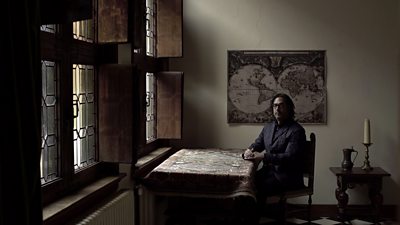
David Olusoga is a British-Nigerian historian, broadcaster and filmmaker. Born in Lagos, Nigeria, David studied history and journalism before joining the BBC. He has won awards as both a presenter and documentary maker. His most recent series include The World’s War: Forgotten Soldiers Of Empire (BBC Two), A House Through Time (BBC Two), Black & British A Forgotten History (BBC Two) and the BAFTA winning Britain’s Forgotten Slave Owners (BBC Two).
David is also the author of The World’s War (Head of Zeus, 2014), the co-author of The Kaiser’s Holocaust: Germany’s Forgotten Genocide and the Colonial Roots of Nazism (Faber & Faber 2010), and author of Black & British: A Forgotten History, which was awarded both the Longman-History Today Trustees Award and the PEN Hessell-Tiltman Prize. David is a regular writer for The Guardian and The Observer and has written for a range of other magazines and publications.