Introduction by Mary Beard, Writer and Presenter
The two episodes of Civilisations I present are based on the conviction that what we see is as important to our understanding of civilisation as what we read or hear.
Published: 7 February 2018
These programmes look at some of those on the losing, as well as the winning, sides in the historic conflicts over images, and about what should and should not be represented, or how.
They celebrate a dazzling array of human creativity over thousands of years and across thousands of miles, from ancient Greece to ancient China, from sculpted human heads in prehistoric Mexico to a twenty-first century mosque on the outskirts of Istanbul. But they also prod at some of our certainties about how art works and how it should be explained. For it is not only about the men and women who - with their paints and pencils, their clays and chisels - created the images that fill our world, from cheap trinkets to ‘priceless masterpieces’. It is even more about the generations of humankind who have used, interpreted, argued over, and given meaning to those images. One of the most influential art historians of the twentieth century, E. H. Gombrich, once wrote, "There really is no such thing as art. There are only artists." The viewers of art are put back into the frame. Mine is not a ‘Great Man’ view of art history, with all its usual heroes and geniuses.
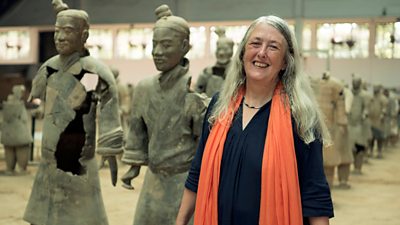
In these two episodes, the team at Nutopia and I wanted to concentrate on two of the most intriguing and contested themes in human artistic culture. My first episode highlights the art of the body, focusing on some very early depictions of men and women around the world, asking what they were for and how they were seen - whether the colossal images of a Pharaoh from ancient Egypt or the terracotta warriors buried with the first Emperor of China. My second episode turns to images of god and gods. It takes a wider time range, reflecting on how all religions, ancient and modern, have faced irreconcilable problems in trying to picture the divine. It is not just some particular religions, such as Judaism or Islam, that have worried about such visual images. All religions throughout history have been concerned about - and have sometimes fought over - what it means to represent god, and they have found elegant, intriguing and awkward ways to confront that dilemma. The violent destruction of images is one end of an artistic spectrum that has ‘idolatry’ at the other.
I am even more concerned than Clark with the discontents and debates around the idea of civilisation, and with how that rather fragile concept is justified and defended. One of its most powerful weapons has always been ‘barbarity’: ‘we’ know that ‘we’ are civilised by contrasting ourselves with those we deem to be un-civilised, with those who do not - or cannot be trusted to - share our values.
Wherever possible I try to see things from the other side of the dividing line, and to read civilisation ‘against the grain’. These programmes look at some of those on the losing, as well as the winning, sides in the historic conflicts over images, and about what should and should not be represented, or how. Those who destroy statues and paintings - whether in the name of religion or not - are regularly seen in the West as some of history’s worst barbarian thugs (and some of them no doubt were), and we lament the works of art that, thanks to these ‘iconoclasts’, we have lost. But, as we shall see, they have their own story to tell too, even sometimes their own artfulness.
Mary Beard biography
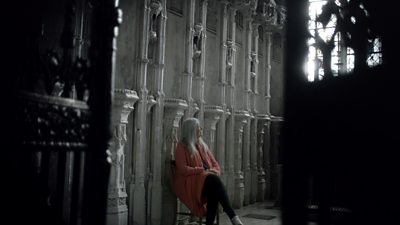
Mary Beard is Professor of Classics at the University of Cambridge, and a Fellow of Newnham College, where she has researched and taught since 1984; she is also Classics editor of the Times Literary Supplement.
She has published widely on many things ancient, from books on The Parthenon, The Colosseum and Pompeii (which won the Wolfson History Prize) to a study of Laughter in Ancient Rome, and (with John Henderson) a general introduction to Classical Art: From Greece to Rome. Her most recent books are SPQR: A History of Ancient Rome (Profile, 2015) and Women & Power (Profile, 2017). Her Civilisations (based on her two episodes of the series) will appear in March 2018 (Profile).
She blogs and tweets (@wmarybeard) and among her radio and television credits are three series of A Point Of View (Radio 4), a documentary about grey hair (Radio 4), Pompeii: Life and Death In A Roman Town (BBC Two), Meet The Romans (three parts, BBC Two), Caligula (BBC Two), Ultimate Rome (four parts, BBC Two). She has a forthcoming programme on Julius Caesar, and why he still matters, for BBC One.
Mary Beard is currently working on a book about images of Roman Emperors in Western art of the Renaissance and later.