Heidi Thomas, Creator, Writer and Executive Producer
Interview with Heidi Thomas, Creator, Writer and Executive Producer on Call The Midwife
Published: 15 January 2018
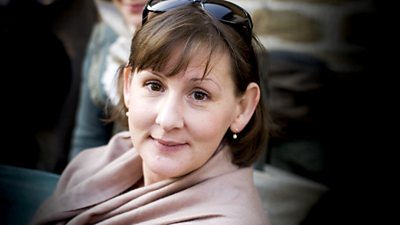
I always say ours is not a series about women being constantly endangered by childbirth. The drama often comes from the setting in which they find themselves in emotionally or socially, and one thing I was very curious to look into was the phobia of childbirth
What can we expect from Call the Midwife in 1963?
The friendships, struggles and triumphs of women remain at the heart of Call The Midwife as we swing in to 1963. Series seven sees our beloved Nonnatus House team stretched to the limit as they face a series of medical, social and emotional challenges.
One of the things people seem to really love about Call The Midwife is that it's centred on a family in Nonnatus House, and I’m including the Turners who don't live there, but we've watched their family grow; I think viewers are looking forward to seeing new baby Teddy, little Angela is growing up and people love that.
Nonnatus House itself, with the nuns, with Fred and Violet and their adopted relative Reggie who has Down’s syndrome, people really look forward to engaging with those characters, and all of those characters are drawn closer together in the course of this series by many different events. Those relationships deepen and widen across the body of the series and added to that mix we have our usual strong magical ‘story of the week’ arcs and storytelling.
We’ve referred to the Space Race in many series of Call The Midwife, and mentioned Yuri Gagarin in series five, and we suddenly realised that the first woman, Valentina Tereshkova, went into space in the summer of 1963! Obviously, that's going to be of huge interest to the Nonnatus community as they’re nurses, they’re scientists, independent strong professional women. There was something amazing about the idea that a woman had gone into space so soon after the first man had done so. I think probably only the Soviet Union would have made such a bold gesture at that time, so everybody has something to say and they sit around the television, which is now restored to Nonnatus House, and I think it inspires different characters in different ways.
We see a lot of changes in 1963, particularly in housing. There's a lot more modern council housing which was fantastic for the people living there at that time, but it also starts to create social isolation and the breakdown of family structures. I think if there's been an emergent theme in series seven it's been about family structure: the phrase seems to come up time and again both in my own notes and in dialogue.
The ties that bind us, what draws us to other people, how do those relationships function within the family and within the wider community. There was a lot of change in the way people were living in the early 1960s, people were moving out of the East End, instead of living next door to your Mum or across the street from your aunt, you perhaps were not physically related to your neighbours, and also there was a sense of a socially upward, more mobile culture that meant people were migrating into London, sometimes from as far away as India or China.
I think on the midwifery front the biggest change is fathers really are starting to be allowed into the room, and that can create tension between couples. We have a wife who wants a husband to be at the birth and he's not keen so you start to uncover these little textures and fractures within human relationships where changes are happening and not everybody is completely happy with them.
The plight of teenagers and young adults is raised in series seven - why have you broached this?
What's been lovely about Call The Midwife as we've gone forward is looking at teenagers. They didn't really exist until the mid 1950s and one could say they were almost an American invention, certainly if you were working class in Britain in the 1950s and early 60s. You could leave school at 15 and so you would go from being little more than a child to someone who was earning a wage and dressing in an adult way. A lot of people married at 18, so being a teenager was quite a short-lived phase. By the early 60s it had been identified as a phase of life that you should really be able to enjoy.
Discos were starting, you've got pop music exploding and there was an expectation of freedom that society didn't always deliver, particularly to young women who had a sexual side to their nature. They were being allowed to think that sexual feelings weren't completely prohibited, but there was very little to protect them from unwanted pregnancy or disease or emotional exploitation because they weren't educated in the things that being an adult woman involves.
I loved the idea that we could pick up on something that was starting to happen which was basically sex education and not just about sex, but education about the way in which a woman's body works. It's something we've touched upon many times over the years that women of the older generation at that time could not name their body parts; they literally didn't understand what made them tick. I love the idea that our younger midwives who are themselves only in their 20s actually want to bring about changes. Interestingly Valerie's very much the vanguard of this; she's been in the army, she's from the East End, and she’s incredibly forthright. Lucille is much more reticent. She's not a prude as such, but there are certain things that she thinks young women don't need to know and I have to say the scenes between them are very, very funny.
How do you tackle the arrival of Nonnatus House’s first black midwife?
Lucille is our first black West Indian midwife and she represents a whole generation of really fantastic young women, I think they were almost exclusively women, who came at the behest of the British Government from their homes in the Commonwealth to train as nurses in Britain. They were hugely needed, passionate about the work they were doing, but sadly they didn't always receive the welcome here that they should have had a right to expect. Lucille is funny, elegant, bright, unassuming and yet very forthright.
While Lucille receives a warm welcome from the Nonnatus community, we do deal with the harsher realities of being a young, black woman in white British society at that time. Back then, the young nurses who came over were heroic - they were leaving their home countries with the almost certain knowledge that they wouldn't go back to live there for many years; a lot of them were single so they didn't have spouses or family around them, they had to be very self-reliant - yet unfortunately, as I mentioned, they didn't always get the welcome they deserved.
There was so much ignorance in Britain at that time and you were seeing people from a country you didn't understand, who were young professionals who had a position of authority and apparent privilege and that didn't always sit very well with people who perceived themselves to be struggling. At that time I think people felt entitled to be very open about their views. It was quite a sad and delicate episode to approach because these young nurses could face persistent racial abuse. There was a definite drip feed of racial prejudice, sometimes it was silent sometimes it was vocal.
We see early on that Lucille is a young woman of faith, but when we did some more research into the way in which the West Indian community was bedding down and becoming local and indigenous in London, we found out some really interesting details about their church-going experience. They were often not as welcome as they should have been in conventional churches and so started to worship in each other's homes, and they built really strong, religious communities. There is something homespun and vibrant and in turn wonderful about seeing how they celebrated the Gospel together and how they developed relationships within their own community that might lead to love or marriage, but was always about offering each other support.
How is Trixie coping with her alcoholism?
I've loved writing the character of Trixie, she’s been an important member of the Nonnatus family from the word go. Her journey has become complicated by her alcoholism, and it's affected her personal relationships. It’s never affected her spirit, but she did have a very unhappy childhood that I think she carries with her. A lot of Trixie's glamour, her beauty, her fashion sense, it's all to do with covering up the very fragile woman she is inside. We've had hugely positive feedback from the AA community in particular about her sobriety, and we liaise with the AA about her journey.
In series seven we decided it was time to challenge Trixie, as we felt it wouldn't be realistic if she never stumbled on that path, and Helen once again gives a tour de force performance in the role. We discover something a little more about Trixie, about her hunger for love and how even though she's met this gorgeous, funny, respectable dentist, he comes with baggage. The path of true love doesn't run as smoothly as we would like and that's very painful for Trixie.
What is tokophobia and why have you tackled this mental illness?
In Call The Midwife we often feature very straightforward labours and births; I always say ours is not a series about women being constantly endangered by the natural process. The drama often comes from the setting in which they find themselves in emotionally or socially, but one thing I was very curious to look into was the phobia of childbirth.
We've always had a very strong remit to look at mental health and I see this story as being an extension of that. There are a lot of emotional issues around childbirth, postnatal depression is well understood these days, and we have featured postnatal psychosis in the past. I think a lot of people have emotional issues as childbirth approaches, it's fear of the unknown or in this case fear of the known.
The mother in our story’s first delivery was very complicated, she had forceps, she was traumatised and the idea of going through that a second time is crippling her. Physically and emotionally she cannot face up to what lies ahead. Phobia of childbirth is so much more than just fear of childbirth and nowadays it's known as tokophobia. In the early 1960s, it was not well understood, but she does have a sympathetic GP in Dr Turner who is always very alert to mental distress or signs of mental illness, and obviously some very supportive midwives.
What fashion styles have you loved from the new series?
Jennifer: I love Valerie's look because it's incredibly different to what I have in my day-to-day life, and that's always helpful when you’re getting into character. It's 1963 now and Valerie’s hairstyle - the beehive - was a huge trend of the early 60s. It tells me that although she might not say she does, she definitely follows trends and she's up to date on that kind of thing.
Her fashion sense is pretty early 60s. She's a very modern woman, she's forward thinking and I think fairly liberal in her attitudes. She often wears trousers, which are still quite unusual for that time, and I loved wearing them - they’re more comfortable than the dresses, and they illustrate her practical nature. She wears lots of really nice bold colours, she's not a shrinking violet when it comes to fashion, she's pretty daring and she's got great clothes.
Helen: This series has been a bit of a challenge for Trixie’s fashion because I was pregnant and so I was growing in size quite substantially. Ralph (Wheeler-Holes), our Costume Designer, really had his work cut out. We were going for very strong 60s silhouettes, but obviously my body was changing. We went for a lot of capes, lots of gloves, lots of bright colours, lots of geometric prints to try and hide the pregnancy, but to keep it looking like a period costume as well.
It was hard because pregnancy clothes in the 60s were quite ‘mumsy’, so the challenge was to make her not look pregnant and keep her fashionable. I think Trixie is looking towards the Bardot style; she’s not 20 anymore and doesn’t want to dress like a teenager. She’s dressing like a woman but she wants to be sexy, she wants to be looked at, she wants to be glamorous, but still functional because of her job.