Call The Midwife cast and creatives reflect on 15 years of the heartwarming series - "Being in the show has changed my life"
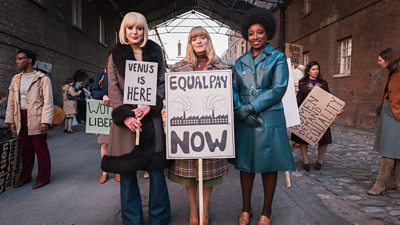
The new series kicks off in 1971 with several of the ladies embracing Women’s Lib and burning their bras outside Nonnatus House
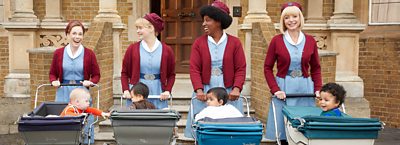
Call The Midwife is back for series 15, kicking off in 1971 with several of the ladies embracing Women’s Lib and burning their bras outside Nonnatus House.
Commissioned by Lindsay Salt, Director of BBC Drama, Call the Midwife is made by All3Media’s Neal Street for the BBC in co-production with PBS. The series is created, written and executive produced by Heidi Thomas, executive produced by Pippa Harris, for Neal Street, and Ann Tricklebank who also serves as producer. Gaynor Holmes is the executive producer for the BBC.
JN
Meet the cast
Jenny Agutter (Sister Julienne)
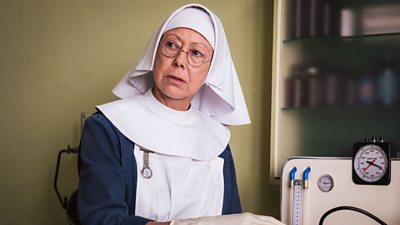
The beginning of the series deals with a lot of social changes…is there still a place for Nonnatus House in Poplar?
That’s the big question all the way through this series. It all looks as if they’ll have to fall in line with the NHS and what the council want of them. One of their requests is that they not wear habits but uniforms. Well, that's fine in itself but it's actually a bigger question which is that Sister Julienne sees the nuns as being missionaries in the East End, serving a community. And she, as a nun, is very much aware of the fact that the first service they have is to God, a higher order than the council. The habit is very much to do with showing that they are a part of serving the community. So it's not just a matter of identification, it's a matter of knowing what one's role is and what they're meant to be doing and feeling that one's no longer wanted. So it's a conundrum because if Nonnatus House goes, then a lot of the services that are a part of it go too. But I think that she also sees that this is something coming anyway.
Is she fighting this battle alone?
She engages Trixie to be her spokesperson because she recognises that there's one person at the council who really does not like the idea of nuns at all and finds it very difficult to talk to them. So Trixie is her ally, and she's very pleased that she has come back from the States and is able to take on that role.
It’s also a time of Women’s Lib. What does Sister Julienne make of that?
Sister Julienne has a quick look through Germaine Greer’s The Female Eunuch. Have I ever read it? A long time ago! I don't have a lot of memories about it. But I do remember meeting Germaine Greer around about that time and being very impressed.
How does it feel to be an original member of the Call the Midwife cast?
I can't believe that we're on series 15 because in many ways it feels like no time at all. It's 15 years of my life and how many changes there have been in my life in that time. Then looking at the series – all the changes there have been in those 15 years as well. Social, economic, artistic, scientific and medical - all of those things change in the 15 years that we see on screen, which for me has always been the exciting thing about doing it. It’s interesting because the series is always that 50 years behind us and one's looking at it from a distance, and at the same time, you're comparing it with the world that you're in now, which is another world completely.
What do you think Call the Midwife teaches us?
The realisation that we do change. Sometimes, because it's happening in front of our eyes, we forget where we've come from, and we have no idea where we're going to. And I think that these stories have helped people understand that in themselves. It's a terrifying time now, because it just seems like the world is right on the edge of all sorts of difficult choices and changes. Looking at the 15 years we've done and knowing that people actually make it through those years, go on to new things and overcome different sorts of problems, I think is heartening.
What was 1971 like for you?
A really busy time! I was 18, 19, and I'd done The Railway Children, Walkabout, The Snow Goose… I went to the National Theatre when I was 21. I mean, all of these things were happening for me. But the world I was in back then was not the same world as Sister Julienne’s.
Molly Vevers (Sister Catherine)
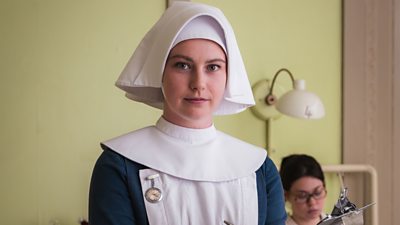
What’s in store for Sister Catherine this series?
It starts off jubilantly because she's just passed her exams, so now she's a fully qualified midwife. She's full of excitement and hope for her career, because though she has been working, she's had to shadow, but now she can go out and do it on her own. That's part of the journey, her learning and coming into situations and trying to deal with them on her own for the first time, and on some difficult cases too.
Is she touched by the Women's Liberation movement?
It's interesting for her because she's obviously a young woman who is engaged with the world and she can see what's happening around her, but she's not allowed to join in in the same way as Rosalind or Joyce can. But that was her choice and she really believes in the vows that she made to be a nun.
Do you have a favourite prop or bit of costume from the series?
I really love the watch. I don't know why. I like putting it on in the mornings. I have a sort of ritual: I put the costume on, and then the ring, then the watch and finally the cross. There’s something about having those three things makes me feel I’m ready for the day.
What do you think we can learn from Call the Midwife?
That feeling of community, sticking together and working together, through differences or hard times. That family unit of Nonnatus House, I think is really special.
Rebecca Gethings (Sister Veronica)
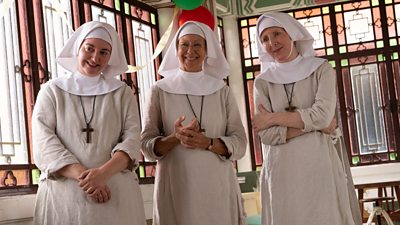
What’s happening with Sister Veronica?
You’re going to see a journey for Sister Veronica. I don't know where she's going to end up, but she will have been to some places and seen some things that she's possibly never seen before. She’ll be forever changed by this series. So watch this space!
Tell us more about her friendship with Geoffrey…
Christopher Harper has become a pal over the years, and it's really lovely to play scenes with him. He and Sister Veronica have an ease with each other and a deep friendship, and they have a lot of fun. He takes the mickey out of her and she likes that, and I've really loved building that relationship with him.
What does Sister Veronica think of the Women's Lib movement?
She’s a huge fan, and if she wasn't constrained by being a nun and having to behave a certain way, she would have been burning her bra. She's a strong, independent woman, she'd be all for it. She'd be marching. But Sister Julienne wouldn't allow that. But she does read The Female Eunuch.
Do you have a favourite prop or piece of costume from any of the years?
I have a love/hate relationship with Eunice, the scooter that I'm no longer using. I'm scared of her, but, you know, she's never done me a disservice, and she was kind of an iconic nun on a scooter thing. So she would be my favourite. But she's gone now and I have a bicycle.
What is Sister Veronica's best quality?
She's kind, she's got a big heart. She doesn't always say the right thing or even do the right thing, but her intention is always to be good and to help. She's got a real calling. Sister Veronica is a surprising woman. I think as much as I thought I knew her at the beginning of this season, I think that she's really surprised me. She's surprised herself. She's stepping into her womanhood, in a way. I think there's a part of being a nun in her that's subjugated all of that, but she's now acknowledging that side of herself.
What do you think is her biggest flaw?
As we know, she often bends the truth, but always to a good end. She always has good intentions. She might be a little bit lazy as well. But most of her falsehoods are because it will help somebody.
What are your highlights of being on the show?
This is my fourth year, and I've got so many wonderful memories. I was so welcomed by my cast mates, who I'm proud to call each and every one my friend. This experience has been really beautiful. Being in the show has changed my life. I've never returned as a character in something, so it's been lovely to know each year that there's going to be this wonderful period of six months of creativity and involvement in a company of actors that you cherish and trust and have ownership of a character that's growing and building. It's been lovely to just flesh out someone and really feel you know her. I'm proud of that.
What’s important about Call the Midwife?
It makes you cry and laugh, but it’s also a social historical document. It's very well researched, and the medical concerns are the medical concerns of the time. The enduring success of Call the Midwife also shows that audiences do still have an appetite for long-form drama. We have loyalty and the ability to stick with something if it's beautifully written and well-made. It doesn't all have to be bite-size - you can actually let things develop.
Helen George (Trixie Aylward)
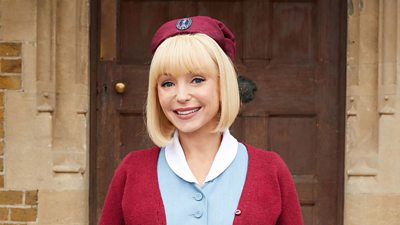
Nonnatus House is threatened with closure this series. How does Trixie feel about that?
It’s one of the storylines that's affected me: This external threat to Nonnatus House and what was happening in the NHS at the time. And the fact that nuns were being made to choose between their habit and their work. Having that looming threat over us, which we've been pushing away for years, inching closer and closer, is terrifying now it’s pounding on the door.
It's 1971 and we’re seeing the rise of the Women’s Lib movement. Needless to say, Trixie’s involved…
Filming the march scenes and burning our bras was so brilliant and so spirited. Freedom has been a long time coming for these characters. At this point in time, women still couldn't get mortgages or have their own bank accounts. It feels so archaic looking back, but this was only a few decades ago. It's really important, especially after what's happened with Trixie. She talks about her husband losing all his money and how if she'd been in charge of the purse strings, maybe it wouldn't have happened.
Trixie’s been on quite an emotional journey over the years…
It's always a fascinating thing to look at and understand your character’s backstory. The storyline with her father, her growing up with him suffering from PTSD and alcoholism, and then her patterns of behaviour as well. And feeling such pain for her over the Tom and Barbara story. And then there’s the bankruptcy and the various relationships that haven't worked out. That the dream that hasn't quite been realised has been hard to witness.
What are Trixie's best qualities?
She's got so many good ones, some bad ones, but so many good ones. I think her determination. When she's got a bee in her bonnet, there’s no stopping her. She will fight to the bitter end, and she's not proud. For instance, this series, we really see her fighting and standing up to the authorities again and again, even though she's nervous. She's carrying the weight of Nonnatus House on her shoulders; That relentless nature that she has is inspiring to me.
How does it feel to be an original member of the cast?
It feels really special that I've been here from the beginning, and there's only a few of us that have that badge now. To make it to 15 series has been an incredible experience for me. Watching Trixie's storylines develop and watching the popularity of the show grow not just in this country, but around the world, has been an amazing thing to witness. It's been something that I could only have dreamed of. I'm so proud of everything that we've achieved so far.
How has Trixie evolved since 1957?
Trixie's a different person. She was a fun-loving girl, just chasing the boys and wearing makeup. But then discovering her backstory and her very fragile emotional state has been very unexpected. There was the dreadful date where she was sexually assaulted, and the fallout from that, and then learning about her alcoholism, and dealing with that over the years. It’s been an incredible journey.
Not only have the characters changed, but the world around them has changed as well…
I think what's been so interesting about this show is watching how political changes affect their lives. We look back and we see a lot of the things that should have changed by now, but haven't, and are still things to be talked about, like the Abortion Act. It's interesting looking at women's rights and looking at the female characters over these 15 years. Holding a mirror up to ourselves now, much has changed, but much is also going backwards.
And have you enjoyed the changing fashions?
The costume changes have probably been so vast over the years, and we've had different costume designers as well, so everyone brings their own ideas. The silhouettes of her clothes have changed from the Dior 1950s dresses, which sort of came out from the hips and were big, to a slinkier shape, a more Marilyn Monroe shape. Going into the 1970s where we see her now, she's in flares, long collars, and she's wearing trousers an awful lot more, which reflects where she is personally as well as professionally. I love the tailoring that we've found for her now, because there's real strength and power to that.
What’s been the most special part of the last 15 years?
The community, which is something that I've been very fortunate to have on this show. We all need community. And I've been lucky enough to have it. Call the Midwife has changed my life. For a start, I knew nothing about midwifery before I started this job, and I had no idea I'd spend 15 years in a nurse's uniform with a red hat and a cloak on. It's taken my life on a course that I had no idea it would go. All the opportunities that I've been afforded, the incredible people that I've met, the experience that we've all had together, going to South Africa and the Isle of Harris, working with these incredible actresses, Judy Parfitt, Jenny Agutter, Miriam Margoyles, Harriet Walter, Pam Ferris... It's been such a journey for me.
What do you think we have learned from Call the Midwife?
There's a great deal of compassion on this show for people who make mistakes in their life. Compassion is the key to this show, and through Sister Julienne's eyes, there is a great deal of compassion and a lack of judgement. We could all learn a lot from Sister Julienne.
What do you think is unique about Call the Midwife?
There's been nothing like it before, and there never will be again. It's changed policies, it's had effects on charities, we've seen midwifery numbers rise, it's held a mirror up to the National Health Service. It's brought families together which is very rare in this world where we're looking at our phones whilst watching TV. It’s made everyone put their devices down and sit together as a family, which is why television was invented. It proves that there is still room for that.
Do you have a favourite prop or costume from your time on the show?
My favourite prop is this tiny little matchbox cover, which has a little deer in a woodland scene on it. I've had it since day one, when I had my first scene with Jenny and Cynthia. Trixie's hair is in rollers, and I think she's in a dressing gown. They’re sat at the kitchen table and she's smoking, and she's talking about how she's desperate to have a manicure. And I remember being so nervous for that first scene that my hand was shaking, but it was also the monologue that I'd done for my audition. So it felt like a really special moment. And the matchbox has always stayed with me, and I've made sure that it's stayed with Trixie, and maybe one day I'll take it home.
Linda Bassett (Nurse Phyllis Crane)
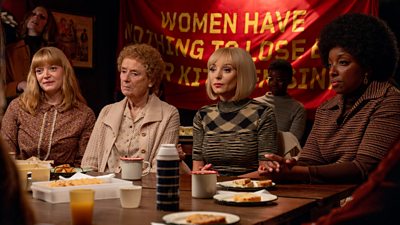
Is Nurse Crane involved in the Women’s Lib march?
She’s initially a bit iffy about it, so it was quite fun watching her conversion. I was 21 in ‘71 and so I was very much into the women's movement. I was part of it, I'm proud to say. But I’ve never burnt a bra. I certainly wore dungarees, I have to admit, for quite a while. The movement informed everything at the time, - our relationships with men and our relationships with each other.
How has midwifery changed since the start of the show’s run?
Call the Midwife portrays a time when midwifery and district nursing was exemplary. You saw the same person who would see you through everything and a small team of people who were committed just to you, which we all know nowadays is not possible. When births became hospitalised, that changed. People go on and off shift, and you might go through three midwives if you've got a long labour but people would like to have that sort of attention, that sort of special care.
Natalie Quarry (Nurse Rosalind Clifford)
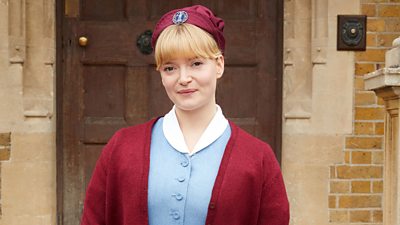
It’s 1971, and changes are afoot…
Rosalind loves to be a part of change. I think she really enjoys getting involved in local events and striving for what she believes is right. She visits a patient who is having a women's lib meeting in her bedroom while she's breastfeeding her baby. She sits down to wait until the meeting's over but is enthralled by these women confidently talking about an upcoming march and she wants to join in.
Does she rope in the other nurses?
She tells them all that she'll be going, and socially they all are on the same page and want to see the change happen in their world as well. It’s not that hard to convince them, though Nurse Crane is unsure at first. But they all get on board quite quickly. It's a great storyline for Rosalind, as she gets to be a figurehead which I think is really cool for her.
What’s the journey for Rosalind this series?
I think she grows up a lot, and a lot happens with her and Cyril and their relationship, and they’re both tested. It changes her perspective on some stuff, and there's good and there's bad. It's a big year for her, but an exciting year.
Do you have any favourite props or costume?
Rosalind always wears a little locket when she’s out of uniform. It's probably my favourite thing that she wears, because it feels really her.
What's your character's best quality?
Her ability to see the good in everyone. She’s overflowing with hope and love for people. And I think that's a really admirable quality.
And what do you think is her biggest flaw?
That she will still want to see the best in people even after they've disappointed her. She'll want them to be better than perhaps they actually are. That gets her into situations where she would end up getting hurt, because she hopes so much that they will prove her right, and they don't always. It's both a blessing and a curse.
What do you think we can learn from Call the Midwife?
It’s a show that has taught people about social history and social politics, in a way that is entertaining and moving. I used to watch the series, I was a big fan, and I learned a lot about the period of time and the medical history of the period. So many people have watched it and learned so much about different perspectives that they might not have thought about. I think it's had a huge impact on many, many people.
Renee Bailey (Nurse Joyce Highland)
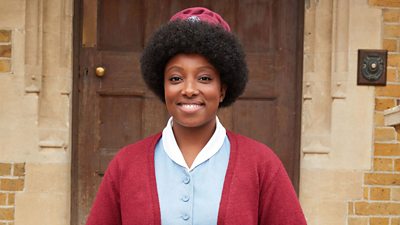
We see a different Joyce this series – she’s burning her bra!
It was really fun filming that - actually getting to burn a bra. Very cool. But also, it's fun exploring the political scope of 1971 and what that means for Joyce as well, looking at what her position would have been as a black woman in the Women's Liberation movement, and also how vital that would have been post her abusive relationship. It was really nice all of us all being together. Those big scenes we do always have a nice community vibe.
What are Joyce’s best qualities?
She gives everything 110%. Whatever she sets her mind to, she's going to do it to the best of her ability, and she'll probably be the best at it. And I really admire that in her.
And her biggest flaw?
Either that her face reveals exactly what she's thinking, or that she can sometimes deliver her truths harshly without thinking about how that might make somebody feel. But she’s just being honest.
What are your highlights of being on Call the Midwife?
So many! Working with people that I've grown up watching, like Jenny Agutter, Judy Parfitt and Linda Bassett, who was in East Is East, a film that me and my family rinsed when I was younger. So then to be acting alongside her is so surreal. Also, I've had some really cool storylines. It's all been so special. I've loved every minute. I also love the makeup chair, it’s like therapy, where we all talk about whatever's gone on at the weekend, etc. You see your cast mates in the chair next to you and that's the one time that you probably get to have an intimate catch up.
What can we learn from Call the Midwife?
The power of community, both on screen and off. They all come together when one of them is down, and I feel like in current society, everyone is in their own space and no one's really looking out for or helping someone in need. We all kind of just turn a blind eye. We could all learn to help thy neighbour without getting too religious on you! Also, it feels like one of the last shows that has an intergenerational viewership. People watch it with their grandmas, their mums and their kids. I've had 11-year-olds say that they watch it. That family thing sitting down to watch together - we don't really do anymore. It's community and good, good vibes.
Do you have a favourite prop or costume?
Hands down that greeny-turquoise leather trench coat. That’s Joy for me. It’s like her in her cop show spin-off, like Foxy Brown. It’s the ultimate costume item.
Annabelle Apsion (Violet Buckle)
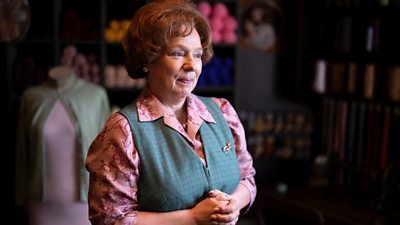
What’s going on for Violet as the series begins?
She’s very concerned for the welfare of all the residents of Poplar, and she sees at first hand, the difference a personal relationship means for people that live there. She sees that the nurses really care about everybody and how they liaise with Dr Turner. Between Cyril, who's the social worker and Violet, who's the mayor, they’re trying to take care of everybody in the community. So when this practical help comes under threat, she tries to do something about it.
And she gets involved with the Mullucks family, whose daughter was affected by Thalidomide?
They, like so many other people in Poplar, only have an outdoor loo. So that's obviously particularly difficult if you have any kind of disability, with bedrooms being upstairs and having to come downstairs to go. So there's a council initiative to instal bathrooms and to have an extension for people that need special equipment. Violet’s showing this off to the press and also trying to encourage people to come forward who need help, who need refurbishment of their properties. She's very excited to make that more widely known, and she tries to get the press to make it exciting by sharing some of the additional details, like the colour of the new sanitary ware, with which she's particularly pleased.
She also gets involved in a Women’s Lib march…
Violet is very taken by the idea of this, and realises that, yes, women do a huge amount of work for which they never get the credit, are never paid for and taken for granted. So she's right behind it. She also gets to socialise with Miss Higgins and the nurses, which she loves. She really enjoys the companionship of all the women coming together.
How has Violet changed over the years?
She's always been quite confident, in one sense, because she always said that she was with Fred because she wanted to be, rather than that she needed to be. She's got very comfortable in the relationship and feels very supported with the things she does, to go and be a dominant voice, to stand up for people. She's in these council meetings where she's the only woman and though she’s not intimidated, she felt they looked down on her because she ran a shop. But she's holding her own. I think she's coming increasingly into her own. She's obviously got Reggie in her life, and that fulfils her in a way that she had not anticipated. The love that she has allows her to be bolder than she might otherwise have been. She enjoys nagging Fred though and having that playful side to their relationship. That all helps her to be more confident in life and to pursue what she loves and believes in.
What does 15 years of Call the Midwife mean to you?
I've been in it now for 11 series, and it really has been like the loveliest family. So many people love the stories and find them so helpful in their own lives, whether it's just uplifting to hear about human kindness or resonate with different stories and characters. It's been a great honour to meet so many people who come up to me and say how much they love the show and it has flown by.
What can we learn from the show?
It reminds people that we're all in this together, and that if you help one person, you help everyone. The small kindnesses count. Also, people are reminded of those past times: allotments, nurses visiting homes and out on their bicycles - all those little things about how we used to live. There’s a value to that. Everything's getting faster and quicker now.
What is the most important thing about Call the Midwife?
I suppose it is that we are interested in what brings out the best of us. Often, we look at what brings out the worst of us, which is also interesting, but it's nice to look at what brings out the best of us.
Cliff Parisi (Fred Buckle)
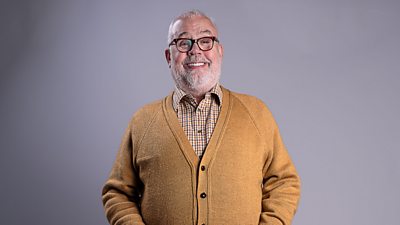
How does it feel to be an original cast member?
Very privileged. We've seen a lot of people come and go. It's been 15 years and I think I might have even been in the first scene that was ever shot. I'm very, very lucky. In this industry, you don't generally get jobs for long. You know, you might skip from doing three jobs at the same time to not doing another day's work all year. So to be doing what you love for 15 years, is a great privilege.
How do you think Fred has changed since 1957?
Fred's changed a lot. He was a face around Poplar, he grew up there, so he knows everyone and went to school with some of the old boys around here. But he kind of bumbled around. He had a couple of daughters that grew up and left and he lost most of his family, including his wife, during the War. He was basically on his own. He does less scammy things now, because Fred would always be selling something dodgy on a street corner. Then he met Violet and became an upright member of the community. They've also got Reggie, so now they’re a little family unit.
What is Fred's best quality?
He’s generous, loyal and fairly honest, although he tells white lies to get himself out of trouble, to save people pain or disappointment and he’s told quite a few to Violet in the past, so maybe he's not quite as honest as he might think. He has compassion, he's optimistic, he has empathy and for the most part is a good member of society.
What does 15 years of Call the Midwife mean to you?
I'm not a proud person, but I am actually proud to be in this show, and to have stayed with it for 15 years. It's been a great journey, and great fun. Though it’s evolved, the backbone of the show is still there, with Sister Monica Joan, Sister Julienne, the Turners and Trixie and Fred chugging on. It's been brilliant. But it’s really all about the people, isn't it.
What do you think we’ve learnt from Call the Midwife?
If you watched it and you didn't know anything about that period in time, you would have learned something. A lot of the stories are very current, really. There wasn't an awful lot of tolerance in the East End back then, but it was a place that was always changing. It would probably have been one of the first places to have Jewish people and black people.
Do you have a favourite piece of costume or a prop?
I have a pair of shoes that I love, an old pair of brown brogues, In fact, I went and bought myself an identical pair. And there’s a mustard cardigan, which you see from time. As for a prop, it's my oil can. Fred Buckle’s oil can has inspired me to go into business.
Zephryn Taitte (Cyril Robinson)
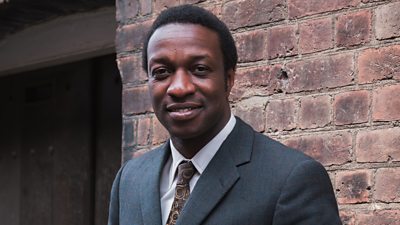
What’s going on with Cyril as this series begins?
Cyril and Rosalind get really close, really quickly. Things take an unexpected turn, and he has to wrestle with her parents and how they may view him and judge him, rightly or wrongly. So, there's a lot for Cyril to contend with this season. There's love but it's bittersweet.
What does 15 years of Call the Midwife mean to you?
I've been on it maybe just under half of that - I started in season eight. There are so many links to life, my personal life. My grandma was a midwife, then became pastor. My uncle was a mechanic. I'm playing a Guyanese. So, it's a lovely nod to my background. It warms the heart when I look back on all the years I've been here and what it’s has meant to me.
Tell us more about your grandma…
So my grandma is from British Guyana, and she came to the UK in the early Sixties to study midwifery in Birmingham. Then she went to New York and became chief midwife in one of the hospitals there. When grandma retired, she went back to Guyana, and now she's a pastor at the church over there. It made me feel quite connected to show. I think [showrunner] Heidi's taken a few things from my life!
Has being in the show changed your life?
A lot. My first two years was a purely educational experience as an actor, as someone who wanted to do more in the industry, just observing everything. It's been a great training ground, because before I did small bits on TV, but nothing where the spotlight is really on you. It’s really developed my skills as an actor. And also, just understanding how the industry works, looking at how Ann Tricklebank, the producer, effortlessly or seamlessly brings it all together. And my career has gone from local theatre actor to international television actor.
What do you think we can learn from Call the Midwife?
My grandma would probably attest to this - there's such a religious undercurrent to this show. There is a teaching with Christianity to be caring, compassionate and love your enemy. That's a big theme and often it's quite hard to do as humans. So it’s taught us how to be a better human.
Stephen McGann (Dr Turner)
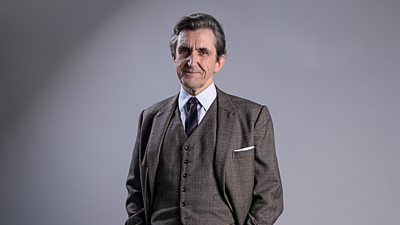
Is it good to have Max Macmillan back as Timothy?
Timothy comes back with a complete vengeance! It's a wonderful journey for me and Timothy in this series. Going back, I did my first ever scene with him. He was a boy of 12 and he grew up on the set of Call the Midwife, doing all his school exams and everything, and we were filming with him all the way through those years. But now he's in his early twenties, a fully-fledged adult. There came a point with Max, as he would tell you, where he wanted to go out in the world and scratch some other itches. So, we were lucky when he agreed to come back. He’s finally a trainee doctor, and we follow that journey.
What does 15 years of Call the Midwife mean to you?
It is a remarkable achievement for any television programme. A week is a long time in politics, a year is a very long time in television. We covered such an important era in the life of my country. We explored what it's like to be a community and what it's like to grow up with children over that time. I've played so many edgy characters, dark characters, light characters, comedy characters, but this has been the most important work I've ever done.
What do you think it means to viewers?
It shows people their country, but it also shows them their heart, because it's about compassion and community. People learn about compassion, people support each other in a community where people care for each other, where they can.
What can we learn from Call the Midwife?
That we showed that you can take people to dark places of death and suffering, you can take them to funny, light places, whimsical places, but at the end you can make them cry almost weekly because you've made people open something that was already in their heart. That, and the opportunity to be with characters who make them feel better.
Laura Main (Shelagh Turner)
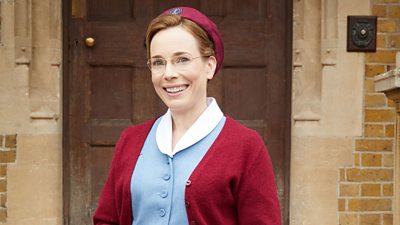
What does 15 years of Call the Midwife mean to you?
I feel so happy that I’ve got to be part of this wonderful show that's grown and evolved and is still loved. And I'm so lucky that I've got to play this role and do this lovely work with this amazing bunch of talented people for 15 years.
Are you proud of what the show has achieved?
I'm immensely proud of some of the topics that it's covered. I think it's really important what this programme has done because there are storylines that you can relate to, even the tough ones. You can find comfort in the fact that somebody else has experienced something difficult, that you've maybe gone through yourself. But even if you haven’t there an understanding there.
What can we learn from Call the Midwife?
That it covered really important issues. You see a community, you see people working together and it's an expression of love. The hard times, the happy times - it's how you pull together. I think it's a really good example to see on screen how we can help one another and how community enhances life. Also, it's highlighted issues that we've been able to show on mainstream television at eight o'clock, when all the family can watch.
Max Macmillan (Timothy Turner)
Timothy’s back and now has his own storylines outside of the Turner family…
It's really exciting, because I've been in this show for over half my life – I was 12 when I started and now I’m 25 - and a lot of it was just this wonderful, constantly evolving and shifting dynamic we had within the Turner family. And now suddenly, just like I did in real life, Timothy has all these new responsibilities. I’m getting to explore a side of acting that I've always observed but never been a part of.
But you’ve always been a part of the show…
It felt like I was in a different half of it. The Turners had this lovely little world of joy and excitement and tragedy and all the things we got to play with. But now I'm up there with the doctors and the midwives and saying all the medical jargon, which I’ve had to learn very quickly!
So you feel you’ve learnt a lot over the years?
Having spent years of watching the other actors do their stuff has made it 10 times easier and 100 times less stressful. Like shooting birth scenes - I've always been in awe of everyone doing that and now it's just really exciting being able to jump into it.
What is important about Call the Midwife?
That it's not afraid to explore horrible topics and be at both ends of the spectrum in terms of joy and tragedy. People constantly call it comforting. It's like a warm place for them to go if they're feeling bad.
Heidi Thomas (Showrunner)
Series 15 of Call the Midwife is one of our most exciting to date, and I loved every moment of writing it. Not only is the show now set within my own living memory - every time I see the Turner girls' outfits I get a jolt of recognition - but 1971 sees the dawn of a whole new era. It heralds the launch of the Women's Liberation movement in the UK, and a period when medicine starts moving really fast. We have often reflected on progress and the passage of time in our show, but this year the pace is almost dizzying. Medically, socially, and emotionally, people know more, want more, can have more. And it suddenly seems as though women, and medicine, are capable of almost anything. This year, we see a 2lb premature baby kept alive by machines in a high-tech incubator. We meet our first ever baby on an ultrasound screen, suspended in the darkness of a womb like a tiny astronaut. We witness a mother’s childbirth agony vanish as she is given a pioneering epidural - and throughout it all, the nuns and midwives of Nonnatus House are there to hold their patient’s hands.
With every episode I write, I am reminded of the power of the human touch. No matter how much science grows in power, when babies are born, when people are scared, or sick, or terrified or dying, it is often the simple act of reaching out that makes the difference. This year, our team are involved with many tough and painful cases, including slavery, poverty, rabies, carbon monoxide poisoning, male breast cancer, child cruelty and lupus.
But in Poplar, no-one is ever lost, or abandoned, or even allowed to be alone for very long. Love isn’t just the best medicine, it is medicine. And that’s the philosophy that’s kept us going all these years. Those legendary red cardigans enfold everyone. They wrap us up in something safe and warm, in a world where the winds can blow very cold indeed - whether it’s 1971, or 2025.
Sister Julienne, Dr Turner and the Nonnatus House team face serious challenges in Series 15. More and more babies are being born in hospital, and a complete reorganisation of the National Health Service is on its way. But time and again, this brings out the best in them, fuelling not just our drama but their own sense of mission, purpose and vocation. I believe that in many ways, this year sees their finest hour. But then again, there is so much more to come! And we can’t wait to take our fabulous, loyal fans - the other Nonnatus family - with us on this incredible, ongoing journey.
Follow for more
Latest from the Media Centre
All newsSearch by Tag:
- Tagged with Latest NewsLatest News
- Tagged with Media PackMedia Pack
