Technology within the series
Starring puma, Canada Lynx, the Rusty-spotted cat, cheetah, leopard and snow Leopard.
Published: 9 January 2018
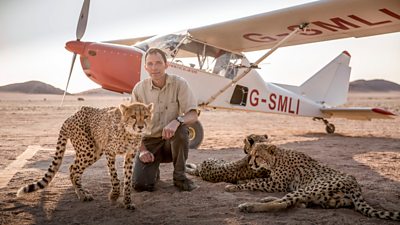
Cheetah’s Speed
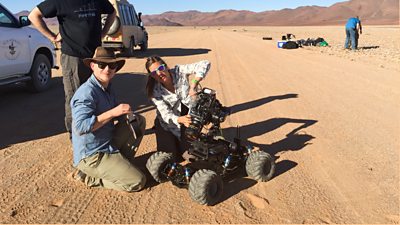
Camera buggy
Cheetahs are one of the most familiar animals from natural history television. Their elegance, grace and spectacular hunting technique have made them TV favourites for years. To show these cats in a new light, reflecting the latest and truly surprising scientific revelations, the team needed to get closer than ever before - an ambitious task, given that they were up against the fastest animal on land.
Working with wildlife cameraman Rob Drewett and buggy operator Andy Nancollis, the team hacked a buggy of their own design to get closer than ever to a cheetah chase and film it at close quarters.
Thermal camera
Thermal camera technology is allowing us to capture never-before-seen behaviour.
Luke Barnett, camera operator, says: "Being able to see in the dark is like having super powers. It is true that you are in part blinded to the outside world by the bright viewfinder, and this, after many weeks of staring, leaves you both captivated and reliant on the screen.
"When the battery dies (and there is no warning) you are plunged back into a primal darkness and the fragile state of being only human, with potential killers just the other side of some canvas."
The CATerpillar - an innovative piece of technology
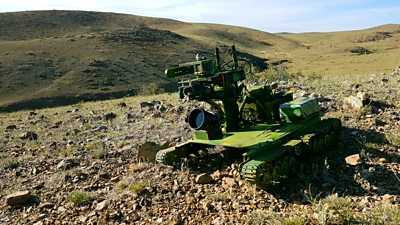
Before leaving for Mongolia, episode producer Paul Williams worked with an engineering team to develop and build a bespoke remote filming vehicle, fitted with a miniature gyro-stabilised gimble, that they named the CATerpillar.
The only one of its kind, this innovative piece of kit can be controlled from over one kilometre away - allowing super high definition images to be wirelessly and remotely filmed.