Transcript of BBC Music Launch
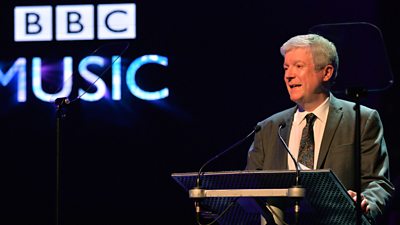
Transcript of BBC Music Launch hosted at BBC Radio Theatre on 16 June 2014.
Published: 16 June 2014
[PERFORMANCE – LAURA MVULA]
TONY HALL
Thank you.
Wow – first, members of our very own Concert Orchestra serenading us in – and now Laura. Two brilliant performances – before you’ve heard a single word. What a great way to start the week!
And I hope you’ll be inspired by all of the performers gracing the stage this morning.
Today’s about the next generation of musicians - singers, composers and arrangers – and the BBC.
It’s about putting music right at the heart of the BBC – and it’s about us supporting young British talent in new and surprising ways.
Music plays such a vital part in all our lives. It really matters to me – and it’s always mattered to the BBC. It’s no coincidence that our very first programme from Broadcasting House, live from this stage more than 80 years ago, was led by one Henry Hall – one of the most popular bandmasters of his day. (by the way, he’s not a relative!)
And, we’ve championed music ever since. It’s in our DNA – just like News.
We’re the most significant commissioner of new classical work anywhere in the world – and we’re the biggest music broadcaster too. We’re producing all kinds – classical, folk, pop and hip hop, electronica and rock. And that’s what marks us out.
That’s the exuberant, distinctive flavour that you only get on the BBC.
And we’re doing it each and every day. In fact, I just took a look through today’s schedules – and found some really precious moments for music fans everywhere:
There’s Paco Pena – one of the world’s greatest guitarists and the first professor of flamenco presenting his own show for us
Zane Lowe interviewing the legendary American producer, Rick Rubin – and, by the way, wasn’t Zane’s interview with Chris Martin the other week just great.
And we’re offering a rare opportunity to hear Schoenberg’s masterpiece Moses and Aron from the Welsh National Opera.
There’s plenty more besides all across the week - on television, radio, iPlayer and online.
We’re already doing a great job – but I want us to do more.
When I set out my vision for the BBC last autumn, I talked about the BBC as the UK’s creative risk capital. We’re here to inspire boldness and creativity. I talked about bringing the wonders of new technology to everyone – and the singular importance of arts and music. And I meant it.
I’ve already set out our plans for the arts - and today it’s all about BBC Music.
We’re making a new and significant commitment to the music industry – beyond what we’re doing already.
We’re going to join up the considerable talents we have across the BBC – and we’re going to work with you all like never before.
I believe in the power of partnerships. Together we can do so much more.
So this morning we’re announcing:
New partnerships – to support and inspire talent just starting out
I’ve seen for myself the great work BBC Introducing is doing – developing and showcasing the most promising newcomers our country has to offer. And I’m delighted to tell you this morning the National Skills Academy and PRS for Music Foundation have been so impressed they’ve decided to join us. We’ll have much more impact working together. And that’s great news for young talent all across the UK.
And, there’s something else. Something really close to my heart – that we’re launching today too. Classical music is in good health – but I’m concerned that none of us can guarantee its future unless more children – from all walks of life - are given the opportunity to learn. To experience - and enjoy classical music.
That’s why we’re announcing the biggest commitment we’ve ever made to music in schools. We want to excite children about the world of classical music – and with Ten Pieces we’ll be taking Beethoven, Handel, Mozart and Stravinsky to virtually every primary school child across the UK - all 4 million of them. And we’ve got 150 partners on board already – before it’s even underway. That’s simply brilliant. It’s something only the BBC could do – in partnership with people who share our passion for music and education.
We’ve also got new digital ambitions to share with you today
We’re re-inventing iPlayer – already Britain’s favourite brand. And I want music to play a vital part.
You’ll begin to see more music programmes in iPlayer – all in one place. Expect new BBC commissions, exclusive content, collections, rare moments of archive and great live events - starting next week with our most ambitious Glastonbury to date.
And, you may have heard me talk about a more personal BBC – getting closer to our audiences and what they like. From later this year, we’ll start to offer everyone a more exciting, a more personal music experience - transforming bbc.co.uk/music.
We’ll be growing Playlister too – making it simpler for you to use it – giving you more playlists - and using the full range of our music specialists. I’m also delighted to announce we’ll be adding iTunes to Playlister – so we’re now working with Deezer, Spotify, You Tube and iTunes – that’s great news for us, for the industry and above all for people discovering music right across the BBC.
And we’ll be joining up BBC Television, Radio and online to create amazing live music and events for everyone.
I want the BBC to showcase our country’s great strength in music. We’re a world leader. Creating and producing some of the most distinctive and popular music on the planet. That’s why we’re launching the BBC Music Awards. BBC One, Radio 1, Radio 2 and The One Show will come together this December to celebrate the very best of British music – plus magical moments from BBC Music across the year. And, alongside the iconic names there – we’ll be reserving a special place for one of BBC Introducing’s hottest talents.
There’ll be new landmark shows too – right across the schedules.
But I should also say - what we’re doing today is just the beginning. It’s just the start of something very special for everyone who loves music.
And the person who’ll be leading all this for us – joining up music around the BBC – is Bob Shennan.
Many of you know him – he’s a brilliant conductor of talent – and ideas. It’s no coincidence that Radio 2 has thrived with Bob in charge. My thanks to him – and to everyone here who’s contributed to its astonishing success.
And I was so impressed by what I saw at Glastonbury last summer – on any number of screens. It was the first time we created a single production team led by Bob across television, radio, iPlayer and online. We reached more people on that one weekend than had attended the festival in its entire forty year history. Our audiences loved it – I loved it. And – this year – we’re taking it a stage further.
Bob will be working with Danny Cohen, Helen Boaden – and our classical music specialists – and the rest of the senior team to shape our ambition in music – starting right here. Today.
BOB SHENNAN
Thanks Tony and good morning everyone.
This morning I will be joined on stage by some very familiar faces. Between them they present music on almost every national BBC Radio or TV channel. And they make a formidable team.
They are here – together - to help showcase our plans for BBC Music.
On the screen, and in the room among you, is a collection of BBC personalities whose passion for - and knowledge of music, is unrivalled. Trust is the foundation of the BBC. And our audiences trust their judgment.
Every day we offer the best new music on Radio 1 and 6Music, British Urban on 1Xtra, British Asian on the Asian Network, plus a substantial commitment to World music and jazz, as well as high quality classical performance on Radio 3.
Radio 2 brings an astonishing range of pop and specialist music to the most popular radio station in Europe.
BBC Television commissions more original TV Music content than any other broadcaster, BBC Four has become the default TV destination for music-lovers and no broadcaster unites the nation around major music events like the BBC.
Along with our services in the Nations and in Local Radio, BBC Music content reaches nearly half the population each week.
All our Music services are loved and popular, but we’ve also shown that great things can happen at the BBC when we work together.
And that challenge is at the heart of my role in Music – to work alongside the experts in their field like Ben Cooper at Radio 1, Roger Wright and his successor at Radio 3 and Jan Younghusband and the TV Controllers - to make BBC Music bigger than the sum of its parts.
Just last month the Radio 1 Big Weekend in Glasgow was a triumph of collaboration across Radio, TV and multiplatform.
Next month we will do the same with the BBC Proms. And next week we return to Glastonbury.
[BBC TEAM FILM]
Today our presenters will unveil some of the ways we hope to put Music at the heart of the BBC. You’ll hear about new seasons and commissions, and some brand new projects. It’s the first wave of BBC Music initiatives. There will be more to follow in the coming months.
This December we will launch the BBC Music Awards on BBC One, in partnership with Radio 1, Radio 2, BBC online and The One Show.
What’s more, from August, The One Show will bring a new and regular weekly music performance slot to millions of viewers.
We will also commission an ambitious landmark documentary strand on BBC Two – a definitive history of 20th century popular music - to launch in 2016.
And we will tell you about how our Performing Groups will help every primary school child in the country to discover Ten Pieces of classical music.
At the same time, we will make sure that the BBC translates all its strengths in linear broadcasting into the digital spaces, where our audiences are spending more and more time.
So we’ll develop BBC Playlister, our forward slash Music site and also build on our existing music offering in the iPlayer, allowing audiences to access the full range of BBC music programming, curated and personalised.
Supporting the best new musical talent will continue to be a priority for BBC Music. We run more than a dozen different schemes each year, championing jazz, folk, classical, pop and a number of choirs. We plan to unite and expand these schemes.
Two people who have emerged with distinction from the BBC Young Musician and BBC Introducing schemes are Jake Bugg and Nicola Benedetti – This is their story.
SUZY KLEIN & KATIE DERHAM
Suzy: Hello, I’m Suzy Klein
Katie: And I’m Katie Derham – and Suzy and I present some of the BBC’s extensive Classical Music coverage across BBC Radio and Television.
Suzy: Over the last 35 years, the BBC has shone a spotlight on the most exciting young classical talent, through the BBC Young Musician competition. International stars like Freddy Kempf and Natalie Clein, Guy Johnston and Nicola Benedetti all got there big break here…
Katie: Young Musician plays an incredibly important role in the BBC’s commitment to helping emerging talent develop. In 2008, Peter Moore became the youngest winner of the competition, aged just 12. Last month, The London Symphony Orchestra appointed Peter as their co-principal trombone player – making him the youngest ever player to hold this position and to join the orchestra.
Suzy: The winner of the 2014 competition was announced last month in Edinburgh, and I’m delighted he’s with us now – he’s a phenomenal player, please welcome onstage: 17 year-old Martin James Bartlett, playing Lieberstraum by Liszt
[PERFFORMANCE – MARTIN JAMES BARTLETT]
Suzy: BBC Young Musician 2014, Martin James Bartlett. Now, the BBC doesn’t just support brilliant performers – it also nurtures the most exciting creators of classical music. Radio 3 is the most significant commissioner of new classical work anywhere in the world.
Katie: And through its Performing Groups, the BBC is a key supporter of classical performance at home, here in the UK. You will be aware of the BBC Proms – but you may not know that it’s the world’s biggest and longest running classical music festival with more than 90 concerts across eight weeks, which since 1927 has been entirely run and funded by the BBC.
Suzy: The BBC’s Performing Groups are, to my mind, one of the hidden gems of the Corporation: five orchestras plus the BBC Singers. Between them, they have given more than 300 concerts across the UK in the past 12 months, and virtually every BBC service uses their talents at some point during the year.
Katie: Representing the best of British music-making, the Performing Groups’ role as Cultural Ambassadors for the BBC was reinforced with a further 50 performances across the world, including China, Japan, India and much of mainland Europe.
An increasing demand for their innovative learning work programmes means the Performing Groups have recently exported their models of best practice around the world. The BBC Scottish Symphony Orchestra has just returned from India after one such successful trip.
Suzy: But it doesn’t end there – we also have to set alight the imaginations alight of a new generation of music-lovers. And that’s why today we’re announcing a major new classical music initiative designed especially for primary schools across the UK.
It’s called ‘Ten Pieces’ – an ambitious project that will put classical music right at the heart of the creative life of Britain’s children. And this is how it will work.
[TEN PIECES FILM]
Katie: Ten Pieces, which will run for ten months of the academic year 2014/15, helping teachers to deliver the music curriculum, and placing BBC Music and our Performing Groups in direct support of musical education. So: what are the Ten Pieces?
- John Adams: Short Ride in a Fast Machine
- Beethoven: Symphony No. 5 (1st movement)
- Britten: 'Storm' Interlude from 'Peter Grimes'
- Grieg: In the Hall of the Mountain King from 'Peer Gynt'
- Handel: Zadok the Priest
- Holst: Mars from 'The Planets'
- Mozart: Horn Concerto No. 4 (3rd movement
- Mussorgsky: A Night on the Bare Mountain
- Stravinsky: The Firebird – suite (1911) (Finale)
Suzy: And as you saw in the film, there’s also a brand new commission from the brilliant young British composer Anna Meredith, called ‘Connect It’.
I think Ten Pieces has the potential to do something very special indeed: introducing the nation’s children to the joys of great orchestral music, igniting their creative potential, getting them truly excited by the possibilities that classical music has to offer.
Katie: And we have some fantastic champions for Ten Pieces who’ll act as ambassadors for the scheme, spreading the word across Britain: Nicola Benedetti, Julian Joseph, Cerys Matthews, Alison Balsom, Catrin Finch and Laura Mvula.
Suzy: We hope and believe that Ten Pieces will inspire the next generation of BBC Young Musicians, as part of the BBC’s vital role in supporting new talent, across a whole range of styles and genres. Many of our presenters champion that talent on a daily basis – and one of them is here now – please welcome, from BBC Radio 6 Music: Lauren Laverne.
LAUREN LAVERNE
Thanks Suzy and Katie
For many years now, the BBC has championed the best emerging artists in popular music through BBC Introducing. BBC Introducing celebrates what’s best about the BBC – working with experts across 40 local radio shows to discover the best emerging talent from right across the UK, and propelling them onto the national stage through Radio 1, 1 Xtra, Radio 2, 6 Music and the Asian Network.
As we saw in the film a moment ago, Jake Bugg went from a brilliant discovery by Dean Jackson on BBC Introducing East Midlands - to national recognition and the Pyramid Stage at Glastonbury within 2 years, and there are plenty others – in the last 12 months alone, 17 BBC Introducing artists have been signed by major record labels.
Much of BBC Introducing’s success has resulted from our use of the BBC Introducing uploader – now the destination for any aspiring music artist to get noticed, and get their music on BBC radio. To date, we have over 100,000 artists registered, and 250,000 tracks uploaded to the BBC Introducing website.
We will build on this by joining up new talent on the BBC across all 15 new musical talent schemes which the BBC is so proud of. We will be more open to new musical talent than ever before, and will showcase the best new talent in new ways.
However, the success of the music industry does not rest on artists alone – we need to foster a wide range of skills to ensure the future health of music in the UK. This is why I am delighted to announce the first of our BBC Introducing partnerships with the National Skills Academy.
We will work in partnership with National Skills Academies across the country to develop the technical and production skills of the future, particularly in the live space, and will work with Academy students to produce on-air content for a range of Introducing sessions and radio shows, as well as sharing the knowledge and experience of our teams here at the BBC.
In addition, we are passionate to continue to offer the best new UK artists unrivalled opportunities. Through another new partnership with the PRS for Music Foundation, we will take a collection of the best BBC Introducing artists to two North American showcases each year – this will be on top of our current showcases at South By South West, and the Americanas in Nashville. For the first time, the PRS for Music Foundation will also support these fantastic showcases.
There has never been a greater appetite in recent times for UK music internationally, and George Ezra is another artist who we tip for wider success. George uploaded his track to BBC Introducing in December 2012. In 2013, he was picked to perform on the BBC Introducing Stage at Glastonbury. The single he is about to play, Budapest, has been Top 10 iTunes in 12 European countries and has received over 10 million streams on Spotify.
He is headlining the BBC Introducing Stage at Glastonbury this year and I’m delighted to welcome him to the stage to play for you today, please welcome George Ezra.
[PERFORMANCE – GEORGE EZRA]
ZANE LOWE
Thank you George Ezra, one of the amazing emerging talents discovered via BBC Introducing
Twenty years ago, the Walkman revolutionised how I listened to music. For the first time, I was able to make mixtapes, and make sure that music was with me whenever I wanted it.
Today, Digital is that Walkman moment for a new generation. Digital has changed the game again – firstly through giving you access to your entire music collection though devices such as the iPod, and now with streaming, you can access an entire world of music!
Streaming doubled in the UK last year, and is here to stay, and as the BBC will be part of the digital revolution.
Innovation is the lifeblood of the BBC and we’ve proved that with the iPlayer and BBC Playlister.
I was pleased to be asked to launch BBC Playlister back in October last year. Those that listen to my show will know how passionately I believe in discovering and sharing new music, and Playlister does exactly that – it helps you find and remember great music from the BBC.
Playlister has had a great response from the audience, and has given us a powerful showcase of the incredible variety of music on offer from the BBC, and the incredible talent of the music team on and off air – their work is celebrated and shared through our extensive collection of Presenter Playlists.
Playlister is helping the BBC, and presenters like me, understand the rapid changes taking place in the digital world, and changes in what the audiences want and expect.
And we will go further. We will be bringing Playlister to new audiences across Radio and Television, covering more stations and channels, as well as more presenters.
We will improve the product, making it faster, smarter and more simple to use, and we will offer audiences new journeys, working with new digital partners for the benefit of the audience.
Just a minute ago, I highlighted the role of the iPod in the digital music revolution. From today, music lovers will not just be able to stream their playlists via Spotify, YouTube or Deezer, but also download these tracks at any time by exporting tracks to iTunes.
With over three billion requests in 2013 and an average of three hundred million requests per month, the BBC has led the field in creating a digital destination that audiences love with the BBC iPlayer; and the iPlayer will again be alive with music.
The BBC iPlayer will be the place to find live and on-demand music television content from across the BBC. This will mean even more live music on BBC iPlayer, including:
- The best new music from Radio 1’s Live Lounge and the live sessions we produce from across the BBC, including BBC Introducing
- A broader selection of content from Glastonbury, Reading and Leeds - with full sets being made available on-demand for 30 days
- An exclusive BBC iPlayer Proms collection, featuring the best live performances from the season
BBC Music will curate the Music category on BBC iPlayer and bring you exclusive content such as the recent unrivalled coverage from Radio 1 Big Weekend. We will build on this for Glastonbury showcasing over 100 sessions from 6 stages after the event.
BBC iPlayer Radio, with six million downloads of app since launch will remain the home for live and on-demand radio programmes from the BBC.
So – a smarter Playlister, and a more comprehensive iPlayer offer a tantalising snapshot of an exciting future for BBC Music, with digital at its heart. Music will also have a refreshed Online home on bbc.co.uk - forward slash music will launch later this year, just like the site we have just launched for BBC Arts. This is the start of a digital adventure for the BBC, a digital future which the BBC translates its linear strengths to new digital spaces, and serves audiences better, and a future where leadership from the BBC can benefit the wider music industry.
It is a place where the BBC needs to be, and where the audience expects us to be.
FEARNE COTTON
We all remember our first music experiences, whether it’s a piece of music we played, the first track we loved, or the first 7" single, album, CD or download we purchased. Music can leave a lasting memory. When it comes to the shared moments where music unites the country, the BBC is unrivalled.
Live Aid, Last Night of the Proms, The Diamond Jubilee Concert, Eurovision – the BBC is really good at making these moments sing and today we are happy to announce a significant addition to the BBC’s musical calendar.
I’m delighted to announce that in December of this year, Chris Evans and I will host the inaugural BBC Music Awards.
Broadcast live on BBC One, the BBC Music Awards will celebrate the year in music on the BBC’s biggest television channel. It will take place at London’s Earls Court on Thursday 11th December.
In a unique production, we will review and celebrate UK music throughout 2014 in a way only the BBC can.
The two hour show will feature up to a dozen electric live music performances – each one inspired by a great musical moment or achievement from the last 12 months.
For example, we might re-create a magical performance from Radio 1’s Live Lounge, a stand-out moment from Glastonbury or invite one of the year’s biggest rock bands to collaborate with a BBC orchestra.
Amongst performances from the biggest new and iconic names in music, we’ll also be reserving a special place for one of BBC Introducing’s hottest talents.
The biggest award of the night will be British Artist of the Year. From a long list of candidates, many of them featured within the show, the eventual winner will be decided by the BBC’s popular music presenters and production members, across every network. The same group will determine the International Artist of the Year.
Viewers and listeners will have their say in deciding the winner of another important award, Song of the Year. For the first time, BBC One, Radio 1, Radio 2 and The One Show will come together to support this event, allowing their huge audiences to get behind the scenes and to find out more about the artists they love.
It will be a team effort – and one that shows how BBC Music will work together to reach a wider audience.
So that date once again – Thursday 11 December - the BBC Music Awards – featuring a host of stars, the BBC Concert Orchestra and providing you can put up with Chris Evans and me, you’ll have a great time on BBC One.
Plus it doesn’t end there! We have more landmark music TV events to share with you - and here to do that is the wonderful Gemma Cairney along with the return of Katie Derham.
GEMMA CAIRNEY & KATIE DERHAM
Gemma: Hello I’m Gemma Cairney
The BBC provides access to all genres of music – something which is greatly enhanced through our partnerships with the music industry - and the high quality programmes made by a combination of BBC in-house production and also the Independent production sector.
With an emphasis on great journalism and imaginative storytelling, our documentaries strive to set new standards in film making.
Katie: Every year, we commission and acquire an extensive range of documentaries, and create unique music events such as BBC One’s forthcoming spectacular concert from Edinburgh Castle, ahead of the opening ceremony of the Commonwealth Games in Glasgow.
Returning events such as Later with Jools Holland, The Proms, and Glastonbury are examples of the how the BBC leads the way in live music coverage and the BBC Music Awards will significantly add to this.
Gemma: Today, I am delighted to announce a landmark BBC Music series, documenting for the first time the history of popular music in the last hundred years.
With a working title of The Soundtrack Of The 20th Century, this multi-part series will broadcast in 2016, across all BBC platforms.
From the Italian tenor Caruso becoming the first singer to sell a million records, through Pop Music amplification by the new media, this definitive yet provocative BBC TV series will explore popular music’s rise and many transformations across the 20th Century.
And it will not only be on TV - but across BBC Radio and online, forming a BBC anthology of the music that makes us who we are.
New for BBC Four will be a live music strand for BBC Four, with BBC Radio 6 Music from iconic music venues around the UK.
BBC Four and Radio 2 will team up to present Country Legends: Nashville and Beyond, a season of programmes exploring the rich history of country music and the reasons for its current resurgence.
Three new films on BBC Four look into the phenomenon of Nashville, the extraordinary capital of country.
Around London Fashion Week this September, BBC Four and BBC Radio 6 Music will combine to celebrate the worlds of Music and Fashion. Oh You Pretty Things! Is a three-part television series exploring the relationship between British rock and pop music and the fashions that have accompanied it.
BBC Two will host Reginald D Hunter’s Songs Of The South, an epic road trip from North Carolina to New Orleans through 150 years of American Popular Song.
Genesis: Together And Apart will be a feature length documentary which will reunite all the original members of Genesis for the first time since 1975.
Katie: The BBC's commitment to putting musicians centre stage continues with a raft of new classical programming on BBC Two, BBC Three and BBC Four.
An ambitious partnership between the BBC, and six partners across the music world will bring L'Orchestre Symphonique Kimbanguiste from Kinshasa, the Congo – to the UK for the first time. The BBC will follow the orchestra – many of whom play on self-built instruments - as they embark on a groundbreaking tour of. I am delighted to say that we have the orchestra’s conductor Armand Diangienda with us here at the Radio Theatre today.
In 2015, BBC Four will dedicate a year of programming across a whole spectrum of song and dance. The Classical Voice Season sees Maestro Sir Antonio Pappano exploring the great operatic roles, alongside the Cardiff Singer of the World and the history of the black voice in The Voice of Black Opera. Radio 3 will join in, with a season of complimentary programming.
BBC Two’s coverage of key moments in music history continues with one of the most mysterious and beguiling collections of religious music in Western culture - The Vespers of the Blessed Virgin - in Monteverdi in Mantua.
On BBC Four, Tom Service goes to Vienna and Salzberg in The Joy of Mozart, discovering the essence of the composer’s genius with the help of Sir John Eliot Gardiner, Nicola Benedetti, Paul Morley and others.
Created for TV next month at The Royal Festival Hall, Tim Rice will be in conversation with Michael Grade, telling the fascinating stories behind his catalogue of hit song lyrics – from Joseph to The Lion King - and a whole host of solo hits – many of which will be performed live by an array of top artists and The BBC Concert Orchestra.
Further highlights include: a major documentary on the history of Glyndebourne on BBC Four and a new BBC Two biography of Britain’s best loved conductor – Sir Simon Rattle - at work with the Berlin Philharmonic.
Let’s have a look at some of these fantastic forthcoming programmes…
[UPCOMING MOMENTS FILM]
TONY HALL
Thank you so much for joining us here at the Radio Theatre today – it’s been a pleasure to share our vision for BBC Music - and the growing commitment we will make to music of all types.
Thanks to all our performers, I’d like to welcome one of them back to the stage now – she also has a starring role later in the summer at one of our BBC Proms – and let me take the opportunity to thank Roger Wright who’s led Radio 3 and The Proms superbly – taking them to an even wider audience. We will miss you Roger.
Now please welcome back Laura Mvula.
[PERFORMANCE – LAURA MVULA]
