Pre-filmed inserts
As ever, Autumnwatch New England will have pre-recorded films that cover the length and breadth of this vast area, bringing geographical diversity as well as a wide variety of animal, scientific and cultural stories.
Published: 10 October 2018
Why New England?
Spanning more than twelve million hectares of woodland and home to six and a half billion trees, the ‘Fall’ in New England is one of the greatest spectacles in the world. This portrait highlights the region’s astonishing scenic beauty and teases they diverse array of animals that will feature in the upcoming series, from black bears to moose, tree swallows to butterflies, porcupines to bobcats.
Black Bears
Live wildlife possibilities
Even more than usual, what we might catch on the Autumnwatch New England cameras will be a mystery until we get to America, put them in and turn them on.
However, the woods in New England are rich and diverse, and there will be plenty of the secret behaviour and hidden surprises that we have come to expect on Autumnwatch
On our woodland cameras we hope to catch a whole host of wonderful wildlife - many that will be familiar to the audience at home, but who also have unfamiliar cousins. Red foxes are the same species as those in the UK, but there are also grey foxes and coyotes in the woods of New England.
White-tailed deer are a common sight, whereas their larger cousins, moose, are very elusive, despite measuring 2m at the shoulders and with the males’ antlers stretching a further 2m across.
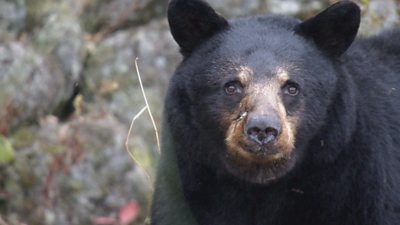
A glut of black bears is also expected in the woods, their numbers bolstered by two exceptionally good food years, and more bears mean a better chance that our cameras will pick them up.
Some of the smaller mammals are familiar too - on the lakeshore there are otters, plus a species we have seen on our cameras in the UK - but which is much more at home here - the mink.
Black Bear numbers are booming across New England, and early indications are that this year could be a record breaker. In Massachusetts alone the estimated number has rocketed from around 100 in 1970 to more than 4,500 in recent years, but more bears means more encounters with people. We explore how people can live alongside bears, and look into stories of opportunistic individuals that gorge themselves on long forgotten apple orchards hidden in the woods.
Hawk Migration
Cameraman Bob Poole has travelled the world to film some of the world’s most iconic animals, but his passion for natural history started much closer to home. On the steep mountainside of Pack Monadnock, New Hampshire, Bob sets out to follow in his father’s footsteps and catch a glimpse of something he’s never seen before - thousands of migrating raptors, jostling in the turbulent mountain air as they head south towards their South American wintering grounds.
Garden Drama
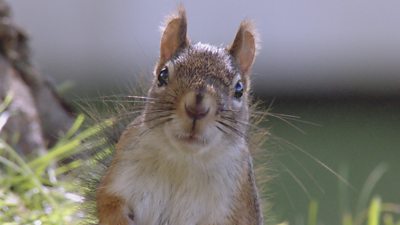
Weasels and stoats play among the boulder piles, while red and grey squirrels live side by side in the USA - with the red squirrels actually seen as the bigger pest out here, a fact the team will unravel in the live shows.
And there are plenty of nocturnal specialists too, with porcupine, skunk, raccoons and flying squirrels coming out after dark, along with owl species ranging from the tiny saw-whet, to the massive barred owl.
We hope to catch all kinds of different birds species, from cardinals, blue jays and chickadees on the feeders, loons and bald eagles on the lake, and many different hawk and vulture species patrolling the skies above.
Gillian’s Missions
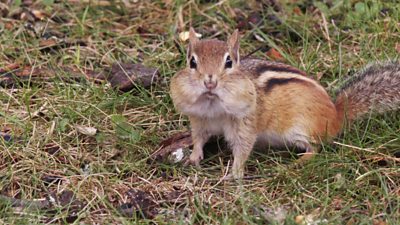
What really goes on in a New England back yard? To find out, we visit a garden in Maine with a breath-taking view of the mountains framed by an old hickory tree. It’s home to beavers, red and grey squirrels, woodchuck and chipmunks, all of whom are busy preparing for winter. Some of the animals are not getting on - the greys are trying to outwit the reds, while the chipmunks are out and out thieves, and a passing bear spells danger for them all. It's a real soap opera…watched over by the bald eagle peering down from it’s roost up in the old hickory.
Beautiful Maine
Maine is home to a 'big' New England - towering mountains, raging rivers and iconic New England wildlife. Moose may be the showstopper - but around the corner we might see a muskrat, snowshoe hare, loon or perhaps even a lurking cougar. Plus the huge trucks lumbering down the highways and sawmills dotted around are evidence that Maine was once a lumber capital of the world.
Caterpillars
Often overlooked, the humble caterpillar displays some of the most fascinating behaviour of any wildlife in the autumn. It’s a race against time as they devour the last of the leaves in a desperate race to get the energy needed to survive the brutal winter. And then, the strategies they use are varied and fascinating. Spiny oak-slug caterpillars ward off predators with bright colours and spikes, skiff moth caterpillars hide in plain sight, disguising themselves as dying leaves and loopers turn themselves into twig look-alikes, hanging from the branches in suspended animation until spring returns. Rest assured - whatever tactic they use, you wont look at caterpillars in the same way again after this film.
Turkeys
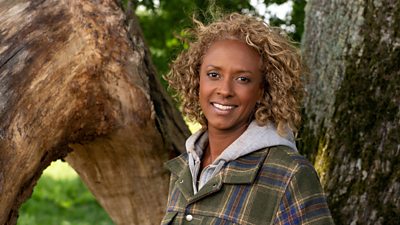
Gillian’s autumn missions will also be based in the Squam Lake area, but she will be exploring slightly further afield, including trips to the lakeside, deeper exploration of the woods and reports from the Squam Lake Natural Science Center.
Each night she will embark on a different mission to unravel some of the harder to see and more unusual stories of the New England fall. Her missions include:
The lake
Squam lake is a large body of water, and Gillian will investigate both the animals that live above it, including the resident bald eagles and those that live on it like the enigmatic loons, before getting in the water itself to see what lies beneath its chilly waters.
The leaf litter
Gillian will delve into the rich, colourful carpet to find the amphibians and insect life that needs this autumnal bounty to survive, including a glorious juvenile newt called a red eft.
Woodpeckers
These forests resound with the sound of woodpeckers, and Gillian will try to track down three different species, including the largest extant species on North America - the pileated woodpecker
Mammal Mission
Gillian will also be on a nocturnal mammal mission - using everything we can learn from our remote cameras to try to see some of the nighttime creatures herself.
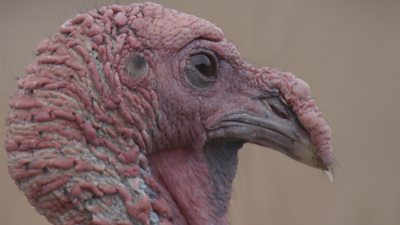
After being wiped from the New England map in the 1800s, wild turkeys have stormed back in what's considered a major success story for wildlife restoration. But as they spread into urban areas, not everyone is 'giving thanks'. They're increasingly clashing with residents, attacking cars, pets and people. When autumn comes the birds gather into streetwise flocks, trying to find their place in the pecking order. Love them or loathe them it looks like these birds are here to stay, and we take a peak in to day in the life of these gangs of gobblers.
Presenter-led films
Leaf Peeping
The dramatic colours and sheer scale of the New England fall lures millions of tourists every year - known locally as the ‘leaf peepers’. Chris Packham and Michaela Strachan join them this year, on a road trip through the New Hampshire countryside to find the best fall colours, tick off the classic sights such as covered bridges, picket fences and church steeples, and meet some of the most dedicated leaf peepers who come back year after year.
Ghost Moose and Winter Ticks
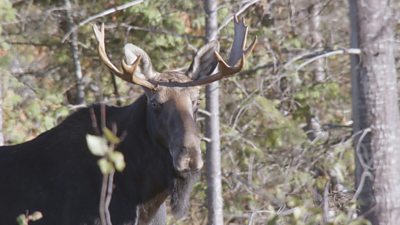
Michaela Strachan goes in search of one of New England’s most iconic animals, the moose. She travels to New Hampshire’s Jericho State Park to meet biologist Professor Pete Pekins who’s been discovering why the region’s moose population is under threat. Pete and his team have revealed that these largest of animals are struggling under a load from one of the smallest, the winter tick, and that our changeable climate is also implicated in their worrying demise.
Tree Swallows
As autumnal avian spectacles go there are few as dramatic as the tornadoes of North American tree swallows that gather on their southerly migration. With their iridescent deep-blue backs and clean white fronts, these acrobatic birds congregate at dusk in their thousands. Michaela Strachan cruises down the Connecticut River to the largest roosting site in New England to marvel at their
breath-taking display - a sight to rival the European starling murmuration.
Bobcat
Persecuted for years, bobcats are now protected in Connecticut and their populations are bouncing back. But with a growing human population, how do these charismatic felines fare in the increasing urban sprawl? Michaela Strachan joins Bobcat biologist Jason Hawley on an autumnal radio-collaring mission, aiming to investigate how these secretive cats are affected by housing density, and if, given then choice, they opt for rural or suburban territories.
Cannon Mountain
Cannon Mountain is one of New Hampshire highest peaks, and at the top is a magical, hobbit-like land of dense, wet woodland - the perfect stop-off point for some of North America’s smaller migrating birds. It’s a birders’ paradise, and Autumnwatch’s birder-in-chief, Chris Packham, is up early to track down some of the remarkable birds that come through this beautiful place.
Science of the Fall
What creates the vibrant colours of New England Fall? Why is there more red pigment here than in Europe? And will this spectacle get better of worse as our climate changes? Chris Packham travels to the University of Vermont to meet maple scientist Abby van den Berg who’s studying these complex questions.
Timber Rattlesnakes
Snakes might be cold-blooded, but that doesn’t make them cold-hearted - as shown by the fascinating life cycle of the timber rattlesnake. Females give birth to live young in the autumn, and then look after them throughout the tough winter. The tender timber rattlers are some of the most selfless snakes around.
Passionate People
Greg Skomal - Sharkman
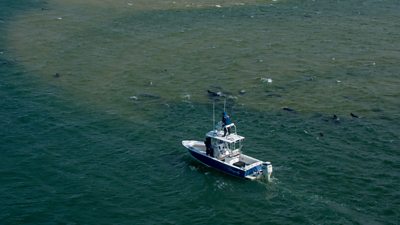
With heroes like Jacques Cousteau and fictional oceanographer Matt Hooper in Jaws, it’s no surprise that Marine biologist Greg Skomal is a total fish nerd. His childhood dream was to study sharks, and he’s spent the last three decades doing just that, becoming the North Atlantic’s go-to guy for the most recognizable of them all - the great white. We dive into Greg’s world to discover what he’s learnt about the private life and habits of this often-misunderstood predatory fish.
Kim Smith & The Monarch Butterfly
Its hard to know which is more fascinating - the monarch butterfly, a beautiful orange and black insect that migrates over 3000 miles each autumn, or Kim Smith, whose life is dedicated to them. Kim designs butterfly-friendly gardens in her home state of Massachusetts to give these epic migrators a chance to find nourishment on their migratory route, and in her spare time breeds, films and writes books about them. This autumn, on the infamous stormy coast around Cape Ann we’ll immerse ourselves in Kim’s world - and that of the monarch itself.