Anna Maxwell Martin
Interview with Anna Maxwell Martin
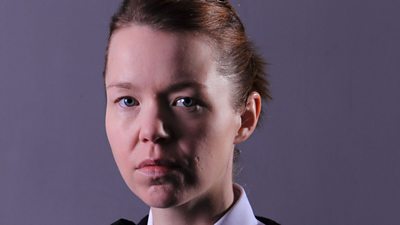
Acclaimed actress Anna Maxwell Martin stars as Tina Dakin, a married mother of three, who is overstretched at home, and at the juvenile detention centre where she works as a prison officer.
But something doesn’t seem right when new inmate Stephen Cartwright (Robert Sheehan) arrives and before long she is to meet his father, Peter (John Bishop) in the worst circumstances imaginable.
There is an attractive modesty and practicality about the way Anna Maxwell Martin comes across. Here is an enormously talented actress, who could have rested on her laurels. She had two BAFTA wins under her belt in a very short space of time for performances as orphan Esther Summerson in the BBC’s Bleak House in 2006 and for Channel 4’s Poppy Shakespeare in 2008.
Since then there have been varied and totally arresting performances including: Kay, a lesbian ambulance driver, in The Night Watch and also for BBC television South Riding, in which Anna starred as an ambitious and idealistic teacher returning to Yorkshire to run a girls’ school. Now she turns her attention to Tina Dakin, in a script by Isabelle Grey and Jimmy McGovern.
This likeable actress wastes no time in saying why Tina appealed to her, in what is a very sombre story.
“I felt I’d never really played anyone like Tina before. She’s a prison officer at a youth detention centre and someone who really has limited choices in life and these become increasingly apparent as the story unfolds.
“I read the script and felt really excited. It’s the story of an ordinary woman’s struggle to do the right thing by her family, look out for those in her professional care and eventually follow her conscience – which is her salvation.
“I’ve always wanted to work on a Jimmy McGovern project for artistic reasons. Then practically this shoot was very short and I have two little children.
“So to be involved in such a high calibre piece of work with a limited time commitment was a great opportunity and really fortunate,” says Anna speaking as an appreciative working mother.
“Also because Tina looks like real person hours aren’t spent in costume and make-up. The whole process took about fifteen minutes. I did my own hair; then it was straight to work,” laughs Anna.
Anna describes the character she plays and tells us about her life. “At home Tina’s a loving wife and devoted mum to three young children.
“She and her husband struggle to make ends meet. Her husband does night shifts and she’s working days. They are decent people who work hard but they don’t have an easy life.
“At work Tina can josh with the boys, but recognises that you’ve got to put yourself in a position where you don’t take any nonsense from anyone. Her attitude is: ‘It’s my job I’ve got to get on with it’.
“To me Tina’s professional life is oppressive and edgy. At times it’s a violent environment.
“She develops a protective cover she while she’s there, a different persona, she’s on guard all the time.
“It must be incredibly stressful to be constantly vigilant. I think it adds to the pressure of her job. I felt stressed just acting it,” comments Anna.
“I have a couple of friends who work in the prison sector and I spoke to them when I was thinking about the role. Their working lives are not like Tina’s.
“I should say that it’s not uncommon for women to work in the service. But for the purposes of this drama you do feel she’s a woman alone in a man’s world.”
Anna stresses that, “Tina’s not living a comfortable middleclass life. She can’t just walk away from her job because something bad happens. And it does.
“Her subsequent reactions are governed by worries of providing for her family as well as well feelings of loyalty to colleagues, in particular Frank. This story is partly about allegiances – where your loyalties lie.
“This fundamental lack of choice and feeling of powerlessness governs her actions. Here Anna emphasises again:
“It’s a very, knotty story filled with moral and emotional dilemmas.
“It keeps changing – sometimes on a knife edge. I felt very stressed at times.”
“Both Ewen (Bremner) and I, who plays Tina’s closest colleague Frank, felt we had to play our parts as truthfully as possible to tell the story the right way.
“At the start Tina’s working relationship with Ewen is what keeps her going, but by the end, she’s denounced him; he’s her nemesis.
“Following the first appalling incident their personal conflict grows. The worst has happened on their watch and it’s huge and shocking.
“Frank’s response to this terrible event is to stay very calm and pragmatic. He becomes increasingly amoral, corrupt and self-serving,” says Anna careful not to be explicit and give away the storyline.
“I think Tina’s in shock following this first incident and remains in that state as things worsen until she is both betrayed and violated at work.
“It’s a terrifying build up and she doesn’t express her feelings about what’s happening around her. She never lets her distress or anger show. I think she’s in such deep shock and she’s unable to express what’s happening for quite a lot of the action.
“Also Tina’s not in a position to whistle blow, she can’t afford to lose her job – so for what seems a long time she keeps her head down, but then she does speak out and this opens the way for an act of forgiveness.”
From Anna’s summary it sounds as if the set was awash with tears, but she explains that she was told not to cry at all during shooting – not until the last scene. But says Anna that’s all well and good in theory but working with John Bishop, who plays Peter, father to Stephen (Robert Sheehan), meant it was impossible.
“I couldn’t do a scene with John without bursting into tears,” she recalls. “John’s a wonderful person and gives an amazing performance. He’s so truthful playing Peter. His acting is so real it made me cry every scene I had with him.”
In conclusion Anna says, “Hopefully Tina’s story will move audiences as much as it did us while making it.”
