BBC to chart century of classical music in epic year of programming
The BBC announced a raft of major classical music programmes at the Association of British Orchestra’s Conference in Cardiff.
Published: 26 January 2018
Our aim will be to help people of all ages to begin a new relationship with classical music - or take their existing relationship even further - and make it a habit and passion for life.
- BBC Four will chart the greatest classical performances of the last 100 years in Our Classical Century, with tie-ins across the BBC Proms, BBC Orchestras and BBC Radio 3
- BBC Radio 3’s Essential Classics to produce companion programming of 100 moments
- Radio 3 to broadcast programmes featuring learning concerts with the BBC Orchestras allied to Our Classical Century
- BBC Young Musician Prom to feature past winners in 40th anniversary year
- BBC Young Musician’s 40th anniversary grand final to be held at Symphony Hall Birmingham with City of Birmingham Symphony Orchestra led by Mark Wigglesworth
- Category and semi-finals of BBC Young Musician 2018 to take place at new Royal Birmingham Conservatoire
- BBC Radio 3 announces concert and repertoire featuring premieres of works by female composers overlooked by history
- BBC Proms Inspire Competition to mark 20 years with illustrious panel of composers
The conference this year was hosted by the BBC National Orchestra of Wales to mark their 90th anniversary in collaboration with Welsh National Opera, and saw a day of BBC hosted sessions looking at the conference theme of collaboration.
The conference culminated in performances from BBC Young Musician winner 2014, Martin James Bartlett and 2016 Finalist and Woodwind Category Winner Jess Gillam, alongside a keynote speech from Alan Davey, Controller of BBC Radio 3, BBC Orchestras and Choirs and BBC Proms, about the corporation’s commitment to classical music where he asked the industry to collaborate on music education and reaching new audiences.
Alan Davey says: “In the classical music industry we have to respond to changing times with new ideas and new ways of connecting with and engaging the public. Our aim will be to help people of all ages to begin a new relationship with classical music - or take their existing relationship even further - and make it a habit and passion for life.”
In the same speech, Davey also outlined that as part of Radio 3’s vision to expand the canon of classical music to be more representative, a special concert at LSO St Luke’s by the BBC Concert Orchestra will premiere works by female composers that in some cases have not been heard in over 100 years or have never before been performed. The works which are announced today, will commemorate International Women’s Day on Thursday 8 March and will be broadcast live on BBC Radio 3. It is part of a body of work the station is undertaking with the Arts and Humanities Research Council.
Earlier in the day Jan Younghusband, Head of BBC Music TV Commissioning, announced a landmark series, Our Classical Century, on behalf of Cassian Harrison, Controller BBC Four. The series will be broadcast in four parts across the year from Autumn 2018 and will survey key historic performances and highlights in the last 100 years of classical music. The series, which will be made by Lion Television, is one of the most ambitious single commissions for classical music, using resources across the BBC including the BBC Orchestras. It will also be accompanied by special BBC Radio 3 programming in Essential Classics made by BBC Radio 3 production, which will identify 100 of the most significant moments, events, and pieces of music from across the last century to be broadcast or staged throughout the year. The focus of Our Classical Century will end in the first night of the 2019 Proms, bringing the classical music story to the present day.
Jan Younghusband, Head of BBC Music TV Commissioning says: “This is a celebration of the great musical achievements in the UK over the last 100 years and the great artists who have thrilled audiences performing the great masterworks old and new.”
Cassian Harrison says: “As the home of classical music on television, BBC Four is always looking for new ways to explore the genre, and to bring the very best artists and performances to our audiences. Our Classical Century will be an ambitious series of programmes working in collaboration with other parts of the BBC. It’s a perfect complement to our constant coverage, including talent initiatives such as BBC Young Musician, BBC Cardiff Singer of the World, Leeds International Piano Competition, documentaries and performances such as the Vienna New Year’s Day Concert, and, of course, the BBC Proms.”
Other announcements throughout the course of the day included: BBC Young Musician, run and produced by BBC Studios and Music Wales, will celebrate its 40th anniversary this year with a BBC Prom in the 2018 festival. BBC Four will also present a special documentary, tracking the experiences of recent finalists and winners following their success in the competition, with contributions from cellists Sheku Kanneh-Mason and Natalie Clein, pianist Martin James Bartlett, saxophonist Jess Gillam and the competition’s ambassador - violinist Nicola Benedetti.
This year’s final of BBC Young Musician was unveiled as being held at Symphony Hall Birmingham, led by the City of Birmingham Symphony Orchestra, conducted by Mark Wigglesworth. The category and semi-finals will take place at the new Royal Birmingham Conservatoire. The competition will be broadcast on BBC television and BBC Radio 3. The 25 young musicians who make up the 2018 category finalists - across strings, woodwind, percussion, brass and keyboard - have been announced today.
And finally, Alan Davey announced the 20th anniversary of the BBC Proms Inspire Composers Competition which opened for entries today. The competition gives composers the unrivalled opportunity to have their compositions performed at the BBC Proms, broadcast on BBC Radio 3, as well as a coveted BBC commission. Previous winners include celebrated composer, Mark Simpson, and this year’s illustrious judging panel includes Sally Beamish, Dobrinka Tabakova, Anna Meredith and Kerry Andrew.
AH
BBC Young Musician 40th Anniversary
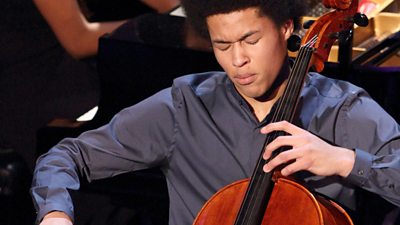
BBC Young Musician, the UK’s biennial talent search for UK’s most talented young classical performers, celebrates its 40th anniversary in 2018.
The 25 young musician who make up the 2018 category finalists - across strings, woodwind, percussion, brass and keyboard - have been announced today.
This year, the competition’s category and semi-finals will be held at the new Royal Birmingham Conservatoire. The grand final will be held at Symphony Hall Birmingham accompanied by the City of Birmingham Symphony Orchestra, conducted by Mark Wigglesworth. Kerry Andrew, this year’s Ten Pieces III commissioned composer, will be the cross-category judge throughout the competition. All other judges will be announced soon.
The anniversary will also be marked with a special documentary on BBC Four, tracking the experiences of recent finalists and winners following their success in the competition. The film will include contributions from cellists Sheku Kanneh-Mason (pictured above) and Natalie Clein, pianist Martin James Bartlett, saxophonist Jess Gillam and the competition’s ambassador - violinist Nicola Benedetti.
2018 will also see the first ever BBC Young Musician Prom, which will feature performances from former winners and finalists. Further information will be announced in due course.
BBC Young Musician is run and produced by BBC Studios and Music Wales and is broadcast on BBC television and BBC Radio 3.
BBC Ten Pieces
Aimed at inspiring a generation of children to get creative with classical music, BBC Ten Pieces invites children aged 7-14 to develop their own creative responses to ten pieces of music.
The initiative has so far reached over four million people across the UK, sold out three BBC Proms concerts and won a BAFTA for the Ten Pieces II film.
A project delivered by BBC Music and BBC Learning, in conjunction with the BBC Orchestras and Choirs, it marks the biggest commitment the BBC has ever made to music education in our country with each set of ten pieces acting as a gateway to children learning more about classical music across a broad range of eras.
Later this year there will be a further opportunity for young people to engage with Ten Pieces through BBC Music presents The Biggest Weekend. Not only will Ten Pieces be running a residency in one of the locations hosting The Biggest Weekend, but schools across the UK will be encouraged to put on a Ten Pieces Assembly in the week running up to the event helping young people across the UK to come together and celebrate The Biggest Weekend with the BBC.
BBC Proms Inspire
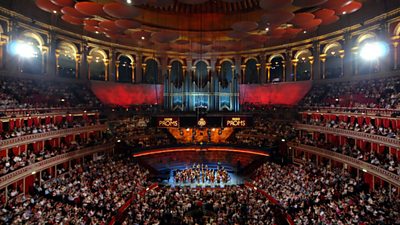
2018 marks the 20th anniversary of the BBC Proms Inspire Scheme, the BBC Proms’ annual scheme which gives the nation’s brightest young composers aged 12-18 years old the opportunity to expand their musical horizons and get a taste of what it means to be a composer in the 21st century.
The 20th anniversary of the scheme has been formally launched today by Controller of BBC Radio 3, Alan Davey, with the opening of the BBC Proms Inspire Competition.
Winners will have the unrivalled opportunity to have their compositions performed by professional musicians at the BBC Proms. Their pieces will also be broadcast on BBC Radio 3 and they will receive a coveted BBC commission.
This year’s competition panel will include some of the UK’s leading composers including Anna Meredith, Sally Beamish, Joby Talbot, Dobrinka Tabakova, and Kerry Andrew.
The scheme will also offer composers of the future opportunities and events year-round to encourage and support them.
Our Classical Century
Our Classical Century is a landmark series presented on BBC Four as well as BBC Radio 3, BBC Proms and BBC Orchestras.
Four series will be broadcast on BBC Four across the year, surveying key moments in the last 100 years in classical music from 1918 to 2018. Key repertoire and highlights will be performed by the BBC Orchestras, offering opportunities for new audiences to engage in classical music.
Our Classical Century will be accompanied by complimentary programming on BBC Radio 3’s Essential Classics. The station will identify 100 of the most significant moments, events and compositions from the last one hundred years, which will be broadcast and staged throughout the year. The series will begin in Autumn 2018 and conclude on the first night of the BBC Proms in 2019 with a performance of a special commission which will bring the story of classical music up to the present day.
Our Classical Century was commissioned by Jan Younghusband, Head of BBC Music Television Commissioning for Cassian Harrison, Controller of BBC Four and will be made by Lion Television.
BBC Radio 3 Forgotten Female Composers
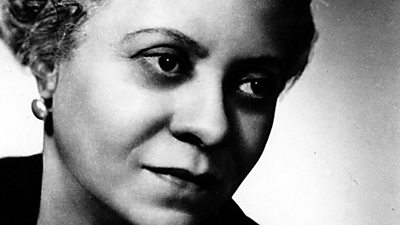
BBC Radio 3 has been working in collaboration with the Arts and Humanities Research Council on an ambitious recording project to revive lost works by five historical female composers and bring them into the spotlight.
Works by the composers will be performed by the BBC Concert Orchestra in a special concert at LSO St Luke’s in London commemorating International Women’s Day on Thursday 8 March, broadcast live on BBC Radio 3.
Further previously unheard pieces, which range from chamber music to full-scale symphonic works, have been recorded by the BBC Orchestras and Choirs and BBC Radio 3 New Generation Artists, and will receive their premiere on the station. In some cases this will be the first time that these works have been heard in over 100 years, and for others this will be the first time they have ever been performed.
The project is part of Radio 3’s mission to bring remarkable music and culture to listeners, expanding the existing classical canon to include unjustly neglected women.
International Women’s Day concert programme
- Leokadiya Kashperova - Symphony
- Marianna Martines - Two arias from the Sant’Elena Oratorio
- Florence Price - Concert Overture No. 2
- Augusta Holmès - Allegro Feroce
- Johanna Müller-Hermann - Drei Gesange
Additional recorded works (to date)
- Leokadiya Kashperova - Evening and Night
- Augusta Holmès - Memento mei deus
- Augusta Holmès - Fleur de Neflier
- Augusta Holmès - Vision de la Reine
- Florence Price - Poem of Praise
- Florence Price - Resignation
- Florence Price - Song for Snow
- Florence Price - Witch of the Meadow
- Florence Price - The Moon Bridge
- Johanna Müller-Hermann - Alle die Wachsende
- Marianna Martines - Sinfonia in C Major
About the composers
- Leokadiya Kashperova (1872-1940) was a Russian pedagogue and pianist who wrote Romantic songs and instrumental music. She performed twice at London’s Aeolian Hall in 1907 and received very good reviews. Kashperova married one of her piano students, a twice-arrested and exiled Bolshevik revolutionary, and the couple was forced to flee to the Caucasus and then to Moscow. Kashperova’s role as a composer is almost completely unknown today, and she is recognised primarily as Stravinsky’s piano teacher.
- Marianna Martines (1744-1813) was an Austrian composer, singer and pianist from a noble Neapolitan family. The large family house in Vienna where she grew up was also home to artists including the librettist Pietro Metastasio, and Joseph Haydn, then a struggling young composer. Composer and teacher Nicola Porpora was a frequent guest. Martines was a keyboard virtuoso and wrote extensively for her instrument, becoming a prodigy of Metasasio and several visiting composers, and attracting illustrious musicians to her regular salons (Mozart reportedly performed at one). Martines enjoyed fame throughout Europe in her lifetime, but has since had little recognition.
- Florence Price (pictured above) (1887-1953) was an award-winning symphonist from an affluent African-American family. Born in Arkansas, Price had her first music published by age 11. In 1903, she was accepted to the New England Conservatoire of Music, where she achieved a Double First and a piano teaching diploma. She was denied a place on the Music Teachers’ Association, however, because of her skin colour. In 1925 and 1927 Price won the Holstein prize, and her Symphony No. 1 in E minor was performed by the Chicago Symphony Orchestra in 1932. Price achieved success at a time when restrictive Jim Crow laws were in place in the South, and the ‘Harlem Renaissance’ movement was taking flight.
- Augusta Holmès (1847-1903) was a French composer of Irish descent. Discouraged by her parents, Holmès had to wait until their deaths to embark on a composing career. She had a large circle of artistic friends and admirers, including Liszt, Rossini, Saint-Saëns and Cézar Franck (who she studied with), and had five children with the poet Catulle Mendés. Holmès’s music was premiered at the 1889 Universal Exhibition, and in 1895 she was the first woman to have an opera premiered in Paris. She composed large-scale orchestral and choral works, writing a piece for 1,200 performers for the centenary of the French Revolution. The first recordings of Holmès’s music were made in 1994, but much of her catalogue remains undiscovered.
- Johanna Müller-Hermann (1868-1941) was an Austrian composer and pedagogue. Originally a primary school teacher, she gave up this career after marriage. She was especially known for her orchestral music, chamber music and songs, and her use of subtle chromatic harmonies. Müller-Hermann studied composition under Alexander Zemlinsky and Josef Foerster, and took over as a theory and composition tutor at the New Vienna Conservatory in 1918 after Foerster left the post. Despite teaching there for more than twenty years, she is relatively unknown today and there are only a handful of recordings of her work, largely due to the suppression of progressive Viennese culture and the closure of the New Vienna Conservatory by the Nazis after 1938.
The Pankhurst Anthem
BBC Radio 3 has commissioned a brand new choral work to mark the 100th anniversary of women’s suffrage in the UK.
The Pankhurst Anthem is a choral work with music by composer Lucy Pankhurst and text by women’s rights activist and writer Helen Pankhurst, based on words by her great-grandmother Emmeline. Written to be performed in two parts, Echoes of Emmeline is followed by Anthem, which features an uplifting melody designed to be easily learnt, sung by any number of voices and especially composed with the view to encouraging music-lovers across the UK to perform the piece themselves to mark their anniversary year together.
The BBC Singers conducted by Hilary Campbell will perform The Pankhurst Anthem in an online premiere available to view on the BBC Radio 3 website from the 100th anniversary of women’s suffrage on Tuesday 6 February.
To enable audience participation and involvement, vocal scores of The Pankhurst Anthem will be available to download free of charge from the BBC Radio 3 website from Tuesday 6 February. Audiences are encouraged to send BBC Radio 3 photographs of themselves learning and performing the work, and to share recordings via social media.
BBC Radio 3 will invite audiences to join amateur choir Voices of Hope for a performance of the complete work on the opening day of the station’s Free Thinking Festival at Sage Gateshead on Friday 9 March, broadcast live on Radio 3. Further performances of The Pankhurst Anthem will be announced in due course.