40 years of the Iranian revolution - on BBC News Persian
On Friday 1 February, BBC News Persian will roll out content across its TV, radio and digital platforms, taking a new a look at the events which led to the creation of the Islamic Republic of Iran in 1979, and exploring various dimensions of the revolution’s legacy.
Published: 30 January 2019
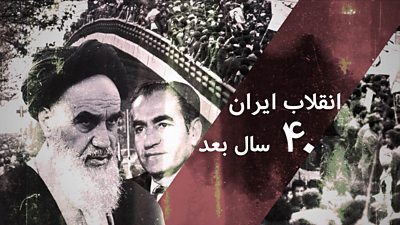
Iran Revolution, 40 years on is unlike any other take on the events of 1979, be it in terms of content or form. It is very much the younger audience we had in mind when we undertook this major project.
As part of Iran Revolution, 40 Years On on BBC News Persian, rare archive materials and testimonies bring to the fore key figures and forces at play in and outside Iran 40 years ago. The BBC also talks to Iranian expat celebrities and youth about the revolution’s effect on their lives.
BBC News Persian Editor Rozita Lotfi says: “Iran Revolution, 40 Years On is unlike any other take on the events of 1979, be it in terms of content or form. It is very much the younger audience we had in mind when we undertook this major project. We hope that the innovative, concise and in-depth content on our social media platforms as well as website, TV and radio will engage them, helping them better understand Iran’s recent past, the personalities and the events which, 40 years on, continue to shape their lives, wherever they are.”
Highlights of the Iran Revolution, 40 years on project on BBC News Persian include:
- A daily look by prominent journalist and revolution eye-witness Masoud Behnoud at how the Iranian press covered the events as they unfolded 40 years ago
- Forty short videos, each introducing key facts about a figure who played a role in shaping the revolution - and the Islamic Republic
- Before and after - an invitation to the audience to share current images of places in their locations alongside the image of the same spot before the revolution
- A piece mapping Shah Mohammad Reza Pahlevi’s journey as he left Iran on 16 January 1979
- Reports about the Shah’s army and the role of the US in neutralising it; the fate of the revolution’s left-wing activists; the property seizures; and the revolution’s slogans and songs
- On the flagship interview programme, Be-ebarat-eh Digar (HARDtalk) - a special hour-long edition with excerpts from the interviews conducted over the last ten years, in which prominent figures share their insights into the revolution; a conversation with Dr Shahriar Ahy who liaised between the Shah and the White House in the last few months of the monarchy; a conversation with Dr Kazem Kardavani, a Shah opponent, about the role of the Iranian opposition abroad, including that of the Confederation of Iranian Students in Europe of which he was a leading member, in the years leading to revolution
- On TV debate programme, Pargar (Compass) - discussions on how the concept of the revolution has evolved; on how the 1960s land reform prepared the ground for the revolution; whether the revolution has boosted or depressed Iranian women’s empowerment; and the role of the Revolutionary Guards in today’s Iran
- On TV programme Safheh Do (Page 2) – a debate will allow social media audiences to join the conversation, with four panellists looking at the causes of the revolution, the direction it took and the Iranian Republic’s future
- Two editions of the digital-first TV programme #Shoma (#You) discussing with social media audiences their views of the revolution and its impact on their lives
- Conversations with Iranian personalities, including Soror Kasmaei, Abdolkarim Lahiji, Shahla Shafigh, Hamid Reza Javdan, Shabnam Toloei, Taghi Rahmani, Mana Neyestani and Faramaz Rashidi, who talk about the revolution’s direct effect on their lives
- Three special editions of the art show Tamasha (Spectacle), featuring 40 best Iranian films made since the revolution, as chosen by industry professionals
- On the documentary showcase programme Aparat (Projector) – the films The Fall Of A Shah, Writing On The City and Lalehzariha will be featured
Dedicated online content will explore a wide range of issues, including Human Rights violations before and after the revolution, the revolution’s ideologues, its economic policies and its impact on Islamism in Afghanistan, the role and position of Iran’s ethnic minorities and women before and after the revolution, as well as other subjects that continue to be in the focus of discourse. The BBC News Persian TV channel will also show Marjaneh Satrapi’s Oscar-nominated animation, Perspolis.
Broadcast from the BBC studios in London, BBC News Persian is available around the clock and has a weekly audience of 22.5m (2018). BBC News Persian TV is broadcast via satellite (Hotbird, YahSat and Telstar 12) and is streamed live online (and available on demand) on bbc.com/persian and YouTube. BBC News Persian also reaches its audience via Facebook, Twitter, Instagram and Telegram. BBC News Persian radio broadcasts are visualized, enabling audiences to also watch radio programmes on TV and digital platforms.
BBC News Persian is part of the BBC World Service.
LN