BBC Four commemorates the fall of the Berlin Wall
To mark the 30th anniversary of the fall of the Berlin Wall, BBC Four has announced four new films that address and discuss the surrounding circumstances that led to the end of the Cold War and the fall of the wall.
To mark the 30th anniversary of the fall of the Berlin Wall, BBC Four has announced four new films that address and discuss the surrounding circumstances that led to the end of the Cold War and the fall of the wall.
The films will be broadcast around the 30th anniversary and include a trio from BBC Arts, Rich Hall’s Red Menace, London Calling: Cold War Letters and A British Guide To The End Of The World alongside The Fall Of The Berlin Wall With John Simpson from BBC Factual.
Cassian Harrison, Channel Editor, BBC Four, says: “Only BBC Four would approach such an important date with such a distinctive, eclectic and unexpectedly entertaining range of content. From Rich Hall’s brilliantly dyspeptic take on the absurdities of mutually assured destruction to shocking footage of the UK’s desperate attempts to prepare for armageddon, BBC Four’s Cold War season will offer a singular perspective on an extraordinary era."
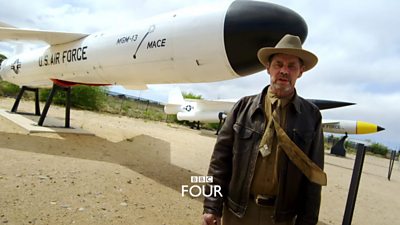
In Rich Hall’s Red Menace, Rich embarks on an examination of the relationship between the West and the East, America and the Union of Soviet Socialist Republics. In his unique way, weaving bizarre, extraordinary and untold stories through the narrative, he looks at the Cold War from an American perspective and delves into the psyche of those living in the Soviet Union; those who took part in the machinations, the plots and the conspiracies and the ordinary citizens who, like Rich lived through this most tense of times.
The Fall Of The Berlin Wall with John Simpson, see John, the BBC’s world affairs editor, go back in time to examine his reports on one of the most defining moments of the 20th century on the 30th anniversary of the fall of the Berlin Wall. As he examines the BBC’s extensive archive he will consider why history has not turned out quite the way he hoped, and why global politics now is in fact even more complex and worrying now than it was then.
London Calling: Cold War Letters is the story of the BBC's World service broadcast Letters Without Signature which between 1955 and 1975 broadcast letters which gave voice to the silenced people of East Germany by inviting them to secretly write in to a radio programme. The film looks at the impact of the programme on both the letter writers in East Germany - who faced jail if discovered - and the producers of the show in London, particularly on its mysterious presenter, Austin Harrison.
Framed by Britain’s mission to have its own nuclear force, A British Guide To The End Of The World uses extraordinary unseen archive and exclusive testimonies from people directly involved in and affected by Britain’s nuclear ambitions as the country prepared itself for nuclear attack during the Cold War.
The Arena film begins with Operation Grapple - a series of British thermonuclear bomb tests that took place in the south Pacific islands between 1957-1958 - and offers unique access to footage from ex-military personnel who filmed their arrival on Christmas Island to carry out these tests. Over succeeding decades the British authorities tried to plan for the prospect of nuclear war reaching these shores - a devastating event that never happened. Long neglected broadcasts from news and government sources reveal a time when paranoia was stockpiled, leaving a generation traumatised.
BW
Rich Hall’s Red Menace
2019 will mark the thirtieth year since the fall of the Berlin Wall and, ostensibly, the end of the Cold War. In light of this, Rich Hall embarks on an examination of the relationship between the West and the East, America and the Union of Soviet Socialist Republics.
In his unique way Rich will look at the propaganda, ignorance, fear and secrecy and the natural offspring of these, paranoia and how a forty year stand off between superpowers brought both the US and Russia to the verge of nuclear war.
This is a 90-minute documentary that doesn’t just look at the Cold War from an American perspective. Rich Hall will delve into the psyche of those living in the Soviet Union, those who took part in the machinations, the plots and the conspiracies and the ordinary citizens who, like Rich lived through this most tense of times.
The Cold War, Americas obsession with Communism and the Soviet Union isn’t just about the race to produce the atom bomb and the conquest of space. It’s about spying, political scheming, fear from Communism in Hollywood, in literature and on television.
It was science fiction, it went from the absurd to the ridiculous, it even created incredible sporting drama.
Rich, in his usual style, uses the bizarre, extraordinary and untold stories to weave the narrative threads to give us his take on the Cold War and Americas hysterical obsession with the “Red Menace.”
Rich Hall’s Red Menace (1x60) is an Open Mike Production for the BBC. It was commissioned by Cassian Harrison, Channel Editor BBC Four, and Mark Bell, Commissioning Editor, Arts. The director is Chris Cottam, producer John McCormack and the exec producers are Andrew Beint and Anthony Caveney.
The Fall Of The Berlin Wall With John Simpson
On the 30th anniversary of the fall of the Berlin Wall John Simpson, the BBC’s world affairs editor, will go back in time to examine his reports on one of the most defining moments of the 20th century. As he examines the BBC’s extensive archive he will consider why history has not turned out quite the way he hoped, and why global politics now is in fact even more complex and worrying now than it was then.
On 9 November 1989, as the Berlin Wall’s check points opened up, Simpson rushed to Berlin to cover this incredible event which he thought, like many others, would change the world for the better. Three decades on, Simpson wonders if he was wrong to be so optimistic and talks with historians and other experts to try and understand just how accurate his reporting was.
He’ll examine why the Cold War battle that built the Berlin Wall was replaced with other destabilising global power-struggles, why he didn’t predict that the pace of change across Europe would lead to the terrible war in Yugoslavia, and why Russia would find a new guise in which to become a bitter enemy to the West.
At the heart of the film is an intense and personal interview where he describes how he grew up in the shadow of the Cold War power battle between the capitalist West and the communist East and how he never thought the Berlin Wall would fall in his lifetime. He believed, like everybody else, this global stand-off would continue for many more decades, ending sooner or later in nuclear war.
The Fall Of The Berlin Wall With John Simpson (1x60) was commissioned by Cassian Harrison, Channel Editor BBC Four, and Tom McDonald, Head of Commissioning, Natural History & Specialist Factual. It is being produced by Alleycats and the exec producer is Emma Parkins. Abigail Priddle is the Commissioning Editor at the BBC.
London Calling: Cold War Letters
For over 25 years the BBC gave voice to the silenced people of East Germany by inviting them to secretly write in to a radio programme called Letters Without Signature.
Broadcast on the BBC’s German Service, the programme gave voice to ordinary East German citizens who wrote about life under the repressive communist regime. On the 30th anniversary of the fall of the Berlin Wall, this film explores an unknown story of the Cold War. The film looks at the impact of the programme on both the letter writers in East Germany - who faced jail if discovered - and the producers of the show in London, particularly on its mysterious presenter, Austin Harrison. Using never before seen Stasi files and recordings, the film documents the tit for tat propaganda war between the Stasi and BBC. It reveals a fascinating world of spies, secret state subterfuge and individual acts of bravery.
London Calling: Cold War Letters (1x60) is A State of Grace/Schulz-Wendelmann production for the BBC. It was commissioned by Cassian Harrison, Channel Editor BBC Four, and Mark Bell, Commissioning Editor, Arts. It is directed by Christian Schulz, produced by Rachel Hooper and the exec producer is Mike Connolly.
A British Guide To The End Of The World
A British Guide To The End Of The World presents a chilling, chaotic and crazed account of Britain as it prepared itself for nuclear attack during the Cold War.
Framed by Britain’s mission to have its own nuclear force, the film uses extraordinary unseen archive and exclusive testimonies from people directly involved in and affected by these nuclear ambitions - including former British soldiers who feel they were used as guinea pigs during early nuclear tests carried out in Christmas Island in the South Pacific.
Determined to maintain its status as a great power and reaffirm its place as the world’s third nuclear power, Britain began Operation Grapple - a series of British thermonuclear bomb tests that took place in the south Pacific islands between 1957-1958.
The film has unique access to footage from ex military personnel who filmed their arrival on Christmas Island to carry out these tests. The men were mostly conscripted national servicemen who believed they had arrived in paradise... until they had to sign the Official Secrets Act ahead of witnessing the live detonation of Britain’s nuclear bomb.
Having joined the US and the Soviet Union at the nuclear table, Britain was then left with a problem - how should she prepare her people for the potential end of the world?
From classified footage, hidden for decades, the film then reveals Britain’s planning for a devastating event that thankfully never happened. Encased in typically British dark humour and punctuated by moments of poignancy, the archive reveals a time that stockpiled paranoia, heightened the fear of our demise and left a generation traumatised.
A British Guide To The End Of The World (1x75) is an Erica Starling production for BBC Four. It was commissioned by Cassian Harrison, Channel Editor BBC Four, and Mark Bell, Commissioning Editor, Arts. It is directed by Daniel Vernon, produced by Rachel Hooper and the exec producer is Sam Collyns.
