BBC Russian debates the future of Russia’s relations with the West
BBC Russian is premiering its TV programme, BBC Debates (Дебаты Би-би-си) on its website bbc.com/russian, and on TV Rain, on Monday 5 March.
Published: 5 March 2018
Russia is not only Putin; there are many other people there
The format of BBC Debates is based on the concept of a university debating society. The University of Oxford and the Ashmolean Museum, the University's Arts Gallery which was chosen as the first programme venue, is home to one of the oldest debating societies in the world: the Oxford Union.
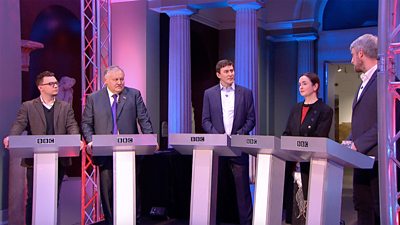
The topic of the inaugural edition of the programme, ahead of the 18 March presidential election in Russia, is the future of Russia-West relations. Presented by BBC Russian’s Oleg Boldyrev, BBC Debates provides a platform for four speakers, all with strong opinions on the future of Russia.
The panel is invited to support or reject a motion on the likelihood of the relations between Russia and the West improving after the election. The programme also features a lively studio audience comprised of Russians living or working in Oxford, as well as Britons interested in Russian politics and culture. Audience members send in their questions ahead of the recording, or pose spontaneous questions and offer their comments during filming.
The programme panel is made up of:
- Howard Amos, Senior Editor, The Calvert Journal
- Catriona Kelly, Professor of Oxford Russian Studies
- Ilya Yablokov, Teaching Fellow, University of Leeds
- Konstantin Zatulin, Member of the State Duma (United Russia)
Howard Amos says: “When the dialogue is not conducted on a political level, it is especially important to maintain it on the cultural level. Russia is not only Putin, there are many other people there.”
Catriona Kelly says: “It's not about a contradiction, but a strange similarity. Neo-liberalism and nationalism are two opposing tendencies, characteristic for many countries today. They are particularly strong in Britain and Russia as both countries are former empires, and they are going through a difficult departure from power.”
Ilya Yablokov says: “The history of today’s conflict and the so-called collective, the West, is a long history of love and hatred. Today we observe one of its chapters, and the relations can change very quickly after the 18 March elections.”
Konstantin Zatulin: “It’s not about Putin and not about 18 March when we talk about conflict. There is Russia which, following the collapse of the USSR, was considered practically unimportant. If our interests are respected, there will be a cause for optimism.”
BBC Debates will be broadcast on TV Rain at 23.00 Moscow time on Monday 5 March and will be published on the website bbc.com/russian
In addition to website, bbc.com/russian, the BBC connects with its Russian-speaking audiences via social media such as Facebook, VKontakte, Instagram, Twitter, YouTube, Telegram, Google+, LiveJournal and OK.ru.
LN