BBC Radio 4’s Farming Today invites Princess Anne, Germaine Greer and Jay Rayner to discuss food, farming and environmental opportunities in the decade ahead
BBC Radio 4’s flagship rural affairs programme, Farming Today will explore the environmental and farming opportunities that will come with Brexit in a week of programming (Monday 20 - Friday 24 March, 5.45am daily), featuring a line-up of special guests.
Published: 17 March 2017
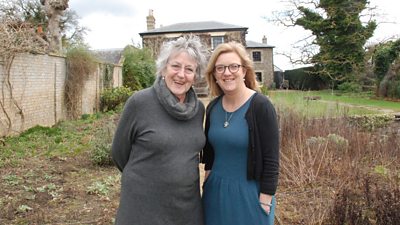
Princess Anne, Germaine Greer, Tim Martin, Jay Rayner and Sir Tim Smit KBE will each explore some of the issues close to their heart relating to how we could look after our countryside, environment and rural communities or produce food from a different perspective.
With the country voting for Brexit, the UK has an opportunity to completely redesign how we consider our environment, produce food, as well as how we look after our countryside and our rural communities.
Farming Today’s guest line-up will examine some of the questions involved, including:
- Should we link our farming policies together with health policies?
- Is this an opportunity to embrace some farming technologies such as GM, which have so far been embraced by the US but avoided by the EU?
- What should we do to ensure rural communities stay a vibrant place to live, where businesses can thrive?
This week of programmes on Farming Today follows the ten-part investigation, Against The Grain, by Charlotte Smith into British agriculture at a time of uncertainty and speculation, which is available on the Radio 4 website and as a podcast via the iPlayer radio app.
The guests will be interviewed by Farming Today’s Charlotte Smith and Anna Hill, and the programmes will feature location reports:
Monday 20 March
Writer Germaine Greer tells Charlotte Smith why protecting our wildlife, pollinators and natural habitats is important as the UK enters negotiations for post-EU trade deals. The journalist - who famously bought a redundant Australian dairy farm and turned it into rainforest - is president of the charity Buglife.
Tuesday 21 March
Eden Project founder Sir Tim Smit says we'll need a revolution in attitudes to producing food if we're to protect food security in the UK post-Brexit. He criticises our current leaders who, he claims, "look down their noses at farming". He says that food production will be the most important profession as the global population moves towards 9 billion, and we need to be inspiring the next generation of producers. He wants leaders who will make it "rock and roll".
Sir Tim Smit says: "The brand of horticulture and agriculture [in the UK] has been allowed to decline to a degree that’s horrifying. If I look at the country of my birth, Holland, if you’re a farmer or a horticulturalist it’s a career, you’re a professional. Agriculture is regarded as every bit as much an applied science as is pharmacy, engineering and medicine. In this country we have a government department where people go to die, and we have a professional class that looks down its nose at people in agriculture and horticulture."
Wednesday 22 March
Wetherspoons pub chain founder Tim Martin tells Anna Hill that UK food and farming will thrive post-Brexit, even without a tariff-free deal from Europe. But he does want to see controlled immigration, which he says is vital for the economy. Tim famously campaigned for Leave in the Referendum by printing anti-EU messages on half a million beer mats. Now he says new trade deals won't put UK farmers at risk, either because consumers won't buy cheaper, lower quality meat and veg, or because our government won't allow it in.
Thursday 23 March
Anna Hill talks to the Princess Royal at Buckingham Palace to discuss food, farming and environmental opportunities after 2020. Princess Anne, who farms in Gloucestershire and is a patron of many rural charities, talks about biofuels, the use of science and technology in farming and what kind of subsidies could help farmers in the future. She explores whether support should also be used to enable producers to grow food staples at a reasonable cost so that all consumers can afford them.
Friday 24 March
Author and food critic Jay Rayner tells Charlotte Smith why he believes it's time for a completely fresh look at food production post-Brexit. He wants to see producers and retailers taking their carbon footprint into account as part of pricing and labeling, right along the food chain.
Jay believes we'll see the end of ultra-cheap food as we've known it in recent decades, but the future of the planet depends on us cutting down on foods that harm the environment. If subsidies to farmers continue he says they should only be to reward progress on environmental or wildlife stewardship.
SW