BBC World Service to bring listeners the science and stories behind the Francis Crick Institute
In a week of special programmes and live reports, BBC World Service will explore the vision of the Francis Crick Institute, including a major debate from the Crick on the fast-changing pace and ethics of genetic research.
Published: 29 September 2016
I’m delighted we’re able to explore the science and learn more about being a scientist today: the role of collaboration across disciplines, the contribution of new technology and the international nature of the teams coming together in this new British institution.
This year sees the Francis Crick Institute open in London and the start of the process of bringing together 1,250 scientists of more than 70 nationalities dedicated to advancing biomedical research. The aim of the Crick is bold - to make remarkable new discoveries that help us understand and treat cancer, heart disease, infection and neurological disorders. The Crick allows people from many disciplines and approaches to work together in their new building in central London, to collaborate and test the value of what they are doing.
BBC World Service is taking up this challenge too, with a series of programmes and reports looking at what the Crick might do for our understanding of illness, treatment and the beginnings of life. Beginning on Saturday 15 October, BBC World Service will investigate what makes such institutions work, be it collaboration or competition, and debate how genetic research might help us better understand the building blocks of human life.
In The Genomic Revolution From The Francis Crick Institute, Claudia Hammond chairs a special debate programme recorded at the Crick with a panel of speakers from across the scientific spectrum. Recent advances in technology mean that scientists can now determine the complete DNA code of an individual’s genome quicker and cheaper than ever before, identifying the genetic variants that may contribute to health and disease over a person’s lifetime. Claudia is joined by experts from the Crick, patient groups, clinical geneticists and ethicists to debate the potential benefits and possible pitfalls around the ethics and implications of the new genomics.
Meanwhile, Roland Pease gets an insight into the concept and creation of the Francis Crick Institute in Discovery: Creating The Crick, while two female scientists talk to a group of young women aspiring to a career in the industry with presenter Kim Chakanetsa in The Conversation: The Scientists @ The Crick. There are special editions of Business Daily, Click, Science In Action and The Science Hour, as well as live reports within BBC World Service news programmes, including Newshour, Newsday and Outside Source.
Mary Hockaday, Controller, World Service English says: “BBC World Service is committed to reporting on the latest developments in science and connecting our global audience to new research that may in time have a real impact on their lives. The Francis Crick Institute is an important and exciting new venture in biomedical science. I’m delighted we’re able to explore the science and learn more about being a scientist today – the role of collaboration across disciplines, the contribution of new technology and the international nature of the teams coming together in this new British institution.”
The series of programmes and live reports exploring the Francis Crick Institute will begin on the BBC World Service on Saturday 15 October. Please see below for individual programme information and scheduling details.
MH2
The Conversation: The Scientists @ the Crick
Monday 17 October, 19.30-20.00 BST
Kim Chakanetsa brings together two successful female life scientists who head their own research groups, and make their own rules. At the new world-leading Francis Crick Institute in London, they sit down with a roomful of young women considering a career in science, and offer their takes on how to make it work for you.
Dr Vivian Li grew up in Hong Kong and completed her PhD there. She says it was only when she went on to conduct research in Europe that she noticed any gender divide in science. She found that male colleagues did not take her expertise seriously as a young woman, so she had to work twice as hard to prove herself. Vivian now leads a molecular biotechnology research team and is pioneering a technique to create human intestines in the lab to then transplant back into patients. She says she never looks at whether an applicant to her team is male or female, but finds the majority end up being women.
Dr Kate Bishop is a British virologist. Her research focuses on HIV and other retro-viruses and she hopes her work could contribute to stopping HIV in its tracks at an earlier stage. She was the first in her family to go to university and says she was always encouraged by her parents, who never put boundaries on her ambition. Since then many more people have given her the confidence to make the right choices, including the men she works with who have been very supportive of her new working pattern since having children. Kate says the best piece of advice she has ever received is 'learn to say no’.
Discovery: Creating the Crick
Monday 17 October, 22.30-23.00 BST
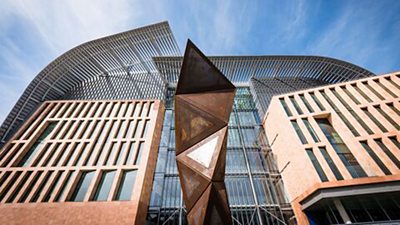
The Francis Crick Institute in central London is a new kind of research facility. Science groups from all over Greater London are moving into the brand new building next to St Pancras Station to begin working in innovative and collaborative ways. The idea is that cross-fertilisation of ideas and people will lead to solutions to the biggest medical problems of our age, such as cancer and hereditary diseases.
Roland Pease follows the researchers as they pack up their laboratories and move to the new location. He observes how scientists are keeping the experiments going in removal vans amidst last-minute construction work and also meets the people behind the vision for the Crick.
The Genomic Revolution from the Francis Crick Institute
Wednesday 19 October, 19.00-20.00 BST
Claudia Hammond chairs a debate with a panel of expert speakers at the Francis Crick Institute in London about the ethics and implications of the genomic revolution.
It took over a decade to sequence the first human genome as part of the Human Genome Project. Today, recent advances in technology have made whole genome sequencing quicker and cheaper than ever before. Within a few days and for under £1,000 scientists can determine the complete DNA code - approximately 3 billion base pairs - of an individual’s genome and identify the genetic variants that may contribute to health and disease over a lifetime.
Whole genome sequencing has the potential to revolutionise medicine, improving our understanding of diseases caused by genetic factors and even paving the way for personalised medicine - the ability to tailor treatment to an individual patient according to their genetic profile. It also raises ethical issues such as data privacy, patient confidentiality and genetic ownership.
In this discussion at the Francis Crick Institute, experts from the Crick, patient groups, clinical geneticists and ethicists explore the potential benefits and possible pitfalls of the new genomics.