Woman’s Hour poll reveals that women are more content being female in 2016 than in 1947
In celebration of the BBC Radio 4 show’s 70th anniversary, Woman’s Hour has released the results of a poll looking at the lives of women in 2016, revealing that 86 percent of women surveyed would rather be a woman than a man, compared to 56 percent in 1947.
Published: 10 October 2016
It's fascinating to see the results of this candid poll and hear women's views on family, work and relationships, and it's intriguing to work out what's changed and what's remained the same since Woman's Hour started 70 years ago.
Looking at attitudes to gender equality in 2016, women aged 18-34 were less likely to feel that they were held back at work as a result of being a woman (18 percent) than those aged 65 and over (27 percent). The age group least likely to feel hindered by being a woman were those between the ages of 55 and 64 (10 percent).
Women also appeared more positive about marriage in 2016, with 42 percent saying that men and women gave up equal amounts of freedom when married, compared to 25 percent of all respondents - female and male - who felt this way 65 years ago (according to a Gallup survey in 1951).
Similarly a higher percentage of women surveyed in 2016 would marry the same person if they had their time over again (87 percent), compared to all respondents - female and male - in a 1949 Gallup survey (77 percent). Only 11 percent of women would marry someone different according to the Woman’s Hour poll.
The poll also revealed that across the age groups, women are more likely to be in employment in 2016 than in 1951, with 60 percent of women working today compared to 31 percent respectively. Older women in particular were more likely to be in employment with 62 percent of 55-64 year olds employed in 2016 compared to 22 percent in 1951.
The majority of women aged 18-64 chose self-respect as the top reason for choosing to work (52 percent), over money and colleagues/work environment (23 percent and 21 percent respectively). The exception to this was women in the 65+ age bracket, who were more likely to consider money (36 percent) over other factors.
As well as asking gender equality issues, the poll covered a wide range of other topics affecting women on day-to-day basis, including money, health and appearance.
Almost one fifth (19 percent) of all the women surveyed stated money related issues as the most urgent problem facing them and their family at present. This was most common amongst 25-34 year olds (28 percent).
Among those surveyed, those aged 25-34 were the most likely to worry ‘a lot’ about a range of issues, including their health and that of those close to them (68 percent), having enough money in old age (53 percent), making both ends meet (51 percent), and were the least likely to consider themselves happier than their mothers were at their age (27 percent, compared to 43 percent of those aged 65 and over). They were also the most likely to have had cosmetic surgery (10 percent), to consider it in the future (46 percent), and to say their personal appearance matters more now than when they were age 21 (16 percent compared to an average of 13 percent across other age groups).
Appearance also ranked high with 18-24 year olds, with women in this age group saying the negative word they’d least likely to be associated with was fat (37 percent), stating this as less favourable than the words stupid and boring. Overall, when accounting for all other age groups, the word women would least like to be described as was stupid (42 percent).
An area in which 25-34 year olds do appear more satisfied than all other age groups is their sex lives, with 24 percent claiming to be ‘extremely satisfied’. This is in contrast with women aged 55-64 who were the least likely of the age groups to be ‘extremely satisfied’ (16 percent) and the most likely to be ‘extremely unsatisfied’ (9 percent).
The poll also explored attitudes to family size and found that women who fell within the highest income bracket, earning £40,000 and above, were twice as likely to think no children is ideal (8 percent) than those in the lowest income bracket, earning £0-£19,999 (4 percent). Similarly, no children was more of a preference among graduates (10 percent) than non-graduates (4 percent) and those in full-time employment (8 percent) than those in part-time work (2 percent).
Over half of all those surveyed (56 percent) felt that two children was the perfect family size, which isn’t dissimilar to the findings of a 1938 Gallup survey in which 45 percent of women chose this as the ideal number. Women were more divided when considering families of six or more, with 3 percent of those aged 18-24 and 65 and over most likely to see this as the ideal number of children, and those aged 25-34 the least likely (0.5 percent).
Alice Feinstein, Editor of Woman’s Hour, says: “It's fascinating to see the results of this candid poll and hear women's views on family, work and relationships, and it's intriguing to work out what's changed and what's remained the same since Woman's Hour started 70 years ago.”
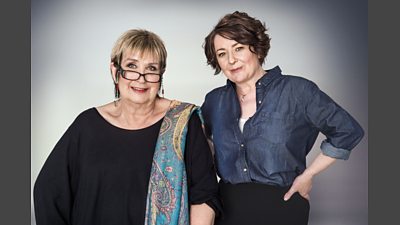
Woman’s Hour presenters Jenni Murray and Jane Garvey will discuss the poll results in a special programme today (Monday 10 October, 10-11am) to mark the anniversary which will be broadcast live in front of an audience in the BBC’s Radio Theatre in London. Joining Jenni and Jane to discuss the results will be Great British Bake Off star Nadiya Hussain, historian Amanda Vickery, former newspaper editor Eve Pollard, and Radio 1 presenter Gemma Cairney.
As part of 70th celebrations, Woman’s Hour has also announced today that they will run a Craft Prize next year in partnership with the Crafts Council and the Victoria and Albert Museum, with nominations opening in November 2016.
Also launching this year, Woman’s Hour will soon be available on new social media channels via Instagram, Facebook, YouTube. The new content will be available in addition to the existing podcast (1m downloads per month), website and Twitter.
And, later this year in recognition of the transformation in women’s roles over the past seven decades, the Woman’s Hour Power List 2016 will celebrate seven women who’ve made the biggest impact on women’s lives since the programme’s launch in 1946.
Please find full results here: http://survation.com/wp-content/uploads/2016/10/FTWET0710JN16WH.pdf
Notes to Editors
- The poll was conducted by Survation for BBC Radio 4’s Woman’s Hour in September 2016. Survation interviewed 1,004 British adults aged 18+ (age groups broken down: 18-24, 25-34, 35-44, 45-54, 55-64 and 65+) by telephone between 16 and 23 September 2016. Data were weighted to be representative of all GB adults aged 18+. Survation is a member of the British Polling Council and abides by its rules.
- Woman’s Hour was first broadcast on 7 October 1946, it now reaches 3.7m listeners weekly (Monday-Saturday) and the podcast has 1m downloads per month.
- Woman’s Hour is broadcast on BBC Radio 4, Monday to Friday at 10am and Saturday at 4pm. The programme is also available to download via the website bbc.co.uk/womanshour or as a podcast on the BBC Radio iPlayer app.
SW