Jocelyn And The Radio Star
BBC Radio Ulster presenter Marie-Louise Muir meets Lurgan-born scientist Dame Jocelyn Bell Burnell, famous both for making one of the most significant astronomical discoveries of the 20th century and for the Nobel Prize controversy that ensued.
Published: 1 February 2016
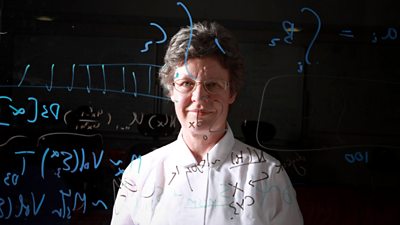
Eureka moments come a bit slowly...It was a significant because we knew nothing in the cosmos could produce anything like that, and yet here it was.
In Stories In Sound – Jocelyn And The Radio Star, on BBC Radio Ulster on Sunday 7 February at 12.30pm, they discuss sexism in the 60s, inspiring young women today and the search for meaning in the universe.
Currently Visiting Professor of Astrophysics at Oxford University, it was in 1967 that Dame Jocelyn Bell Burnell detected the first pulsar, short for ‘pulsating radio star’, which turned out to be the kind of star nobody had dreamt of.
Despite having failed her 11 plus, which she admits did dent her confidence, an undeterred Jocelyn started Lurgan College and recalls: “As soon as I got to do science in secondary school it was clear I was good at it, particularly the physics bit. Getting into the grammar stream in secondary (school) and doing well in many, many subjects enormously helped.”
During her time in secondary school Jocelyn made the decision to pursue a career in radio astronomy, a decision that would take her all the way from Lurgan to the discovery of pulsars which are still making waves today.
It was a small signal during many hours of work which made Jocelyn’s ears prick up and she began to realise she may have found something very special.
Of her discovery, Jocelyn says: “Eureka moments come a bit slowly and after a lot of trying and failing I finally was able to get an enlarged version of this funny signal which turned out to be a string of pulses. It was a significant moment because we knew nothing in the cosmos could produce anything like that, and yet here it was.”
In 1974 Jocelyn’s PHD professor and another colleague were awarded the Nobel Prize for discovering the pulsar, but her name was not mentioned.
She reflects: “It became known as the ‘No Bell’ Prize because my maiden name was Bell and it was particularly my generation of graduate students and young astronomers who were really upset on my behalf. However I have subsequently had just about every prize that moves.”
Stories In Sound – Jocelyn And The Radio Star is on Sunday 7 February, BBC Radio Ulster at 12.30pm.
CC
