BBC Two’s Horizon reveals new era of Alzheimer’s research, bringing hope to millions of people
Details of new Alzheimer’s research feature in Horizon, BBC Two’s science strand (Curing Alzheimer’s, 11 May at 8pm on BBC Two).
Published: 10 May 2016
This is a very exciting time. There is a new window of opportunity. New technology allows us to see the first signs of Alzheimer’s Disease, earlier than we ever could before
- New scanning and gene technology is allowing scientists to identify the disease up to 15 years before symptoms appear.
- New drugs trials are showing startling success in reducing beta amyloid, the protein which is a hallmark of the disease.
- A new device aims to encourage deep sleep and strengthen memories while we are sleeping.
- A new system inside the brain has been discovered which clears amyloid in deep sleep, but allows it to accumulate when we don’t sleep well.
- For people in the early stages of the disease brain connections can be strengthened by eating the right nutrients.
- UK-wide trial in brain training could help people with Alzheimer’s in the early stages to improve their cognitive performance.
The film features cutting-edge scanning technology used by Professor Nick Fox at the Dementia Research Centre, UCLH. New brain scans can pick up the early signs of the disease at a cellular level allowing Alzheimer’s disease to be detected up to 15 years before symptoms become apparent. Earlier disease detection means more effective therapies for preventing the onset of the disease.
Professor Fox says: “This is a very exciting time. There is a new window of opportunity. New technology allows us to see the first signs of Alzheimer’s Disease, earlier than we ever could before.”
Medellin in Colombia is at the forefront of drugs research into the prevention of Alzheimer’s Disease. A new drugs trial is focussing on the thousands of people in the region who carry a gene mutation carried by a conquistador brought from Spain in the 16th century, which causes symptoms to appear in people as young as 45 years old and full-blown Alzheimer’s to develop in their mid-50s. A $100 million drugs trial has been rolled out by the Banner Alzheimer’s Institute and the US National Institute of Health, using the anti-amyloid drug Crenezumab, which is bringing renewed hope.
Dr Eric Reiman, of the Banner Alzheimer’s Institute said: “Crenezumab is an anti-amyloid treatment that had several characteristics we thought were especially suitable for prevention trials. It seemed to attack different forms of amyloid. There was a suggestion that it could reduce amyloid and might have a role if it was started in people at an earlier stage. We believe that this trial marks the dawn of a new era of Alzheimers Prevention Research.”
Five other drugs trials have also been launched in the US and Europe. The programme looks at the drug Aducanumab, which created a sensation early last year when its Phase One Trial results showed that it reduced amyloid plaque, a hallmark of the disease, and slowed cognitive decline among sufferers. The programme features Neil Corkery, a 75 year-old New Englander with the early stages of the disease, who has enrolled in the trial and feels the improvement in his condition has been "a miracle". He doesn’t know however if he’s been given the drug or a placebo. Talking about the direction of Alzheimer’s prevention research, Dr Al Sandrock, Chief Medical officer of Biogen, says: “If we treat early enough, we may stave off Alzheimer’s disease completely and we may never have to worry about it again.” Biogen is currently conducting a phase 3 study of Aducanumab and its effects on the early stages of Alzheimer’s disease.
Professor Maiken Nedergaard of Copenhagen University and the University of New York, Rochester, explains how she discovered a hitherto unknown system in the brain, called the ‘glymphatic system’. She has found that there are gaps in between the brain cells, which open during deep sleep and allow spinal fluid to wash away toxins and amyloid plaque in deep sleep. The research also reveals that too little sleep allows amyloid to build up in the brain, which in time thwarts good, deep sleep.
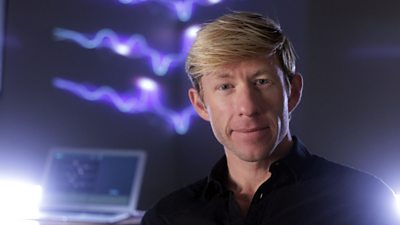
To encourage deep sleep, Professor Matt Walker, from the University of California, Berkeley (pictured), is experimenting with a newly developed magnetic stimulation device. He wants to find out if it can encourage deep sleep and strengthen memories while we are sleeping. He hopes that if the experiments are successful the machine will become a major tool in the prevention of amyloid build-up. At the moment the magnetic stimulator is only available for research purposes.
New research is providing insights into how to help people with Alzheimer’s who are in the early stages of the disease. Professor Robert Wurtman, from MIT, Boston, has worked with mice brains to discover that not only does the disease reduce brain synapses, but it also prevents new ones being created to replace them. He has found that extra doses of the brain building nutrients, Uridine, Choline and DHA can change all that. Subsequently a product has been manufactured, which underwent successful clinical trials to reveal that the extra nutrients do indeed build new synapses.
Professor Linda Clare, from Exeter University, a world expert on Alzheimer’s rehabilitation, has investigated how brain training can help Alzheimer’s patients improve their cognitive performance. She has discovered that brain training may help stave off the disease; however, it does not benefit patients once it is full blown. So she has taken techniques used for the rehabilitation of accident victims who suffered memory loss, and applied them to Alzheimer’s patients. Now her GREAT Trial is being tested across the UK. The trial therapists use intensive training to help people in the early stages of the disease to concentrate on two or three everyday tasks. By making them engage their brains and concentrate on these tasks they have found that not only can people manage their lives better, but that they may also activate parts of their brains connected with organisation and planning.
Professor Clare has scanned the brains of trial participants and reported in the programme. She says: “People who had had the cognitive rehabilitation programme showed greater activation when they were doing a memory task, in certain brain areas, particularly the bilateral frontal areas….We tentatively suggested that this might reflect some improvement in functioning in those areas of the brain.”
Notes to Editors
Horizon is edited by Steve Crabtree; series producers are Zoe Heron and Rob Liddell.
Transmission: Horizon: Curing Alzheimer’s, 8pm on 11 May on BBC Two
Pictured: Professor Matt Walker, from the University of California, Berkeley
YL