Charlotte Moore outlines vision for channels in her new role and announces new programmes
Speaking tonight at an event hosted by BBC Director-General Tony Hall and Charlotte Moore for writers, actors, industry and media, Charlotte Moore shared her vision in her new role and talked about how she sees the channels working together now and in the future.
Published: 7 March 2016
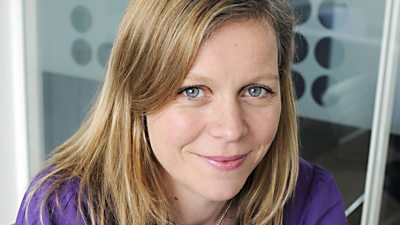
I’m excited about the potential we have now, working together, across all our channels and iPlayer to give people the most ambitious, exciting and distinctive range of programming ever.
She also announced a range of new programmes which signal the direction of travel.
Charlotte Moore, BBC Controller of TV Channels and iPlayer, said:
“I’m excited about the potential we have now, working together, across all our channels and iPlayer to give people the most ambitious, exciting and distinctive range of programming ever. Programmes that inform, educate, entertain and inspire.
“Risk taking, innovation and originality has to apply to everything we make. I’m making a commitment to you all tonight that we’re going to be open, collaborative and agile. I’m going to make sure our channels complement each other.
"Each channel has its own unique character and purpose. For me, BBC One helps make Britain great. It unites us as a nation around big, shared moments and events. It’s a place where everyone knows they’re going to find the very best programmes – programmes that are unashamedly popular, that feel timely and relevant and speak to a big broad audience. It’s the channel that tackles big universal subjects, and stories that people care about, stories that become part of our everyday conversation. Yes, people come to be entertained. But they’re informed and educated along the way. So if BBC One unites us and celebrates all the things we have in common, then BBC Two is about everything that’s different about our world. It’s a channel that stretches the mind and takes you to places and subjects you haven’t been before.
“I love BBC Two. I believe it has a special role to play in broadcasting and, when it’s true to its DNA, it’s unbeatable. I want to make BBC Two confident again. I want to give BBC Two a much greater sense of identity. I want to commission programmes that challenge the status quo, inspire original thinking, and give a voice to new perspectives and opinions. It’s going to be lean-in, not lean-back television. BBC Two should be a place for talent to do their most distinctive signature work. And to do that, I understand you need freedom. You need to be able to experiment with form and subject matter and you need to know you’re backed. My ambition is to expand that authorship and diversity of voice across every genre on the channel. While drama, comedy and entertainment all play a crucial role, I want to put factual proudly at the heart of BBC Two. I want to embrace all the specialisms from science, history and religion to current affairs, natural history, documentaries, music and the arts. Because, by contrast to BBC One, audiences come to BBC Two to be informed – but we can entertain them too.
"I also want BBC Two to be the flagship channel for contemporary arts and music, and I want partnerships on the channel to thrive, bringing audiences closer to great art and performance, to those who make it, how they make it and the art itself. BBC Four has a unique role - it is a channel dedicated to culture and ideas; and it plays a vital role in the BBC’s music and arts story too. BBC Four is a channel for adventurous minds, feeding people’s curiosity about the world with content that’s timeless.
“A simpler, co-ordinated approach to commissioning decisions will deliver more creative opportunities, a greater diversity of distinctive, ground breaking programmes and - crucially - quicker decision-making for all. We’ll be much better placed to curate a journey for ideas and talent across the portfolio. BBC iPlayer will have an increasingly important part to play in the BBC’s future. I want to grow iPlayer in the future and will explore more premieres and how we reach new audiences.”
She closed the speech by saying:
“We are going to continue to challenge what popular mainstream television is on BBC One.
"We're going to support authorship, a diversity of voice and opinion, innovation in form and an unprecedented commitment to factual on BBC Two. And we're going to keep pushing the boldness and range of what BBC Four and iPlayer can offer. Most importantly, we are going to provide the best home for talent - writers, actors, producers and directors. The licence fee gives us the creative freedom to work with you in ways that no-one else can. I want to make the most of that. From now on, we’re going to be the most distinctive we have ever been.”
Notes to Editors
More information about new programme announcements can be found below.
MO
BBC One
Last year Charlotte Moore made three promises that would define BBC One over the coming years: a commitment to risk taking, guaranteed investment in innovation, and a promise that she would challenge every new commission to break the mould. These new BBC One announcements below deliver on those.
Drama
Wanderlust, 6x60 mins, made by Drama Republic
A searingly insightful and funny exploration into the relationships of a multi-generational family, looking at how we build and maintain happy relationships and asking whether lifelong monogamy is possible - or even desirable. The first television series scripted by award-winning playwright Nick Payne, whose brilliant, distinctive plays have earned plaudits from around the world (Constellations, If There Is I Haven’t Found It Yet).
Made by Drama Republic (Doctor Foster, The Honourable Woman, An Inspector Calls). Commissioned by BBC Controller of Drama, Polly Hill, with Charlotte Moore. The Commissioning editor for the BBC is Lucy Richer and the executive producers for Drama Republic are Roanna Benn, Jude Liknaitzky and Greg Brenman.
Our Loved Boy, 90 mins, made by Minnow Films
The death of 10-year old Damilola Taylor in 2000 saw an innocent child lose his life on the streets of Peckham, shocking the nation and generating headlines worldwide. In his debut for BBC One, award-winning screenwriter and playwright Levi David Addai will tell the story of Damilola from the perspective of father, Richard Taylor, going behind the headlines to explore the lasting impact of Damilola's death on his close and loving family. A decade since his case was finally brought to justice, with the issue of knife crime on our streets as relevant and urgent today, Damilola's story is powerful and illuminating, in this extremely moving film about fatherhood and family, justice and hope.
Made by Minnow Films from Bafta and Emmy-winning executive producer Colin Barr (My Murder, Our War) and Bafta-winning director Euros Lynn (Capital, Happy Valley). The producer is Sue Horth. Commissioning editors for the BBC are Clare Sillery and Lucy Richer.
History
Henry VIII's Six Wives, 3x60 mins, made by Wall to Wall South
In an ambitious, ground-breaking approach to drama and history, historian Lucy Worsley time travels back to the Tudor Court to witness some of the most dramatic moments in the lives of Henry VIII’s Six Wives. Combining drama written by Chloe Moss with Lucy’s own contemporary historical comment, Lucy will move seamlessly from the present to the past, appearing as a range of silent servants: a maid, midwife or nurse maid. As the drama plays out, Lucy eavesdrops on the events in the Royal Court and reports back.
Closely knit and often related to each other, the Tudor court was made up of a small group of powerful families all vying for influence and power over each other. While it was a world run by men, and the King had ultimate power, each Queen (as well as their ladies in waiting) found their own unique methods of exerting influence. For the first time, it is these women’s stories that Lucy wants to uncover, witness and explore, as well as offering a very new lens on Henry himself.
Commissioned by Martin Davidson, Head of Commissioning, Specialist Factual and produced by Wall to Wall South. The BBC executive producer is Diene Petterle and the executive producer for Wall to Wall South is Emma Hindley. The director is Russell England and the writer is Chloe Moss (Dickensian, New Tricks).
Documentaries
Last Seen On CCTV, 3x60 mins, made by Blast Films
A major new series for BBC One following live missing person investigations as they unfold, from the perspective of police officers and the families and friends whose loved ones have disappeared.
Across the UK, 400 people go missing every single day - including teenage runaways, dementia patients who leave their homes, as well as people mixed up in crime and occasional terrifying stories of abductions. The first 72 hours are crucial in finding that person alive. Following the moment someone is first reported missing to the police, this new series will explore the waiting, the hoping, and the heartache for ordinary families - as well as the joyful moments when they are reunited with their loved ones. These are stories about ordinary people whose lives have gone into free-fall, and the dedicated individuals working around the clock to find and save them.
BBC Two
In the coming months, Charlotte Moore will give BBC Two a much greater sense of identity with programmes that challenge the status quo, inspire original thinking – and give a voice to new perspectives and opinions.
King Charles III, 90 mins, made by Drama Republic
The multi-award-winning, internationally successful ‘future history’ play is to be adapted by award-winning playwright and television screenwriter Mike Bartlett (Doctor Foster) from his own Olivier Award-winning script. Fellow Olivier Award-winner Rupert Goold will direct, reuniting the creative team behind the play originally produced by the Almeida Theatre.
The piece, daringly written in blank verse, sees Prince Charles ascend to the throne following the Queen’s death. But when he refuses to sign a controversial bill into law, political chaos ensues – a constitutional crisis, rioting on the streets, and a tank in front of Buckingham Palace. Charles, meanwhile, is forced to wrestle with his own identity and purpose as a ceremonial monarch.
A sell-out theatrical success, following a critically acclaimed run at the Almeida Theatre and in the West End, the play has toured nationally, and enjoyed a rapturous reception upon its transfer to Broadway. King Charles III won Best New Play at the Olivier Awards and the Critics’ Circle Theatre Awards in 2015, and was awarded the South Bank Sky Arts Theatre Award.
Mike Bartlett says: "I'm so excited to bring King Charles III to BBC Two. The play has always had the ambition to be an ambitious, provocative, yet popular national story, written to explore the possibilities and contradictions of a figure and a family that we all think we know so well. It can now reach a wider, national audience, and the story can expand out onto the screen. With Rupert Goold directing, and Drama Republic producing, I know it's in the very best hands possible."
Commissioned by Polly Hill and Charlotte Moore. The commissioning editor for the BBC is Matthew Read and the executive producers for Drama Republic are Greg Brenman and Roanna Benn.
King Lear, produced by Playground Entertainment
Sir Anthony Hopkins returns to the channel in King Lear from the team behind last year's The Dresser, produced by Colin Callender’s Playground Entertainment.
NW, 90 mins, made by Mammoth Screen
Zadie Smith's dazzling novel of London life, adapted by Rachel Bennette. NW tells the story of Natalie and Leah, friends who grew up together in North West London, whose lives have taken them in different directions. Natalie's wealth and ambition have set her apart from the friends and family she grew up with - and she finds herself asking not only who she really is, but where she belongs. In an area where wealth and poverty are only streets apart, life is fragile - as Natalie and Leah are about to find out.
Zadie Smith says: "I am thrilled that the BBC is picking up NW. These are characters of the page for me and I'm very curious and excited to see them walking and talking in a fully realized world."
Made by multi-award-winning Mammoth Screen (Poldark, Parade's End, And Then There Were None). Executive producers are Damien Timmer and Preethi Mavahalli and Lucy Richer for the BBC.
Documentaries
Three new single films from Sue Bourne, Fergus O'Brien and Nick Broomfield that "will bring back the director's voice to BBC Two".
The Secret Lovers, directed by Fergus O'Brien
In 1950, a young researcher called Michael Schofield began to set up interviews across the UK with people from a world that was so illicit, many people in the country could hardly bear to think about it. Schofield's research was intended to uncover what it was like to be gay in Britain. The interviews he conducted were with men from three broad categories - those who had been imprisoned for homosexual acts; gay men who had been made to attend psychiatric care; and those who lived out their homosexuality in secret.
On the 50th anniversary of the 1967 Sexual Offences Act, using the original testimony of Schofield's interviewees, The Secret Lovers, a 1x60-minute film, will use a mixture of drama and documentary to cast a light on what life was like before the passing of that revolutionary bill. All these men lived in an Orwellian world where merely the suspicion of homosexuality would be sufficient for the police to detain them for questioning - and where interrogations often led those under suspicion to provide even more names of gay friends and lovers.
Schofield's work, collected in three books published between 1952 and 1965, acted like a lightning bolt on the national consciousness, illuminating a world that had been entirely hidden from view. Homosexuality had been illegal in the UK for more than 400 years - now Schofield's books would be frequently referred to in Parliament by those MPs seeking to end the ban on homosexual relations. The Secret Lovers was commissioned by Danny Horan, Commissioning Editor, Documentaries. It is executive produced by Aysha Rafaele for BBC Documentaries Production. The producer/director is Fergus O’Brien
Living To Die, directed by Sue Bourne
What would you do if you were told you only had months to live?
From acclaimed documentary maker Sue Bourne comes Living To Die, a thought-provoking, compelling 1x60-minute film which will look at a subject that affects everyone: death.
We are all going to die, but medical and technological advances mean more and more of us are now told how long we have to live. When you are told you only have months to live, how do you respond? How do you live out those few remaining weeks? Do you discover what really matters in life? Do you rage against the world? Or do you stay calm and draw up a bucket list?
What the film will show is how very differently people of all ages react to the news of their impending death. Bourne has long been fascinated by this question, and through her trademark candid interviews will explore and probe all manner of questions about death – and life - and most importantly ask what they can tell the rest of us about how to live life to the full.
Commissioned by Clare Paterson, Commissioning Editor, Documentaries. It is executive produced by Grant McKee and produced and directed by Sue Bourne for Wellpark Productions.
Whitney, directed by Nick Broomfield
Whitney Houston sold over 150 million albums, had seven consecutive US number ones, and was one of the most successful female singers of all time.
Now, four years after her death, acclaimed filmmaker Nick Broomfield (Sara Palin: You Betcha!; Aileen: Life And Death Of A Serial Killer; Kurt & Courtney) goes in search of the forces that made and then destroyed the singer who has been described as having one of the greatest voices of the last 50 years.
Exodus: Breaking Into Europe, 3x60 mins, Keo Films
Documents the journeys of people trying to reach the safety of Britain and other countries in Europe. From families forced to flee war and persecution, to economic migrants searching for a more prosperous life, the series will feature the journeys of over 70 people filmed in 26 countries. Keo gave cameraphones to migrants so they could capture some of the most perilous parts of their journeys that couldn’t otherwise be filmed, resulting in a series which offers a unique and extremely personal insight into the largest period of migration in Europe since the Second World War. Executive produced by Will Anderson and Andrew Palmer.
Co-commissioned by Documentaries and Current Affairs. Commissioning editors: Clare Paterson and Fiona Campbell.
DOWNS (working title), 60 mins, made by Dragonfly
This film explores the impact of a new screening test that is said to be able to detect Down's Syndrome in 99 per cent of pregnancies. Actor Sally Phillips, who has a child with Down’s Syndrome, sets out to explore this emotionally charged debate and ask what effect the test could have on our society. Sally asks what the impact of this scientific breakthrough will be on the future of Down’s Syndrome, at a time when the health, life expectancy and well-being for people born with the extra chromosome continues to improve.
Earlier this year, the National Screening Committee recommended the government make this new genetic screening test for Down’s Syndrome available on the NHS. In a world where pre-natal genetic screening is predicted to become routine, this timely documentary asks what the future is for people with disabilities.
The discussion will have contributions from experts and supporters on both sides of the debate, including children and adults with Down’s Syndrome, and leading professors in the field of genetics. The one-hour documentary was commissioned by Maxine Watson, Commissioning Editor, Documentaries. It is produced by Dragonfly, part of Endemol Shine Group. The executive producer is Emma Loach and the producer/director is Clare Richards.
History
1066, 3x60, made by BBC History Production
Dan Snow takes on one of the most famous dates in British history when, 950 years ago, William of Normandy, soon to be Conquerer, defeated Harold, King of England, at the Battle of Hastings. But 1066 is more than just one battle on one day. It is the dramatic story of a single year when the ancient world of the Anglo-Saxons is swept aside and the dominance of the Vikings is brought to a shuddering halt. It’s the year when the power balance of Europe is upturned and Britain’s future determined.
Dan reveals a bitter tale of family betrayal and political intrigue as England reels in the wake of three rival kings, three separate invasions and three major battles, in the course of just one year. With the Norman victory, in comes a new era of medieval knights, mighty castles, towering cathedrals and linguistic richness - all part of a world that remains familiar in Britain today.
Using the very best historical evidence, including a little-known poem written just months after the battle of Hastings, scientific exploration, hands-on experiment and historical debate, Dan reconstructs the events of 1066 as they unfolded, and brings them vividly to life in action-packed drama as our three warlords Harold (Adam James), William of Normandy (Ed Stoppard), and the Viking Harald Hardrada (Clive Russell) fight for supremacy.
By the end of the year, by the end of 1066, only one will still be alive. Joining Dan Snow are historians Tom Holland, Nina Ramirez, and Dan Jones battling out the politics and tactics of the warring sides. 1066 follows on from the hugely successful Armada: 12 Days To Save England, a strand in which BBC History explores iconic moments as they were really lived, shaping our past and still influencing our present. Commissioning Editor is Rachel Morgan, executive producer is Cameron Balbirni.
Science
Secrets Of The Human Body, 3x60, made by BBC in partnership with PBS
You may think you know the human body - heart, lungs, brain and bones - but it’s time to think again. The landmark, ground-breaking science series will reveal extraordinary new advances in our understanding of human biology, making this the most in-depth and revelatory examination of the human body to date. We now know you have a second brain in your gut, that the power to beat cancer may be hidden in your immune system and that your body is made of more bacteria cells than human ones – a system called the human microbiome that is essential for good health.
The series will show how these discoveries are dramatically altering the way we think about the systems that bind the human body together - the hormones, genes, immune and nervous systems that make each one of us function. Each episode will tell stories of the everyday miracles that unite us: learning to walk, falling in love, the moment of birth. We’ll ask simple questions – Why are tears of sadness different to tears of joy? Why are we ticklish? – and find that the answers lead us to the very latest advances in genetics, neurology and endocrinology.
Pioneering specialist photography will enable us to see the human body as never before and a new generation of digital effects will allow us to catch a tantalising glimpse of what goes on beneath your skin. This will be a series full of content for the heart and the head, as we reveal the secrets that make every ordinary human body extraordinary.
Secrets Of The Human Body was commissioned by Martin Davidson, Head of Commissioning, Specialist Factual and will be executive produced for the BBC by Martin Davidson and Diene Petterle. The executive producer for BBC Science is Andrew Cohen and it is being co-produced by PBS.
Comedy
Decline And Fall, 3 x 60 mins, made by Tiger Aspect and Cave Bear Productions
Anarchic, stylish and hilarious, Decline And Fall is Evelyn Waugh's first, most perfect novel. James Wood's dazzling three-part adaptation for BBC Two will follow the exploits of Paul Pennyfeather, whose unfair expulsion from Oxford kick-starts a disastrous series of events, wherein he is by turn a naive teacher, a celebrity bridegroom, a wanted fugitive, and an international (and unintentional) white slave-trader - while always being, indubitably - a victim of comic misfortune.
The never-before-televised novel is commissioned by Shane Allen, Controller of Comedy Commissioning and Charlotte Moore, with Chris Sussman as BBC Commissioning Executive, and will be executive produced by Will Gould for Tiger Aspect Drama and Ben Cavey for Cave Bear Productions - and the production will mark 50 years since Waugh's death.
Arts
BBC Two will be the flagship channel for contemporary arts and music, with partnerships thriving on the channel.
- Ambitious run of Saturday nights dedicated to arts, music and performance will launch on BBC Two in September.
- There will be evenings devoted to Marlon Brando and Alan Bennett, landmark profiles of Sue Townsend and Vincent Van Gogh.
- Behind the scenes of cultural powerhouses like the Royal Ballet and Tate.
- Topical programming about the biggest arts events like Man Booker Prize and Frieze Art Week, and special access to once-in-a-lifetime, blockbuster exhibitions.
- BBC Two will bring audiences closer to great art and performance, to those who make it, how they make it and the art itself.
BBC Four
BBC Four is a channel for adventurous minds, feeding people’s curiosity about the world with content that’s timeless.
Architecture season
Dan Cruickshank: At Home with the British, 3x60 mins
Presented by Dan Cruickshank and produced in partnership with the Royal Institute of British Architects, this BBC Four series takes an up-close-and-personal look at the place we are all familiar with but rarely stop to question – our home. Why are those stairs at that angle? Why is the kitchen at the back of the house? Why are some houses made of wattle and daub, and some of brick? And why do some live in a terrace and some in a flat? How did the British home end up looking the way it does – and why?
This series reveals the men, women and sweeping history that shaped the houses that people in Britain live in. Each film will be sited in a particular location which embodies a building type, whether it’s the terraces of the industrial North in Toxteth Liverpool, the high-rise towers of Bow East London, or the cottages of rural Stoneleigh in Warwickshire, and will peel back the years to see how it was when these particular buildings were first built. Dan will be house detective as he traces how and why each flat, terraced house or cottage was built – and who were the heroes and villains of the story. He’ll scour the deeds, rake up the family albums and hunt through the municipal records to track down the builders, the first inhabitants, the debt and the design of these buildings.
Aiding his hunt, a wealth of material from the RIBA Collections lays bare the interplay of design, economy, prudence and recklessness that lies behind every stair, every chimney breast and every doorway. RIBA’s exhibition to complement the series will be on display at the Architecture Gallery in London from 18 May to 28 August. It traces the historical development of our homes and explores how they could be designed differently to meet our future needs.
Going Going Gone: Nick Broomfield’s Disappearing Britain, 2x60 mins
Two iconic British buildings are threatened with demolition and the intrepid Nick Broomfield is on the case. In this pair of documentaries Going Going Gone, Broomfield profiles the Wellington Rooms in Liverpool and the Coal Exchange in Cardiff.
Designed by Edmund Aiken in 1815 of the Greek Classical revival school, the Wellington Rooms began life as a gentleman's club and quickly established itself as the hub of fashionable Liverpool. In later years, it became an important gathering place for the Irish community.
The Coal Exchange, designed by Edwin Seward in 1883, housed one of the world’s great deal-making markets back when Cardiff was a prime commercial centre. Both buildings have fallen on hard times and their fates remain up in the air.
Jonathan Meades: Benbuilding
Having investigated the architecture of Hitler and Stalin’s regimes in previous films, Jonathan Meades now turns his attention to another notorious 20th-century European dictator: Mussolini.
When it comes to the buildings of the Fascist era, Meades discovers a dictator who couldn’t dictate, as Mussolini was caught between the contending forces of modernism and a revivalism that harked back to Ancient Rome. The result was a variety of styles that still influence architecture today. The programme sees Meades visit Rome, Milan, Genoa, the new town of Sabaudia and the vast military memorials of Redipuglia and Monte Grappa. Along the way, he ponders on the nature of Fascism, the influence of The Futurists and Mussolini’s love of a fancy uniform. Single film.
Deaf United
An immersive, experiential single film that takes the viewer into the world of the deaf.
It's a world with its own unique humour and banter, language (deaf people pride themselves on being a linguistic minority) and culture. The film follows deaf people having animated conversations in the street, on the bus or in the supermarket, but viewers are always outsiders to their conversations.
The film introduces a cast of memorable characters through the hub of St John's Deaf Club in North London. St John's is one of the oldest running deaf clubs in the country - more than 100 years old. We meet young and old as they invite us in to share some of the milestone moments in their unique world that is - for the main part - silent.
Genius Of The Modern World, BBC Four, 3x60
Bettany Hughes discovers how Karl Marx, Friedrich Nietzsche and Sigmund Freud changed the landscape of the modern world.
Together they re-imagined global economics; questioned the very foundations of morality and society; and unravelled the workings of the human mind. They were all born in the 19th century, a pivotal, tumultuous age that witnessed revolutions in industry, technology and politics. Old certainties were breaking down. Science was undermining religious authority. Their challenge was to figure out what makes us human in a fast-evolving world, and to identify the hidden forces, and ideas, controlling our lives. It was a search that would drive Marx to poverty, and Nietzsche to psychological breakdown.
Bettany discovers how these sceptical 'masters of suspicion' created ground-breaking, penetrating ways of seeing the world, that still shape how we make sense of our lives today.
Danielle de Niese: The Birth Of An Opera
2016 is the 200th anniversary of the premiere of Rossini’s masterpiece The Barber of Seville, one of the greatest comic operas ever written. In this documentary, internationally acclaimed lyric soprano Danielle de Niese provides the viewer with a unique backstage pass to her own preparations for the role of Rosina in Glyndebourne’s 2016 production, giving us an unparalleled insight into how a top opera professional shapes a performance.
With exclusive access to Danni, who is also the lady of the house at Glyndebourne, this programme follows all the preparations for this much-anticipated new production, from the earliest stages to curtain up on the first night. This film accompanies BBC Four’s broadcast of Glyndebourne’s new production of The Barber of Seville, directed by Annabel Arden and conducted by Enrique Mazzola and starring Danielle de Niese as Rosina and Italian buffo baritone Alessandro Corbelli as Dr Bartolo.
Commissioned by Jan Younghusband, directed by Guy Evans and produced by Trade Mark films.
People's History Of Pop - first episode presented by Twiggy
Episode one of this major series, telling the story of pop uniquely through the eyes of music fans, will be presented by the face of the Sixties, Twiggy.
The programme celebrates the decade in which we created our very own pop culture and reveals unearthed pop treasures including a first-ever recorded performance of The Quarrymen and rare acetates of Merseyside musicians.
Cross-channel seasons
Black Britons Season (working title)
Alongside acclaimed historian and broadcaster David Olusoga's A Black History Of Britain series for BBC Two, the BBC presents a major season of programmes. Those commissioned so far include:
Black Is The New Black, BBC Two, 4x30 mins, made by Iconoclast/Plum Pictures
A landmark documentary series which explores what it means to be black and successful in Britain today. For the first time, a range of well-known - and not so well-known - Black Brits face the camera and tell us what it's really like to be black and British in every situation from childhood, through school and out into the big white world.
Beautifully shot by photographer Simon Frederick, this four-part odyssey will pull no punches, telling inspirational stories that are full of humour and passion. These stories will reflect what black Britons have left behind as well as where they are headed.
Commissioning Editor: Maxine Watson
White Boys And Black Heroes – How Black Footballers Transformed Modern Britain, BBC Two, 60 mins, made by Sugar Films
On 16 May 1979, an extraordinary game of professional football took place that if played today, would cause uproar, mass protest and media frenzy. As part of Len Cantello’s testimonial at West Bromwich Albion, an all-white team took on a side comprised solely of black players – ‘Whites against Blacks’. For the white team, it was nothing more than a lighthearted gimmick, but for the black players it represented so much more. It was a game they had to win.
Life-long West Brom fan Adrian Chiles journeys across England to uncover the truths, taboos and real meaning behind this remarkable game. It was played during an era when for the first time young white boys had black British heroes, not Muhammad Ali or Jimi Hendrix, but black footballers who talked like them, wore the same clothes and played for the teams they loved.
Today, where 30 per cent of English professionals are black, such a game would never take place. These players are superstars in their own right, with some earning in excess of £200,000 a week: names like Ian Wright, Rio Ferdinand and Ashley Cole transcend the sport. But how far have we come and how did we get here? Adrian Chiles charts the remarkable highs and lows of the modern black footballer and how they changed not only football but the country itself.
Pat Young, MD of Sugar Films, said: "This is a great first commission for Sugar Films, unearthing a significant untold but mainstream story that informs our understanding of modern Britain."
Executive producer is Narinder Minhas at Sugar Films, BBC commissioning editor is Fatima Salaria.
Back In Time For Brixton, BBC Two, 2x60 mins, made by Wall to Wall
We take one second or third generation Black British family through 60 years of cultural and social shifts, charting the story of how African-Caribbean immigration has changed British culture and society. Based in Brixton, the series will chart Black British milestones as the family fast-forward through six decades that changed the face of Britain. From the arrival of the first families of the Windrush generation, to active recruitment from London Transport and the NHS to the slow and sometimes questionable appearance of black faces on British TV, to the transformation of Britain’s musical and culinary tastes, Back In Time for Brixton offers a new way of celebrating as well as exploring Black British history and its place and influence on British popular culture.
Underpinned by data from the Census and a wide variety of national and local archive sources, everything the family does will be guided by the lives and experiences of real British families. Starting with no mobiles, and roughly the same amount of money and possessions that their ancestors brought with them on arrival, the family will spend their first night in one of the actual locations newly arrived immigrants were sent to: the recently restored 1950s Clapham South Deep Level Air Raid Shelter. The family then need to start jobs, find somewhere to live, and the adventure begins as they journey through six decades of history. BBC commissioning editor is Donna Clark.
Roots Reggae, Rasta & Rebellion, BBC Four, 1x60 mins
From the ghettos of Kingston, Jamaica, to the streets of Ladbroke Grove, West London, British rapper, poet and cultural commentator Akala tells the story of a golden period in the island’s musical history; they called it Roots Reggae and through artists like Bob Marley, Peter Tosh and Max Romeo, this message of revolution and spirituality resonated with the world over. By the end of the 1970s, both Rastafari and Roots Reggae were internationally famous. Its vibrations were felt here in Britain too, simultaneously providing a news service, a history lesson and a connection back to the motherland for many sons and daughters of Jamaican immigrants.
Today, the red, gold and green, the dreadlocks, marijuana and reggae music form part of the country's enduring global image. Akala reveals how it all happened and, in the process, traces the roots of a culture in which he grew up, on a personal journey of discovery.
Commissioning editor: Jan Younghusband.
EU Referendum programming
BBC One: Paxman In Brussels, 1x60
Jeremy Paxman takes an impartial look at the fundamentals of what actually goes on between the UK and the EU in this one-hour documentary. He travels to Brussels and walks the corridors of power in the EU’s headquarters, to discover how decisions that affect half a billion people, including all of us, are made.
Paxman meets both officials and politicians from elsewhere in the EU to discover what makes Brussels tick. In interviews and lively encounters, he hears the full spectrum of opinion on whether the UK should remain within the union or leave. Back in Britain, he explores how our relationship with the European Union and its predecessors has shaped Westminster politics for decades. He reveals unexpected stories and talks to key figures of many political stripes and differing convictions on the EU.
Paxman explains the process by which laws made in the EU pass onto our statute books. And he examines why the concept of ‘sovereignty’ has long played a part in our national debate about Brussels. The programme reveals just how the decisions made in Brussels are now part of all our lives, and asks how our relationship with Europe might change, whatever the referendum outcome. The programme is being made by Brook lapping.
Europe: Them Or Us, BBC Two, 2x60 mins, by Nick Robinson
Radio 4 Today presenter and the BBC’s former political editor, Nick Robinson, presents an authoritative and impartial two-part series exploring the turbulent history of the UK’s relationship with 'Europe' – the Common Market, the EEC and now the EU. For decades, it has divided the public, torn political parties apart, felled prime ministers and baffled, bemused and angered our neighbours in Europe. The question the country has faced again and again is whether we should be partners or spectators, take part in or stand aside from the post-war project of unifying Europe. We have - in other words - struggled with a simple question: does Europe mean ‘them’ or ‘us’?
Europe: Them Or Us takes viewers into the corridors of power to hear from the men and women who took the decisions which led us to where we are today. It examines why British governments first shunned the new Common Market then begged to join it; next, renegotiated the price we paid to stay in; refused to sign up to the creation of a single currency; and argued against the dream of political unity shared by so many of Europe’s other leaders.
An unfamiliar story – sometimes witty, sometimes poignant – emerges from a series of special interviews with past and present prime ministers Edward Heath, Margaret Thatcher, John Major, Tony Blair and David Cameron, as well as other key British players – Roy Jenkins, Barbara Castle, Enoch Powell, Geoffrey Howe, Nigel Lawson, Douglas Hurd, Norman Tebbit, Jack Straw and William Hague – plus the main civil servants and diplomats involved. Continental contributors include officials and politicians working for President Charles de Gaulle, President Georges Pompidou, President François Mitterrand, Chancellor Helmut Kohl and Chancellor Angela Merkel, plus the former president of the European Commission, Jacques Delors, and the former President of France, Valéry Giscard d’Estaing.
The critical decision Britain’s voters are about to take in the referendum is the culmination of decades of agonising debate about Britain’s place in Europe, and its often lethal effect on British politics. Europe: Them Or Us is a Crux production for BBC Two by John Bridcut, who in 1996 produced the BBC Two series The Poisoned Chalice.
Europe: For Richer Or Poorer, BBC Two, 1x60, by Laura Kuenssberg
This summer, the UK faces a momentous choice: are we in or out of the European Union? As the vote nears, the BBC’s Political Editor Laura Kuenssberg tackles the big questions at the heart of the debate: would we be richer or poorer as a nation if we left, and what are the costs and benefits of staying in?
She will talk to leading politicians and business big hitters on both sides, and set out to discover what leaving would really mean for trade and jobs, for red tape and the pound in your pocket. She will set out the facts about what we chip in to the EU, and what we get back – and she will take the debate to the public about whether we’re better off in or out. The EU referendum is set to shape our future as a nation: this film is your impartial, indispensable guide to a decision which matters to us all.
Truth About EU Migration, 1x60, by Mishal Husain
In this hour-long special for BBC Two, Mishal Husain takes an impartial look at the effects of migration from other European Union countries to the UK. From our economy and jobs market, through education, housing, and the NHS, to our security and national identity, this documentary explores the true impact of EU immigration on Britain.
This immigration question goes to the heart of what kind of a country we want Britain to be. It divides experts, politicians and the public. Polls suggest it will be one of the primary issues, dictating how the public vote in the forthcoming referendum.
With Britain’s borders facing increasing pressures, this programme hears from experts and voices on both sides of the debate, as it seeks to shed light on what is fact and what is fiction.
