Springwatch 2015
Springwatch returns to BBC Two, broadcasting live from RSPB Minsmere on the beautiful Suffolk coast.
Published: 7 May 2015
The three-week-long wildlife extravaganza, hosted by Chris Packham, Michaela Strachan and Martin Hughes-Games begins on Monday 25 May and continues through to Thursday 11 June.
The Suffolk coast is one of the wildest parts of the UK, and RSPB Minsmere is widely regarded as one of the best nature reserves in the UK, if not Europe. We’ll be exploring the rich diversity of internationally important habitats on and around the reserve, from sand dunes, shingle beaches and saline lagoons to reed-bed heathland, woodland and grassland.
In late spring, Minsmere is bursting with a stunning array of both exotic and familiar species. There will be entertainment from a colourful cast of local characters, including rare birds such as marsh harriers, avocets, and bitterns as well as old favourites such as otters, woodpeckers and red deer.
For the first time, we’ve fitted GPS trackers to three families of badgers living on the reserve. We’ve been following their movements since January, getting to know them as individual animals and finding out what impact they’re having on other wildlife on the reserve.
But the action is not just restricted to Suffolk. Roving reporter Iolo Williams will be sending daily updates from the far north of the British Isles as he journeys from John O’Groats to the Shetland Islands, catching up with puffins, eagles and killer whales along the way.
Our camera teams have also been out and about covering the best of the season’s wildlife stories from around the UK. We reveal the latest scientific discoveries, explaining why mosquitoes prefer biting some people to others, and showing what impact city lights are having on our blackbirds. The intimate details of tawny owl family life, filmed 24/7 for three months, will show that nature truly is red in both tooth and claw! Springwatch has also been granted exclusive behind-the-scenes access to the wildlife story of the year, the return of the beaver to the English countryside.
FS
RSPB Minsmere – The Home of Springwatch
Minsmere is the most wildlife-rich site in Springwatch’s 11-year history. This huge reserve on the East Anglian coast is one of the most diverse patches of the UK, with more than 5,600 plants and animals species recorded on the site. This astonishing figure includes more than 1,000 species of moth and butterfly, 336 kinds of bird and 37 species of mammal.
From the beach to the forest, the Springwatch team will have Minsmere rigged with cameras and microphones, following the lives of its wild residents as they face a daily struggle to survive and breed.
Out on the lagoon, specially built hides, linked by corridors of high reed screens to shield our team from view, will put us in the heart of the action. Cameras will be carefully positioned in and around the nests of birds such as marsh harriers and bitterns, allowing constant, real-time updates as they strive to raise their young.
Minsmere’s intricate system of freshwater lakes, marshes and islands includes one of the largest areas of reed-bed in the country. A state-of-the-art camera will be scanning these wetlands from dawn to dusk. Remotely controlled from Springwatch HQ, it will follow herons and bitterns as they hunt for fish. It will also zero-in on nesting birds such as great crested grebes as they face the daily threat of marsh harriers from above – and otters from below.
Springwatch would not be the same without a few nest boxes and we have many in the woods around Springwatch HQ. Great tits, blue tits – and perhaps even a nuthatch family – will be live in viewers' homes as they hatch to face the daily fight to become fledglings.
Other highlights at Minsmere will include:
- Marsh Harriers, a first for Springwatch. Our cameras will reveal the secrets – and very catholic diet – of these reed-bed raptors.
- Avocets, the emblem of the RSPB and the icon of Minsmere. These elegant birds face many threats out on the lagoon.
- Sticklebacks. Nestcams have long been a staple of Springwatch, but never under water. We film the plucky male stickleback as he defends his nest of eggs against all comers!
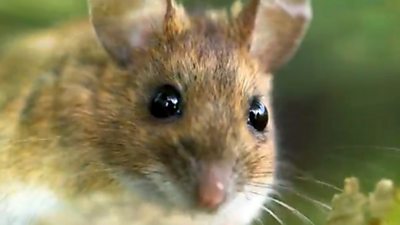
- Iron Mouse Challenge: A purpose-built ‘Rodentorium’ will put Minsmere’s rodents through their paces. This year, it’s all about water. A succession of obstacles await – rolling bars, stepping stones, a metre-long swim before the final underwater diving challenge.
- Some of the UK’s rarest and most endangered birds will be filmed, such as nightjars, Dartford warblers and bearded tits.
Bristol’s Urban Jungle
This year, to augment the cameras in Suffolk, we’re featuring three urban nests on the mean streets of Bristol. Live cameras on a swift, gulls and a feral pigeon nest will feed into Springwatch HQ via the internet, and will be remote-controlled by our team of story developers. ‘The Urban Birder’ David Lindo will then investigate the surprising science behind these city success stories.
As well as appearing on Springwatch, footage from the nests will be beamed on big screens in Bristol’s Millennium Square as the city celebrates its status as the European Green Capital.
Iolo’s Scottish Odyssey
This year, Iolo Williams and his Roving Team will be on the move, starting on the mainland at John O’Groats and finishing on the most northerly point of the British Isles in the Shetland Islands. This epic 300-kilometre journey will take Iolo through some of our most remote and wildest terrain, introducing him to a cast of amazing wildlife along the way.
Iolo will get up close and personal to puffins and other seabirds on the mainland, where he might even get a glimpse of a killer whale. Then it’s on to Orkney, where he’ll see the first breeding pair of white tailed eagles on the island for 100 years and snorkel World War I wrecks in Scapa Flow in search of anemones, nudibranchs and other colourful marine life.
He’ll then head to the Shetlands where he’ll swim with seals in the harbour of Lerwick, meet otters with very special relatives, and end his journey on the northernmost point of land in the UK – Out Stack.
Animal Trackers
A major theme of this year’s Springwatch is how cutting-edge technology is allowing us to learn more about our wildlife than ever before. We’ll be fitting state-of-the-art GPS trackers to badgers, hedgehogs and nightjars, and getting to know the habits and movements of individual animals. And we’re teaming up with scientists to find out where some of our long-distance migrants go when they leave our shores.
Badgers Behaving Badly
Last year, we filmed extraordinary scenes as a badger swam out to the avocet breeding grounds and cleaned out 19 nests full of chicks and eggs – a feast of more than 4,000 calories. The result was only two avocets had fledged at the end of the season. This year, we want to find out which badger – or badgers – were feeding on the Scrape, and what other impacts the predators might be having on wildlife on the reserve. So we’ve teamed up with scientists from the RSPB and the University of Brighton to trap and fit eight badgers with GPS tracking collars. We’ve been following their movements since January, and finding out what they are up to under the cover of darkness. In a series of special films, Chris Packham and the ‘badger team’ reveal what we’ve learnt, and identify the badger with a taste for avocets!
Adders on the Move
It wasn’t just the badgers hunting Minsmere’s chicks last year - the adders were at it to. The adder is Britain’s only venomous snake and this year we want to learn more about them. We’ll be catching and tagging five of the snakes on the reserve. Tiny GPS transmitters will allow us to observe their every move, and the information gleaned will reveal a remarkable insight into their secretive, predatory lives. Other tagging projects have already revealed the huge distances the snakes will travel for mate and food, but how close will our snakes come to our nesting birds? Will more chicks be taken? The stage is set for some fascinating drama.
Arctic Terns
Arctic terns are one of the world’s greatest migrants, travelling from their summer breeding grounds in the northern hemisphere to overwinter in the Antarctic, seeing more daylight than any other living creature. Thousands nest on the Farne Islands off the Northumbrian coast. Though we know they head south at the end of the summer, no one knows exactly where they go, or what route they take to get there. A British bird once turned up on the west coast of Australia. Was it diverted by a storm? Or is this a regular stop over for ‘our’ birds? Nick Baker teams up with Newcastle University and launches and an ambitious, yearlong study, fitting tiny geolocators to 30 Arctic terns. These ingenious devices weigh less than a paper clip but will record day length and temperature. We’ll recover the tags when the birds return to the Farnes next year, and the secrets of their great global migration will finally be revealed.
On the Hunt for Hedgehogs
Hedgehogs are declining in the wild at the same rate as tigers, and it seems our city hogs are not immune to this shocking statistic. In the dead of night, Michaela Strachan joins a team from the Zoological Society of London and the Royal Parks Foundation to track down the last remaining hedgehogs in central London. GPS and radio trackers will be fitted to hogs in Regents Park in a new project to discover more about what’s happening to our prickly pals and help inform other city parks around the country.
To Peru and Back
Iolo Williams journeys to Fetlar, a small island in the Shetlands, to find a tiny bird that has been keeping a big secret – the red-necked phalarope. Scientists recently fitted geolocators to 10 red-necked phalaropes nesting on the island. When one of the tags was recovered early this year, the results took everyone by surprise. This tiny bird, smaller than a starling, had flown all the way to Peru on its epic annual migration, a round trip of 16,000 miles. Most of it into the wind.
Naming our Nightjars
If you go down to the woods this May, then you could be in for a big surprise: the strange, supernatural churring call of one of our most enigmatic birds, the nightjar. Nightjars have been critically endangered in the UK for many years as their heathland habitats have all but disappeared. But now, they could be making a comeback. With the help of Nottinghamshire Wildlife trust, Michaela Strachan puts state-of-the-art GPS tagging devices on the nightjars of Sherwood Forest to find out more about these incredible birds before they fly back to the Central African rainforest for the winter. We’ll name individual birds – and report on their progress over the next year, till they return to Britain next spring.
Wildlife SOS
Do you enjoy the wildlife that comes into your garden? Despite our best efforts, some of our most loved species are in grave danger. Greenfinches are being killed by a fatal disease, hedgehogs are being locked out from their garden larders, and house sparrows and house martins are becoming homeless.
But there are simple things we can all do to reverse the decline of our once-common garden wildlife. So we’ll be sending out a series of Springwatch SOS’s, trying to mobilise the British public to Save Our Species.
Spring Highlights from around the UK
Since early spring, our camera teams have been out and about around the country, from inner London to the wild Welsh coast, capturing the best of the season’s wildlife. Highlights will include:
Solving the Mosquito Mystery
As summer draws near, there’s one question on many people's minds - why do mosquitoes bite some people more than others? Many theories have been proposed – alcohol in the bloodstream, blood type, and even whether you eat Marmite! But none of these has stood up under scientific scrutiny. To solve the mystery once and for all, Chris Packham visits Dr James Logan at the London School of Hygiene and Tropical Medicine. Dr Logan has made an astonishing discovery and reveals why the best mosquito repellent might be hidden in our genes.
Owl Family Drama
In a Springwatch first, we bring you all the drama and action of life in a tawny owl nest in Cheshire. Our cameras have been recording 24/7 for more than three months, capturing every single moment in this family drama, from the female’s very first nest excavations through to egg-laying, hatching and finally fledging. With the help of local wildlife enthusiast Dave Culley, we’ve filmed extraordinary footage of this amazing owl family. The struggle towards adulthood has never been tougher as we witness cannibalism in the nest; this truly is nature red in tooth and claw.
The Beaver Is Back!
The headlines this spring have all been about the first beavers found to be living wild in England for up to 800 years. Springwatch has been granted exclusive access to film every dramatic stage of the story. Martin Hughes-Games rolls up his sleeves to help the Devon Wildlife Trust team capture, health-check and then re-release the beavers onto the River Otter. Martin then looks into the impact these newly arrived animals might have on the Devonshire landscape.
Sex in the City
Capturing the eccentric courtship of great crested grebes is no easy challenge, but that’s exactly what wildlife photographer Andy Rouse has attempted this spring. From the intriguing and ritualised early stages, through to the drama of the weed dance, and finally the magic of newly hatched chicks, he got it all. And the twist in the tale? It all happened on his doorstep, in the heart of the bustling city of Cardiff.
Super Slugs
Under the cover of darkness, an array of creatures come out to play in your garden and on a damp spring evening none is more obvious than the slug. These generally hated and often overlooked little molluscs are worth a second look. Like elastic, they can stretch up to 20 times their normal length and squeeze through the tiniest of gaps. Copious amounts of slime allow them to abseil away from danger and spooky white penises make mating an interesting affair!
Micro Plastics, Big Problem
Plastic will never go away. It can be broken up into smaller and smaller particles, but are called microplastics. Millions of tonnes of these tiny pieces are in our oceans. Investigative reporter Sonali Shah discovers that plastics found in beauty products are killing our marine wildlife, and asks what can be done about a problem that's affecting the whole of the food chain.
Bright Lights and Blackbirds
David Lindo (aka 'The Urban Birder') reveals that the Dawn Chorus is not just a countryside phenomenon: it enlivens spring mornings even in the heart of London. But what effect is light pollution having on our city songbirds? Dr Davide Dominoni has discovered that urban blackbirds are starting their breeding season three weeks ahead of their rural cousins, with surprising consequences.
Springwatch Unsprung
Springwatch Unsprung returns with a new look offering an enthralling mix of entertainment, interaction and spontaneity. Chris Packham presents the series this year and he will be joined by a host of celebrity guests – from artists and writers to entertainers and musicians - all of whom share a passion for wildlife. It's a chat show with a difference – one where wildlife is the core celebration. Guests will include birdwatching comedian Vic Reeves, nature writer Robert McFarlane and wildlife sculptor Geoffrey Dashwood. The show will continue to delve deeply into the stories featured on Springwatch, with expert naturalists and scientists popping in to share their knowledge and passion.
Audience interaction will remain at the heart of the programme, with Chris and his guests answering comments, questions and observations from the live studio audience or from viewers on social media. There’ll be behind the scenes secrets from roving reporter Lindsay Chapman and catch-ups with Chris’s fellow presenters Michaela Strachan and Martin Hughes-Games. And there will be a weekly visit from urban birder David Lindo, who will be sharing his top tips on how to connect with wildlife no matter where you live.
Springwatch Unsprung will be live on the Springwatch website and on the BBC Red Button immediately after the main show at 9pm every day on Mondays, Tuesdays and Thursdays. On Wednesday evenings, Springwatch Unsprung will air on BBC Two at 9pm.
Springwatch Extra
Springwatch will be truly multi-platform, streaming wildlife action live on the Springwatch website, on BBC Red Button and on tablets and smartphones, from 6am to 10pm daily, from Monday 25 May to Thursday 11 June. This is Springwatch Extra, and it’s the place to watch the action as it happens, whether it’s birds fledging the nest - or adders attacking it!
As well as the live cameras streaming 24/7, Springwatch Extra will be bringing three daytime programmes to BBC Live on the web and the Red Button.
The Breakfast Show with Brett Westwood (7–8am) will ease you into the morning with gentle commentary on the live cameras as the reserve comes to life.
Brett returns with The Lunchtime Show, (1-2pm), bringing the best of British conservation knowledge into the studio to discuss some of the latest wildlife science.
The Afternoon Show (4.30 – 5.30pm) with Lindsey Chapman will seek to inspire with guests who have great personal connections to wildlife.
As ever, our Social Media Team will be engaging with our wider audience in a number of ways:
- On the web bbc.co.uk/springwatch
- On Facebook - facebook.com/BBCSpringwatch
- Contact us on Twitter @BBCSpringwatch or share your Spring experiences with #Springwatch
Share photos via the official SPRINGWATCH Flickr group flickr.com/groups/bbcSpringwatch