New BBC schemes encourage BAME talent to join senior leadership of broadcast industry
Two ambitious new leadership schemes to encourage better on and off-screen representation of the Black, Asian and minority ethnic (BAME) communities in broadcasting are today launched by the BBC.
Published: 6 October 2014
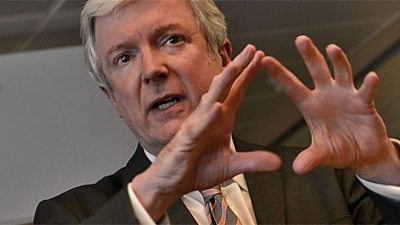
I want the BBC to be the first choice for talented people, whatever their background. The launch of these two leadership programmes is an important step towards a more open broadcast industry.
Six talented people from BAME backgrounds are being sought to join the BBC’s ‘Senior Leadership Development Programme’, to get experience right at the very top of the BBC alongside Director-General Tony Hall and his senior leadership team, and help the corporation to become more representative of its audiences.
And the ‘Assistant Commissioner Development Programme’ is seeking six potential ‘Commissioners of the Future’ in entertainment, comedy, factual, daytime, children’s programming and across BBC Two and BBC Four.
The two schemes are a key part of Tony Hall’s drive to make sure the BBC represents every family and community in the UK, as well as being the first choice employer for people with creative ideas whatever their background.
BBC Director-General Tony Hall said: “I want the BBC to be the first choice for talented people, whatever their background. The launch of these two leadership programmes is an important step towards a more open broadcast industry. We’re working with some very exciting partners on this – and I’m convinced that together we’ll make a tangible difference.”
Charlotte Moore, BBC One Controller, said of the launch of the Assistant Commissioner scheme: “It’s crucial for the BBC and other broadcasters to broaden the range of voices and backgrounds at commissioning level. This is a really great opportunity for people who, while they may already have experience of the industry, want to get involved with BBC Television at a more senior level. I passionately believe that schemes like this can have really positive impact both on screen and off.”
The successful candidates for the Senior Leadership Development Programme will undertake a 12-month training programme alongside one of the BBC’s board members, including Director-General Tony Hall and James Purnell, Director of Strategy and Digital.
The programme is in association with The Clore Leadership Programme, and is open to people from both outside and inside the BBC. The successful applicants will start in January 2015. The aim is to encourage those selected to consider and apply for careers as senior leaders in the broadcast industry.
The Assistant Commissioner Development Programme will train six potential ‘Commissioners of the Future’ in comedy, drama, factual, daytime and children’s programming and across BBC Two and BBC Four. There will be a 12-month paid development programme, targeting promising people from BAME backgrounds to deepen their understanding of commissioning and encourage them and others to put themselves forward for commissioning roles, at the BBC and elsewhere.
Tony Hall announced his action plan to tackle the under representation of people from BAME backgrounds in June 2014. Since then, the following progress has been made:
Encouraging new talent
The BBC announced that it would be taking on 20 BAME graduate trainee interns from the successful Creative Access Programme, a charity that finds training placements in the media industry for high potential BAME graduates. These are due to start their first joint training session in Salford in the week of the 6 October.
Commissioning
A new £2.1m Diversity Creative Talent Fund was announced to help address the specific challenge around BAME portrayal in BBC programmes. It will support the development of ideas across all genres. BAME writers, talent and production staff will be encouraged to get involved. This money has been re-prioritised from other budgets and came on stream on 1 September. It will help fast-track great ideas and projects onto screen.
Independent challenge and advice
A small group of respected experts have joined an Independent Diversity Action Group, chaired by the Director-General. The panel comprises Baroness Tanni Grey-Thompson, Lenny Henry CBE – actor and writer, Nihal – Asian Network presenter, Tanya Motie – former BBC One and BBC Three channel executive, Daniel Oudkerk QC – barrister, George Mpanga – writer and performer, Jason Roberts MBE – former footballer, Baroness Floella Benjamin OBE– actress, presenter, and broadcaster.
The BBC is also an active member of the pan industry Creative Diversity Network (CDN) and is working on a number of joint projects that will have impact across broadcasting. Later this month BBC News is opening up its newsrooms as part of the CDN Open Room events in which all the major news broadcasters give taster days to young people from broad range of backgrounds. The BBC is also collaborating with a CDN monitoring pilot that aims to deliver consistent and comparable data about on and off air talent across the industry, scheduled for 2015, and is exploring the possibility of more commissioning placements with all the major broadcasters.
Notes to Editors
Successful candidates for the Senior Leadership Development programme will be from a Black, Asian, Minority Ethnic background and have a basis of demonstrable experience leading projects or teams, either within an organisation or working independently, which it is hoped can be developed further under the scheme. As a training and development programme, the position does not attract a salary; however participants will be provided with an allowance/bursary for the duration of their training contract to enable them to participate.
On and off-air representation
On-air
In the next three years our aspiration is to see on-air BAME portrayal increase from 10.4% to 15%.
Off-air
The BBC already has a series of aspirational targets for staff representation that it aims to achieve by 2017. In addition, the BBC has announced that it hopes to increase its BAME senior level staff (grade 10-SM1) in the most relevant areas of TV and Radio Production, Broadcast Journalism and Commissioning and Scheduling from 8.3% currently to 10% by 2017 and then to 15% by 2020. BBC News has also reviewed its figures and hopes to achieve changes at a level in London, Birmingham, Manchester and Leicester to reflect the population.
For full details of the schemes see bbc.co.uk/careers
BBC Press Office
