Investigating environmental harm in Zambia
From toxic waste spills to unsafe mining Mercy Mulenga shines a light on the hidden harmful practices of extractive industries
Mercy Mulenga is an investigative journalist from Kitwe, Zambia, working with Yar FM Radio in the heart of the Copperbelt. For more than five years she has reported on the social and environmental costs of mining, deforestation and climate pressures — holding authorities and companies to account and speaking out on behalf of affected communities.
“What inspired me to be a journalist is curiosity and a love for storytelling,” she explains. “I want to inform and educate on issues that matter - with accuracy, accountability and impartiality.”
Trained under BBC Media Action’s MOTO initiative, Mercy applies rigorous research and impartiality to uncover hidden truths. Her recent reporting highlights the devastating consequences of toxic waste leaks into the Kafue River and other biodiversity-rich areas, revealing both environmental destruction and gaps in compensation or justice for local people.
“Being a journalist matters because we play a crucial role in shaping public discourse,” she says. “Through uncovering wrongdoing, we hold those in authority accountable for transparency and good governance.”
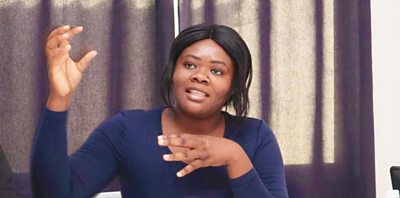
Journalists uncover hidden truths and give a voice to those who might otherwise go unheard”
Mercy is particularly passionate about exposing illegal and unsafe mining, the increasing reliance on charcoal because of power shortages, and the toll these practices take on Zambia’s environment. She believes journalists can spur immediate change: “I’ve seen stories prompt instant action from leaders, because once the truth is out, it’s harder to ignore.”
At the IUCN World Conservation Congress, Mercy will discuss how investigative journalism can uncover environmental harms, push for better governance and amplify community resilience in the face of climate change and resource extraction.
“My hope for Zambia’s journalism is to see an industry free from interference, intimidation and fear — one where media freedom thrives,” she adds.
Read more about our Moto initiative here.
--
We are an official media partner of the International Union for the Conservation of Nature's World Conservation Congress in Abu Dhabi. Find Mercy at 'Speaker's corner' alongside the rest of our journalists delegates on 9th October at 2pm (GST), and for a more in-depth session on how investigative journalism exposes environmental risk on 10th October at 12pm (GST).
As part of the collaboration, we will host a media pavilion throughout the Congress (9–13 October), with contributions from the BBC Studios Natural History Unit (NHU) exploring how storytelling can inspire and inform audiences on the intertwined issues of threatened biodiversity and the changing climate.
Find out more

BRIDGES at the IUCN World Conservation Congress
As an official media partner of the International Union for Conservation of Nature’s (IUCN) World Conservation Congress, we shared learning and insights from BRIDGES and other projects focused on climate and resilience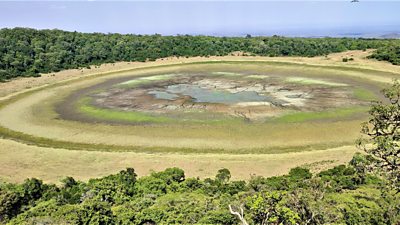
Find out more about BRIDGES
Read our project overview, our research and our press release

--
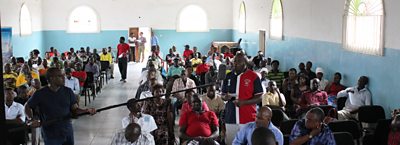
Header image: A public debate in Kitwe's Wusakile Town hall on the effects of mining pollution and job losses in the mines, 2015.
Search by Tag:
- Tagged with ZambiaZambia
- Tagged with AfricaAfrica
- Tagged with Media developmentMedia development
- Tagged with Climate ActionClimate Action
