Helping Kenyans adapt to a changing climate
Only media can reach frontline communities in crisis with critical information - donate to support our work with local broadcasters
DONATE ONLINE through PayPal Giving (t&cs and privacy policy below)
As a fast-changing climate creates more unpredictable and deadly weather events, broadcasting can quickly distribute life-saving information. Community radio can help Nairobi’s most vulnerable residents to prepare for an uncertain future
When the rains begin to fall, Veronica watches with trepidation. Like the other simple houses on her street, built of wood and corrugated metal, her home offers little protection from flooding, and any rain usually means she will soon be busy bailing out her room with buckets. This is becoming a regular occurrence for her, and she sighs at the thought of another night trying to keep dry.
Meanwhile, as increasingly heavy rain falls, Mary’s heart sinks. Last time it rained this heavily, she was out at work, and couldn’t get back in time to stop the water coming into her home. She needs the money – but her neighbours are getting tired of watching her young son, and are criticising her constantly.
On the other side of the country, Richard checks the station’s inbox. There are reports of impending rainfall and storms in the local area. Every fluctuation in weather can wreak havoc on his listeners, the fisherfolk who live and work around Lake Victoria. He begins to prepare his report from the forecast, then translates it to Dholuo, hoping he can report the coming storm in time to help his audience prepare themselves.
In Nairobi, Kenya, more than half of the city’s 4.4 million population live in informal settlements – homes built from readily-available materials – yet these settlements occupy less than 5% of the area of the city. Hand-built homes like Veronica’s are quickly constructed but offer little protection from the elements, and as Kenya’s climate changes, residents are starting to feel the consequences of both rain and heat.
This problem is not limited to Kenya. Globally, one billion people live in informal settlements, and in 30 years two-thirds of the world is expected to live in urban areas - putting even more pressure on communities like these.
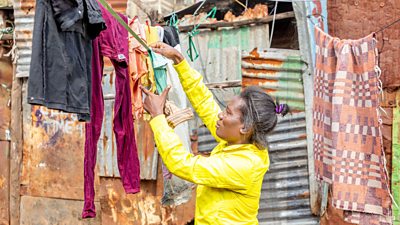
"We were expecting the rains, but we didn't expect it to be that heavy, with that intensity"
(The link above will redirect you to PayPalGiving's website and its use is subject to their privacy policy and terms and conditions)
--
The precariously-built houses in Nairobi's outskirts tend to be in areas that are more susceptible to changing climate conditions, posing a risk to residents’ homes, health and livelihoods.
In March 2024, floods swept through Nairobi, with more than 200 people losing their lives, and thousands losing their homes.
And women are increasingly and disproportionately affected by the effects of climate change. More likely to take a greater share of low or unpaid domestic labour, and less likely to own their land, climate-related disruptions are even more likely to jeopardise women’s homes and incomes.
Veronica, a young mother living in Korogocho, one of Nairobi’s largest informal settlements, was unprepared for the floods at first. “We were expecting the rains, but we didn't expect it to be that heavy, with that intensity.”
Like other homes in the area, Veronica’s roof leaks, and the rain takes a toll on her health as well as her home – sewage water inundates her home along with the rainwater.
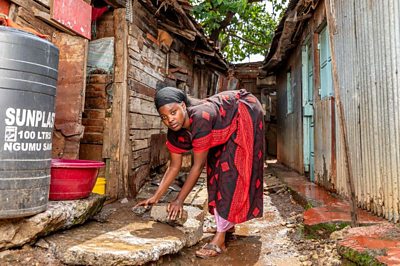
Mary, another young woman living in Korogocho, is raising her child alone. She makes her living doing laundry and other odd jobs, and often must entrust her neighbours to watch him. One evening, she experienced flooding that came too close to home. “When I got back in the morning from work, I found my baby’s bed was submerged in water. I had put him on a higher place and the waters still got to him – but the neighbours saved him.”
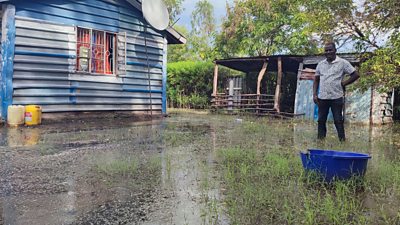
In these worsening conditions, it isn’t only homes that are affected, but livelihoods. Peter, a farmer in Ahero, near Lake Victoria in Western Kenya, was forced to evacuate with his family when the floods reached them. Seasons of unusually heavy rains have contributed to higher water levels and lake backflow – which means the tide now submerges everything every evening, whether it has rained again or not, damaging farms like Peter’s. “We cannot do any farming because of the floods. I’m just suddenly depending on whatever [money] I made yesterday.”
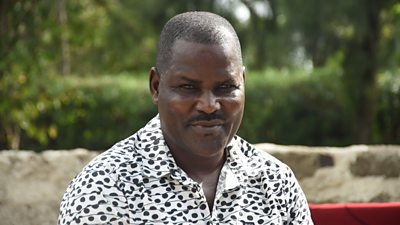
“I decided to move my family because I was fearing for their lives.”
As well as affecting families and farmers, the ripples of climate change are being felt in local journalism. Radio Lake Victoria is a station based in Kisumu which broadcasts in local dialect, reaching around 2.5 million listeners. The station’s core audience is those who work in the fishing industry. The station broadcasts weekly shows focusing on environmental issues, meeting locals who are undertaking conservation projects and community stakeholders. “Fishermen and environment – they go hand in hand,” says Richard Oyoo, the station’s general manager. “We saw the need of trying to carry out [climate] education to our people.”
Beyond programming, this station has experienced firsthand the impact of recent flooding. “Lake backflow had stormed the ground floor and the studio, [our offices] ... water was all over.”
The damage affected their equipment, with the transmission studio under water. “They didn’t salvage anything.”

The link above will redirect you to JustGiving’s website - its use is subject to their terms & conditions and privacy policy.
--
Before the floods, Peter got his news like many others, through his smartphone, and the television. But climate-related weather events can impact communication, too - and local broadcasters also need support to prepare for the future: “Right now, we are down – we don’t have electricity.”
Radio is a valuable tool when other forms of communication fail, as radio bulletins can be heard by those who cannot afford or access the internet.
Catherine Wanjiku, a team leader at Koch FM, a community radio station based in Nairobi, says weather warnings are critical; not only to help protect communities against damage to their homes, but to help prevent against loss of life. When a sunny day was followed by a cyclone, she said, the community wasn't prepared. Five people in a household near the banks of the Gomongo river died. Earlier warnings might have helped them evacuate.
Having experienced these weather extremities, the station has various ways of preparing its audience. “We get our weather news from the Kenya Meterological Department, [which] we translate into Swahili.” During radio broadcasts, these translations can help to reach a wider audience, with Swahili more widely spoken than English, particularly in informal settlements. Koch FM also uses a WhatsApp group to share weather updates with its listeners.
Yet this key community resource faces its own challenges. With Koch FM’s frequency only covering a small 5km (3.1-mile) radius, and not everyone having access to a smartphone where they can listen to the shows online, the station struggles to reach as many people as it would like to. There’s also the matter of the cost – it largely relies on the passion of a dedicated team of volunteers who keep the station going.

Stations like Koch FM can help connect displaced audiences to resources, provide education and inspire communities to take action to adapt and prepare. “As much as we are covering them, they also see us as their voice,” says Catherine.
Citizen-led action can have an enormous impact on the resilience of these communities. From adaptive planting to river clean ups – community-led projects, communicated through broadcast media which also provide platforms for further discussion, are helping to improve the living conditions of people in Nairobi’s informal settlements.
Bringing residents closer together can also repair community spirits. When Mary experienced depression after the flood, worsened by souring relationships with her neighbours, she sought solace in radio.
“I told [Shiko from Koch FM] my story; [she] felt the pain […] she helped me with food [and] took me to a safe space.” Mary has since found a new place to live, and likes to listen to the teachings and seminars hosted by Koch FM. “For us young mothers, it educates us. I see my life changing.”
But these small community radio stations face tremendous financial hardships. They can’t create change alone. This is where BBC Media Action – the BBC’s independent, international development organisation – is stepping in.
With support, training and mentoring for local community radio stations, the hope is that more people will receive life-saving information, stories and ideas about adapting to climate change.
As the impacts of a changing climate intensify, along with the challenges of supporting people to adapt and survive, supporting community broadcasting through charities like BBC Media Action could help make the difference to those reporting from the frontlines, and the people they serve.
Climate-related programming, as seen on Radio Lake Victoria, and weather information distributed in understandable and engaging ways on Koch FM can help audiences to more effectively protect their homes, adapt their lifestyle and farming practices, and be equipped with practical information. Community-run radio stations can help communities can grow stronger, with more platforms to discuss issues, helping people make informed choices and transform their own lives.
BBC Media Action’s support stretches far beyond Kenya, with a global reach and projects in 30 countries. Through our work, we are training community radio stations and journalists to deliver trusted, often life-saving information and content – including about weather and climate.
We need your help to reach more community broadcasters around the world - so they can strengthen and empower their communities to adapt to the growing threats.
The links above will redirect you to third-party websites and their use is subject to their privacy policies and terms and conditions:
Paypal Giving terms and conditions and privacy policy
JustGiving terms and conditions and privacy policy

Donate to our winter appeal
We need your help - support our winter appeal
Read our Impact Report
Read in-depth about our work with local broadcasters and communities around the world in our 2023-24 Impact Report


Search by Tag:
- Tagged with FundraisingFundraising
- Tagged with Climate ActionClimate Action
- Tagged with KenyaKenya
