Wash the Dabba
How a simple ask sparked a city-wide movement in Bengaluru


What does it take to spark change in India’s Silicon Valley?
For Saamuhika Shakti partner BBC Media Action, the answer lies in the power of insight-led storytelling – narratives rooted in empathy, co-creation, and strategic communication design. #WashTheDabba is one such story. What began as a modest request – empty, rinse, and dry your food containers before throwing them out – grew into a city-wide movement that not only influenced public behaviour but also nudged the systems that govern Bengaluru’s waste.
From sympathy to empathy: the insight that sparked it all
In 2021, as part of the #Invaluables initiative, BBC Media Action conducted an impact evaluation that revealed a crucial insight. While many residents of Bengaluru were aware of waste pickers and their work, their support remained largely passive – rooted in sympathy, not empathy.
This led to a simple but revealing question posed to the waste picker community:
“How can the city support you?”
Their answer was equally straightforward:
“Please don’t dispose containers with food in them.”
Behind that plea lay layers of invisible labour, health risks, and dignity. Sorting soiled containers was not only unhygienic but deeply discouraging. When food was left inside containers, they became infested with worms and bacteria, making the waste picker’s job significantly more dangerous and unpleasant. In addition, handling such waste could lead to health risks, such as infections and contamination.
By simply rinsing out food containers, residents could make the job easier, safer, and more dignified for the waste pickers. This wasn’t a call for charity – it was a call for partnership. This small act also meant that more dabbas (food boxes) could be recycled, rather than ending up in landfills or as waste that required extensive sorting. This simple shift in behaviour had a profound impact on the waste management ecosystem in Bengaluru, enabling waste pickers to work more efficiently and with greater respect.
Designing change with, not for
Recognising that real change begins by designing with communities – not for them – #WashTheDabba was embedded within BBC Media Action’s PRIDE framework: Pathway to Respect, Identity, Dignity, and Empowerment. With support from the H&M Foundation, the campaign took root.
In 2022, the Happy Number song launched, giving Bengaluru a tangible goal: reduce waste reaching the city's landfills. #WashTheDabba became one of the key actions supporting this goal – a small shift in daily habit with outsized systemic impact.
Strategic creativity: when food speaks, people listen
In 2024, the campaign took a creative leap: food was given a voice.
Across social media, leftover Idlis and Biryani began speaking from inside discarded, grimy boxes – lamenting their fate. The tone was playful, the visuals relatable and the message hard to ignore.
But digital was just the beginning. The campaign showed up in the physical world too:
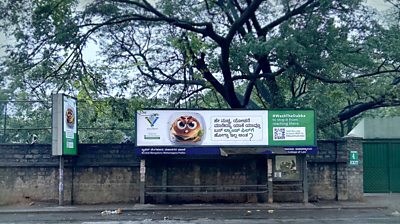
- Eight bus shelters in Bengaluru posed a cheeky question: “Matcha, why does no bus go to landfills?”
- Over 136,000 food containers across 36 restaurants carried the #WashTheDabba message
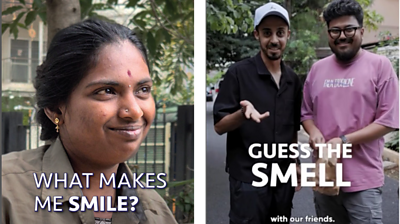
- In 65 residential communities and co-working spaces like WeWork India, immersive experiences like Guess the Smell encouraged participants to confront the everyday consequences of unwashed containers
Each touchpoint acted as a behavioural nudge – clear, achievable, and contextually grounded.
Influencers for good: authentic amplification
To take the message further, the campaign brought on board cultural influencers who added their own voice, humour, and authenticity:
- Shraddha Jain (@Aiyyoshraddha)
- Environmentalist Vani Murthy (@wormrani)
- Comedy duo JordIndian
- Musician Vasu Dixit
- Rapper Karthik Gubbi
So far, nearly 20 influencers have amplified the message of #WashTheDabba. Their content turned #WashTheDabba into more than a hashtag – it became the norm. A reel using Hanuman Kind’s trending track Big Dawgs went viral, garnering 13 million views and drawing attention to @Invaluables.Bengaluru across the country.
Changing attitudes, shifting systems
By the end of 2024, a third-party evaluation confirmed the campaign’s impact:
- 44% of respondents could recall the campaign without prompting.
- 60% reported they had started washing their plastic food containers.
- Waste pickers at Dry Waste Collection Centres noted that containers were arriving noticeably cleaner.
The campaign succeeded not by guilt-tripping, but by enabling. Social media data and feedback revealed a significant shift in how residents viewed waste pickers – terms like “warriors,” “influencers,” and “queens” began to replace the earlier, more dismissive language. The campaign’s ability to shift this public perception was one of its major wins.
Perception data from our research further confirmed this shift. A marked increase in positive sentiment was reflected in both online engagement and offline interactions with the Invaluable Recyclers.
Residents began recognising the contributions of the #InvaluableRecyclers. One recycler, Mary, featured in a campaign video, shared: “People now bring newspapers with my photo to our DWCC.”
Beyond Bengaluru: a movement in motion
The ripple effect was unmistakable:
- Colleges in Coimbatore and NGOs in West Bengal adopted and adapted the idea
- A municipal corporation in Kerala translated and implemented it locally
- A major food delivery unicorn, once considered a dream collaborator, began amplifying the core message recently
But the movement didn’t stop there. The campaign sparked queries from cities across India, including Ladakh and Delhi, with many expressing interest in bringing the campaign to their regions.
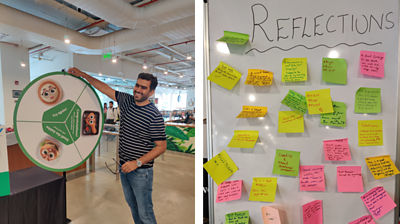
The Homeal collaboration took the campaign further, amplifying the message and engaging more communities. And the campaign’s success caught the attention of the Tamil Nadu Government, which invited the team to share learnings and strategies, a moment of pride for Saamuhika Shakti. From community screenings to interactive art installations at Echoes of Earth, the campaign transcended boundaries – geographic, cultural, and institutional.
And the story continues...
As BBC Media Action continues to co-create with the people living and working within the waste ecosystem, one belief remains central:
Small actions, when grounded in respect, can ignite movements.
So, the next time a food order arrives, and the container is rinsed before being thrown out, it’s more than hygiene. It’s a nod to the empowered voices of Bengaluru’s #InvaluableRecyclers – the people who turned a simple ask into a powerful movement.
- Listen to how Wash the Dabba has brought global recognition for Bengaluru’s waste pickers This episode of the Nelson John 360 podcast unpacks how Wash the Dabba became Bengaluru's most unlikely revolution. It started with waste pickers, a simple request, and a rinsed food container. What happened next won the Internet's highest honour.
Latest India stories
More stories from IndiaSearch by Tag:
- Tagged with IndiaIndia
- Tagged with InsightInsight
- Tagged with Social and behaviour changeSocial and behaviour change
