 | 28 October 2014 |

| |
| BBC Homepage | | |
| |||
| Contact Us | | |
FeaturesYou are in: London > News > London Elections 2008 > Features > The tracks of Ken's tears 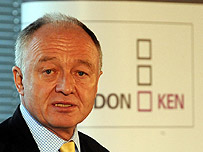 The tracks of Ken's tearsOver the years Ken Livingstone has become increasingly susceptible to public shows of emotion. He's found it difficult to hold back the tears in the face of, say, a rousing 2012 Olympic video or a poignant slavery abolition ceremony. Help playing audio/video By BBC London's political editor, Tim DonovanAt the launch of his re-election campaign, he seemed very close to another wobble, as Doreen Lawrence praised him for the unstinting support he'd given her over the years. But it may not have been the only factor causing the bottom lip to quiver. The latest opinion poll had after all been enough to make any grown candidate weep. How could the capital's electorate really prove so fickle? The sheer ingratitude! Certainly, it's difficult to maintain your usual poise when a 12-point deficit has just come hurtling from nowhere out of the sky six weeks before decision-day. Labour isn't working...Some present at the launch at the Royal Festival Hall – no mention anywhere incidentally of Labour in the decorative branding - thought that, whatever the exact reasons, the incumbent mayor was a little below-par as he set out his vision for a third-term. 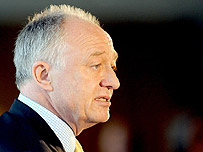 Unusually, he read quite a few passages of his speech, not trusting on this one to his habitual off-the-cuff instincts, and perhaps conscious there were clear dividing lines with Boris Johnson which he just had to get absolutely right, on the record, and underlined. There was an element too of structural repetition, of which he can't often be accused. 'Seven deadly sins'He first outlined seven policy areas where Johnson would fail Londoners or 'wind back the clock', before running through the issues all over again, this time with the gloss of how deftly he himself had dealt with them up to now. Nevertheless, in Johnson's 'seven deadly sins' was the essence of a line of attack likely to be repeated often over the next 40-odd hustings-strewn, pavement-pounding days. Livingstone claims that Johnson:
Johnson's retortIt's not clear yet whether Boris Johnson will stage a similar official launch event, believing that he's already effectively set out his stall with 'policy manifestos' on transport, crime and housing. On a visit to Tooting's covered market, he seemed unperturbed. A lot of things would be claimed during the campaign, he said. But now was, quite simply, time for a change. Did he, as Livingstone suggests, not have the experience and competence to run London – a serious business? "That's a bit rich coming from the man who presided over the collapse of Metronet and who presided over the loss of millions of pounds from the London Development Agency and still cannot produce an audit trail," he said. More election articles by Tim Donovan: last updated: 20/05/2008 at 14:36 SEE ALSOYou are in: London > News > London Elections 2008 > Features > The tracks of Ken's tears  London candidates for the European Elections 2009 |
| | About the BBC | Help | Terms of Use | Privacy & Cookies Policy |


