
Wartime and Evacuation
| Soldiers |    | Remember when ...
Doctors charged three shilling and six pence to visit a sick person at home, and two shilling and six pence for a visit to the surgery (until 1948). |
| | Lily Jones - born 1932
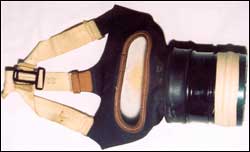 "A squad of soldiers was billeted on the Gandy field near where we lived. We children went to watch them putting up their huge bell tents and field kitchen. They were in charge of two barrage balloons, we thought they looked like great wobbly elephants in the sky. The roads were festooned with metal pipes for emergency water supply and with ramps at the ends of the roads so that vehicles could enter or leave without damaging the pipes". "A squad of soldiers was billeted on the Gandy field near where we lived. We children went to watch them putting up their huge bell tents and field kitchen. They were in charge of two barrage balloons, we thought they looked like great wobbly elephants in the sky. The roads were festooned with metal pipes for emergency water supply and with ramps at the ends of the roads so that vehicles could enter or leave without damaging the pipes".
"Windows in every building were criss-crossed with brown sticky paper to stop flying glass in the event of a bomb blast. Most boys and girls collected shrapnel that fell everywhere. Some of the Birknhead buses towed a gas cylinder behind them on a trailer, replacing petrol, which was scarce. Headlamps were covered in black paint except for a little cross allowing a glimmer of light". |
| Evacuees |   | Remember when ...
A Councillor's note had to be obtained before you could visit a relative in hospital, unless they were on an 'urgent note'. |
| | Mollie Connor - born 1926
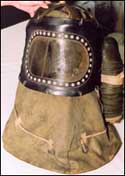 "Being an evacuee was the most memorable experience in my life, I came to understand how naive I had been, I had always assumed that everyone’s lifestyle was the same as my own, living in street communities and grinding poverty from which there was no escape. "Being an evacuee was the most memorable experience in my life, I came to understand how naive I had been, I had always assumed that everyone’s lifestyle was the same as my own, living in street communities and grinding poverty from which there was no escape.
I was billeted with my sister and a classmate with a Mr and Mrs. Bickley. She was a music teacher, and he worked at the aerodrome. 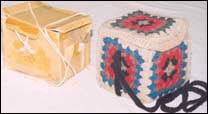
They had a large garden and orchard. It was paradise. We went to school in the village hall where dances were held.
This happy interlude as an evacuee did not last long - about six months. I had to return to Liverpool to help my mother who had had another baby, I was the eldest of seven. |
| VE Day |   | Remember when ...
Only two hospital visits a week were allowed, and only two people allowed at the bedside. |
| | Ann Roberts - born 1937
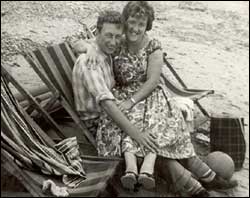 "VE day was wonderful, the whole street was decorated in red, white and blue, bunting zig zagging across the street and kerbstones painted alternate colours. All the women got together to make garlands of flowers out of crepe paper, to decorate the doorways. Tables and chairs were placed in a line down the middle of the street and everyone brought a plate, cup and spoon. Each house would provide as much food and drink as they could afford, to be shared". "VE day was wonderful, the whole street was decorated in red, white and blue, bunting zig zagging across the street and kerbstones painted alternate colours. All the women got together to make garlands of flowers out of crepe paper, to decorate the doorways. Tables and chairs were placed in a line down the middle of the street and everyone brought a plate, cup and spoon. Each house would provide as much food and drink as they could afford, to be shared".
"We played games, danced and had competitions - I won a bar of chocolate for singing on top of the air raid shelter. I remember standing on the teacher’s desk one wet playtime, belting out the Kay Starr hit "Wheel of Fortune". Little did I know that our headmistress, Sister Mary Cuthbert, was standing at the door of our classroom. Amazingly she didn’t shout at me, but told me I’d just passed the test to join a choir and sing at the Philharmonic Hall for the Festival of Britain celebrations". |
| Telegraph Boy |   | Remember when ...
White reins were used on the horses pulling the herse if the deceased was under twenty-one years of age. |
| | Doris Windsor, born 1917
 "During the war, it was terrifying to see the telegraph boy on his red bike. I am ashamed to say that it was a relief when he went to someone else’s house. Eventually I did receive a cablegram - I was so frightened but it read "Safe and well, darling, hope to see you shortly. Don’t write, Love you a million billions". I can’t describe the relief, I was hysterical. After the war we went to Butlins in Filey. We had a most wonderful week, and we went every year after that, the whole family. We made our holiday dresses ourselves". "During the war, it was terrifying to see the telegraph boy on his red bike. I am ashamed to say that it was a relief when he went to someone else’s house. Eventually I did receive a cablegram - I was so frightened but it read "Safe and well, darling, hope to see you shortly. Don’t write, Love you a million billions". I can’t describe the relief, I was hysterical. After the war we went to Butlins in Filey. We had a most wonderful week, and we went every year after that, the whole family. We made our holiday dresses ourselves". |
| Rationing |   | Remember when ...
Shops selling mantles (coats) charged top prices for 'mourning' clothes, possibly because of the insurance money. |
| | Phil Kenny, born 1916
 "Food rationing was a big problem. If I happened to see a group of women queueing outside a shop, I’d join them. On one occasion we were waiting for half a rabbit and when the shopkeeper came out, he surveyed the queue, saw me, and shouted "You’re not a customer of mine, you needn’t stay". So no rabbsit pie that day! " "Food rationing was a big problem. If I happened to see a group of women queueing outside a shop, I’d join them. On one occasion we were waiting for half a rabbit and when the shopkeeper came out, he surveyed the queue, saw me, and shouted "You’re not a customer of mine, you needn’t stay". So no rabbsit pie that day! " |
Get involved!!
Add your own merseyside memories to the BBC website. Each monthly edition of The Mersey Times is written and compiled by local groups, colleges, schools or individuals.
The aim of the Mersey Times is to tell the story of a particular piece of Merseyside history - in words and images. Click here to send your memories here |
|




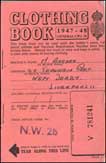 "I came back from evacuation in Llanberis because I was of working age. I started as an apprentice tailor at Wetherall’s in Parr Street. After 12 months I realised I could earn far more money at the Bear Brand in Woolton - making silk stockings. This also meant I was able to wear fully fashioned stockings throughout the war - a rare luxury".