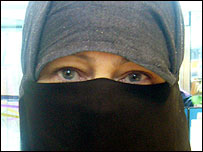
Jack Straw's comments on how he asks Muslim women in his constituency to remove their veil when meeting with him has prompted lots of discussion on TV, down the pub, in places of worship and on the street. There have been misconceptions about why women take to wearing the veil, whether or not they are forced to and many BBC Radio Leicester listeners agreed with Jack Straw’s viewpoint. But what has the controversy meant for local Muslim women? Bridget Blair has been to meet Khadija Ravat who wears the niqab, the veil over the face, to find out...Khadija Ravat, a Muslim woman in Leicester, who has chosen to wear the veil for 12 years, shared her thoughts on why women wear the veil and why they feel it's important to for them to see themselves as an individuals rather then concentrating on the way other people see them. | "I don't think that Jack Straw realises that his statement really works against all good British values." | | Khadija Ravat from Leicester |
In regards to Jack Straw's comments, we heard how it is regarded as a step back against all good British values of respect for each other and their way of life. Khadija stressed the point that just as one should not force a woman to wear a face veil it's just as important one should not force a woman to take off her veil. Disagreeing with the opinion that wearing a veil could be seen as submissive, we heard the contrary, it empowers women to not be dominated and controlled by fashion, society and its pressures. 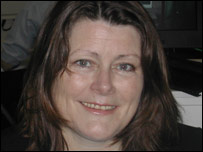 | | Bridget Blair, BBC Leicester reporter |
One reaction to the veil could be seen as the feeling of intimidation. Khadija responds to this by inviting anyone, who is wary or intrigued by the veil, to come and try one on and invite the possibility that they might enjoy it. This is exactly what Bridget Blair, a BBC Leicester reporter, did and experienced what it's really like to be behind the veil in Leicester's city centre. A learning experience of communication, perception and illumination. Listen to her views and thoughts on the right-hand side. |