 Olive oil and Puglia Olive oil and Puglia
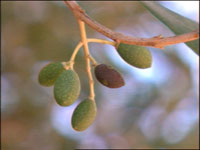
Over 75% of Italy's olive harvest comes from Puglia. In Lecce alone there are over 14,000 hectares of olive groves - that's an area the size of Liguria. So it's no wonder that the little green berry enjoys almost iconic status in the region.
As he reverently pats one of the oldest trees in the grove, an enormous specimen that's thought to have been around for over 2000 years, Michele Doria, secretary of a cooperative of more than 800 local olive oil producers, explains the significance of olive oil to Puglia. It is, he says 'la nostra cultura, la nostra storia': our culture and our history. Nowadays it is central to Puglian cooking, but in the past, the olive oil had many more uses. Though it may seem wasteful to us now, olive oil was once the main fuel for lighting, and locals would brag that oil from Puglia 'illuminated the whole of Europe'. Oil also played an important role in medicine. On top of that, the wood of the trees was used for most household furniture. The inhabitants of Puglia pretty much lived and breathed olive oil.
And this was even truer for the men that worked in the 'fantoio', the olive press, in the centre of Lecce. From 1500 until the beginning of the 1900s, five chosen men - four workers and a foreman - would work in this olive press from harvest time, around October, until April.
And what made them, and this press, so special? Incredibly, the press is underground, buried under the central piazza. And those five men spent six months of every year living in the press, in two tiny rooms hollowed out around the central mechanism, never coming up, never leaving the olives. Being underground had several advantages in the processing of the olive oil. The temperature was almost constant, which made production far more efficient, and quality far more consistent. It was also, of course, cheaper to build down, rather than up. And it also provided extra security. The oil, nicknamed liquid gold, was precious and its owners went to great lengths to stop any of this valuable commodity from trickling through their fingers. And what did the workers get for their labours, aside from a week of frantic blinking when they finally resurfaced into the dazzling Puglian sunshine? Well, respect, for one thing - it was considered a highly desirable job. And anything more substantial? Three pockets of dried figs. Let's hope they at least got a little light to eat them by.
Links
Filippo Berio
Home site of one of Italy's biggest olive oil producers - facts, recipes and cooking tips. These links do not constitute an endorsement by the BBC of the companies, their services or products. The BBC is not responsible for the content of external sites. |