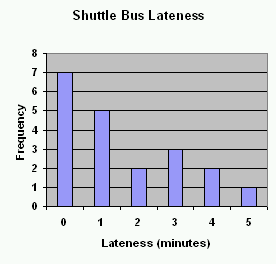
Q5. An airport shuttle bus transfers passengers form the car park to the terminal. The management monitored the lateness of the buses on a certain day. The chart shows the results showing lateness to the nearest minute.
(a) What was the mean and the mode lateness on that day? (2 marks)
(b) On another day the mean was 1.7 minutes but the mode was 5 minutes. Give a possible explanation for this situation. (2 marks)
(a) - answer and commentary
We have to add up the total lateness in minutes and divide by the number of buses. There were 7+5+2+3+2+1=20 buses.
There were 7 times at 0 minutes late, 5 times at 1 minute late and so on.
So we can add up:
(7x0) + (5x1) + (2x2) + (3x3) + (2x4) + (1x5) = 0+5+4+9+8+5 = 31
The mean is 31 ÷ 20 = 1.55 minutes
The mode is the most common lateness, which on this day was 0 minutes.
Answer: Mean 1.55 minutes, Mode 0 minutes (b) - answer and commentary
There are many possible answers. We don't know enough about the airport to say. However, we need to come up with a story that could fit the information. The key point is that the mode is now 5, which means that the most common lateness was now high, but the mean was only a little worse than the day we have the chart for. One possible story would be: There was a problem at the depot which sent the first bus off 5 minutes late - the next few buses set off at the same intervals and remained 5 minutes late. When the problem was solved an extra bus was added to put the system back on time. After that everything ran very well indeed, to make up for lost time and make the mean average only a little worse than normal. Next question
 |