 | 28 October 2014 |

| |
| BBC Homepage | | |
| |||
| Contact Us | | |
Marine MattersYou are in: Kent > Nature > Marine Matters > The Port of Dover 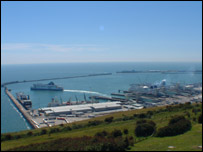 Dover Harbour The Port of DoverBy Peter Barker As the world's busiest ferry port Dover is looking forward to further developments despite competition from cheap flights and the Channel Tunnel. Dover is one of around 100 UK trust ports and celebrates the 400th anniversary of their foundation this year. Its proximity to the continent makes Dover an ideal port for cross-channel traffic. From the earliest days of crossing the channel, Dover has continually evolved and developed. While the opening of the Channel Tunnel saw a drop in the amount of cross-channel traffic using the port, Dover continues to handle significant volumes of passengers, vehicles and particularly freight. With an annual throughput of around 15 million passengers Dover remains the world’s busiest ferry port and while the figures for cars and passenger traffic has been slowly falling over recent years the volume of freight traffic is gradually increasing. Dover’s proximity to the shipping lanes (just a few miles away) makes it an ideal stopping of point for the growing UK cruise industry with nearly 200,000 travellers in 126 ship visits using the port in 2004, or put another way, around a third of the UK’s cruise market. Recently Dover Harbour Board announced ambitious plans that will see among other things a major re-development of the Western Docks area. This part of the port of Dover was previously used in the days of rail freight traffic and once again the Western Docks are to be used by ferry traffic with the building of up to four new ferry berths. The plans also involve the reclamation of the Tidal Harbour and Granville Dock marina areas. A new marina is planned for the outer harbour linked to the new sea sports centre due to open in 2007. last updated: 06/03/2008 at 14:07 SEE ALSOYou are in: Kent > Nature > Marine Matters > The Port of Dover    5 DAY FORECAST The latest forecast for your area from BBC Weather [an error occurred while processing this directive] |
| | About the BBC | Help | Terms of Use | Privacy & Cookies Policy |
