BLACK FLASH 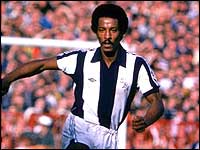 | | Brendan Batson plays for West Bromwich Albion in 1978 |
West Bromwich Albion’s 'Three Degrees' - Cyrille Regis, Laurie Cunningham and Brendan Batson -changed the colour of the beautiful game. Over 25 years after their glory days, Inside Out finds out more about them. When Michael Owen was substituted for Darius Vassell in England’s World Cup quarter-final match against Brazil, history was made. For the first time ever, there were more black players on the pitch than white, representing England’s national team - arguably a revolution in British football. Many believe the seeds for that change were sown in the Midlands by three black footballers - Cyrille Regis, Laurie Cunningham and Brendan Batson. Pioneering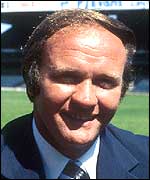 | | Ron Atkinson when he was West Brom's manager |
During the 1978/79 football season, West Bromwich Albion was the first club to field three black players. Their Manager Ron Atkinson gave them their chance. "They could have been yellow, purple, and have two heads," he says, "So long as they could play and they were good lads - and they were." Ron nicknamed the boys the Three Degrees following an appearance by the real Motown legends at the club's ground. Legendary Midlands sports journalist Bob Downing reflects on their phenomenal impact on the whole of English football, "People talk about them being a breath of fresh air and those three lads were," he says. "Laurie had flair, Cyrille was all power and Brendan was the thinking man’s footballer. I don’t think they ever went anywhere looking for a draw." InspirationThe Three Degrees became the role models for thousands of black boys who wanted to play football. Dion Dublin admits being inspired by them, "I think the three of them broke the mould for the black people of the Midlands and I’m obviously one of them. I think they had a part to play in the whole of the English game." Robbie Earle says, "Together they paved the way for players like me. Without the inspiration provided by the likes of these players, I might never have considered football as a career." Racism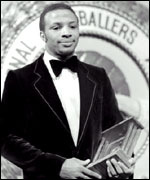 | | Cyrille Regis winning the PFA's Young Player of the year in 1979 |
Despite their success on the pitch, life wasn’t easy for the three degrees. The late 70s were a time of race riots and right-wing nationalism. Brendan Batson says, "We had some quite hostile receptions - it was extremely unpleasant. "When we were going to games, you could see the National Front outside, handing out their racist literature. "We never felt intimidated by it. If anything, it galvanised us into even better performances." Modern gameThe arrival on the scene of Cyrille, Laurie and Brendan made a huge difference to the integration of black players into English football. But have attitudes to black players really changed over the last quarter of a century? Measures have been taken to kick racism out of football, on a professional level, but how far has racism been able to "kick it out" at a grassroots level? Seventeen-year-old Ephram Williams, a Highfield Rangers player, describes how he has suffered both physical and verbal racist abuse on the pitch since he was 10-years-old. "If the ref doesn’t hear it, you can’t do anything about it," he says. "You just have to get on with it." Sad loss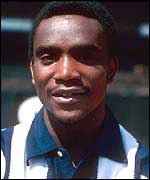 | | Laurie Cunningham's death was a shock to football |
The Three Degrees were split up when Laurie moved to Real Madrid for £1 million. Sadly, in June 1989 Laurie was killed in a horrific car crash. Cyrille says, "Laurie Cunningham died and I realised by priorities were wrong." Brendan retired in 1984 and became a senior executive at the Professional Footballers’ Association. Cyril played for four West Midlands clubs before hanging up his boots. West Bromwich Albion broke the mould back in the late 70s, and the influence of the Three Degrees is still felt in stadiums across the country. | 



